Ian Lawson – författare
Visar alla böcker från författaren Ian Lawson. Handla med fri frakt och snabb leverans.
3 produkter
3 produkter
E-bok
Engelska, 2017166 kr
Läs direkt efter köp
Working Scottish Trucks is a photographic book bringing together 262 images of commercial vehicles spotted across some of the most scenic parts of Scotland. The beautiful landscapes offer a fantastic backdrop to the large range of haulage companies based in this rural, rugged and often difficult area. With just one picture per page, this book reproduces Ian Lawson's perfectly captured shots to maximum effect. The images have been taken over 30 years of dedicated viewing and focus on 10 types of vehicles - bulk transport, curtainsiders, fridges and food, general haulage, hay and stray, heavy haulage, livestock transporters, renewable energy transport, round timber haulage and tankers. Each photo is captioned with the date, location, make and model of vehicle and details of owner and types of work undertaken. The distinctive and unashamedly patriotic look of Scottish liveries has always attracted a strong following and so Working Scottish Trucks is a must-have for transport enthusiasts within Scotland, the UK and beyond.
E-bok
PDF, Engelska, 2012693 kr
Läs direkt efter köp
There is both a timeliness and a transcendent ''rightness'' in the fact that scholars, clinicians, and health professionals are beginning to examine the ethics-based components of decision making in health care of the elderly. Ethics - as the discipline concerned with right or wrong conduct and moral duty - pervades hospital rooms, nursing home corridors, physicians'' offices, and the halls of Congress as decisions are made that concern the allocation of health-related services to individuals and groups in need. In particular, care of older persons recently has received dispropor tionate attention in discussions of ethics and clinical care. Age alone, of course, should not generate special focus on ill individuals about whom concerns arise based on value conflicts tacitly involved in the delivery of health care. Having said that age is not the principal criterion for attention to ethics-based concerns in health care, it must be acknowl edged that old people have a high prevalence of conditions that provoke interest and put them in harm''s way if value conflicts are not identified and seriously addressed. Issues that concern autonomy, the allocation of scarce resources, inter-generational competition and conflict, the withholding of treat ment in treatable disease, and substitute and proxy decision making for the cognitively impaired all have special relevance for older persons.
Del 25 - Philosophy and Medicine
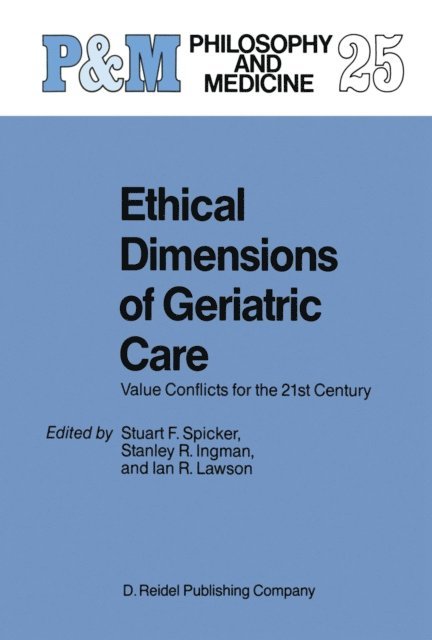
Ethical Dimensions of Geriatric Care
Value Conflicts for the 21st Century
Häftad, Engelska, 2011
540 kr
Skickas inom 10-15 vardagar
There is both a timeliness and a transcendent 'rightness' in the fact that scholars, clinicians, and health professionals are beginning to examine the ethics-based components of decision making in health care of the elderly. Ethics - as the discipline concerned with right or wrong conduct and moral duty - pervades hospital rooms, nursing home corridors, physicians' offices, and the halls of Congress as decisions are made that concern the allocation of health-related services to individuals and groups in need. In particular, care of older persons recently has received dispropor tionate attention in discussions of ethics and clinical care. Age alone, of course, should not generate special focus on ill individuals about whom concerns arise based on value conflicts tacitly involved in the delivery of health care. Having said that age is not the principal criterion for attention to ethics-based concerns in health care, it must be acknowl edged that old people have a high prevalence of conditions that provoke interest and put them in harm's way if value conflicts are not identified and seriously addressed. Issues that concern autonomy, the allocation of scarce resources, inter-generational competition and conflict, the withholding of treat ment in treatable disease, and substitute and proxy decision making for the cognitively impaired all have special relevance for older persons.