Ian Sumner - Böcker
Visar alla böcker från författaren Ian Sumner. Handla med fri frakt och snabb leverans.
14 produkter
14 produkter
153 kr
Skickas inom 10-15 vardagar
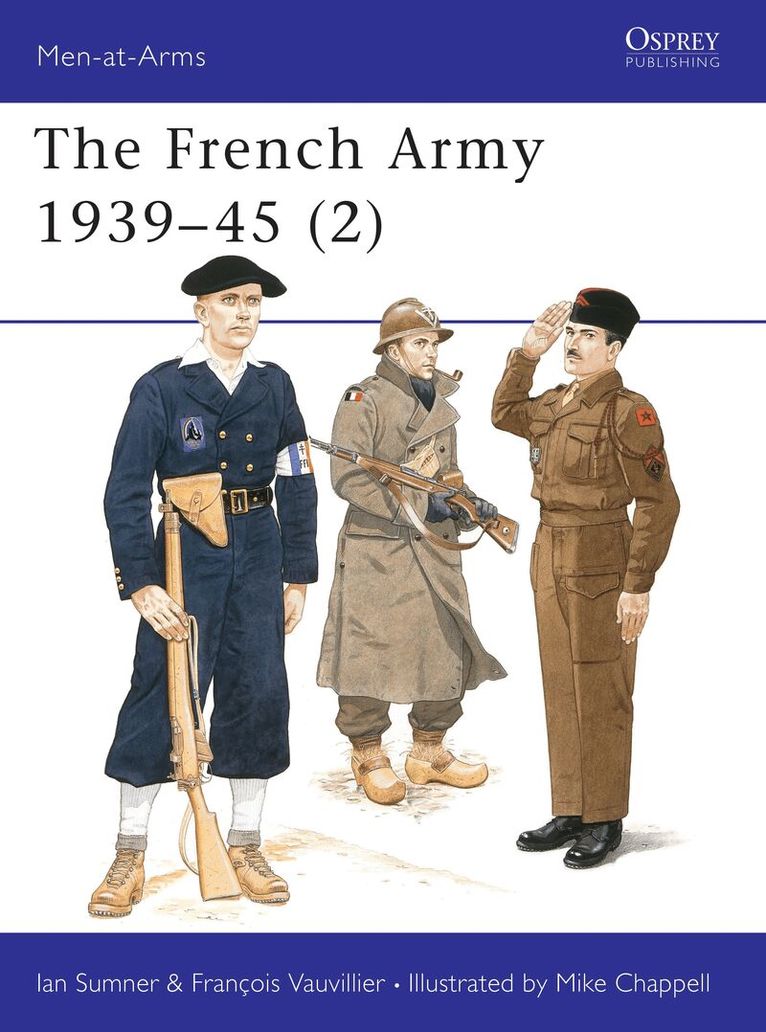
The Battle of France in May-June 1940 resulted in the French Army being outthought, outmanoeuvered and crushed. Despite being the most powerful land army in the world with huge reserves of manpower and some of the world's most modern and powerful tanks the French Army had lacked the flexibility to withstand the hammer-blows of the German Blitzkrieg. Those few thousand troops who were successfully evacuated supplemented by those individuals who managed to flee occupied territory began the task of rebuilding France's military might and pride under the inspirational leadership of de Gaulle. Many of those in occupied or Vichy territory refused to cooperate and began to fight back in their own way within the ranks of the Resistance. As the tide slowly turned re-equipped Free French Troops joined the fight combining with former Vichy units to fight in North Africa, Sicily, Italy and taking part in the liberation of France itself before helping to crush Nazy Germany. This second volume details the uniforms and equipment of the Free French forces which fought alongside the Allies to defeat Germany and liberate Western Europe.
163 kr
Skickas
The French air force of the First World War developed as fast as the British and German air forces, yet its history, and the enormous contribution it made to the eventual French victory, is often forgotten. So Ian Sumner's photographic history, which features almost 200 images, most of which have not been published before, is a fascinating and timely introduction to the subject. The fighter pilots, who usually dominate perceptions of the war in the air, play a leading role in the story, in particular the French aces, the small group of outstanding airmen whose exploits captured the publics imagination. Their fame, though, tends to distract attention from the ordinary unremembered airmen who formed the body of the air force throughout the war years. Ian Sumner tells their story too, as well as describing in a sequence of memorable photographs the less well-known branches of the service the bomber and reconnaissance pilots and the variety of primitive warplanes they flew.
175 kr
Skickas inom 10-15 vardagar
Advances in submarine warfare and air/sea tactics cost the Royal Navy dear in the early Atlantic, Mediterranean and Pacific campaigns, but the traditional professionalism of the pre-war regulars and the willingness of the Reserves and "hostilities only" recruits combined to win the battles of the Atlantic and Mediterranean. The navy went on to play a vital part in the sea-borne invasions to liberate Europe, and by 1945 was once more making a serious contribution to the war against Japan. This work comprehensively covers the full range of Royal Navy uniforms during World War II in colour. It explains the organization, duties and shipboard life of the wartime ships' companies, and traces the development of the Royal Navy from 1939 to the end of the war.
175 kr
Skickas inom 10-15 vardagar
The Indian divisions made a huge contribution to the British war effort in both World Wars, fighting in the trenches of the Western Front and in the Middle East in 1914-18, and in North Africa, Italy and Burma in 1939-45. This detailed text describes the developing organisation, uniforms and equipment of the Imperial and other regiments during the thirty years which saw them at the peak of their numbers and their combat service. Mike Chappell's meticulous colour plates illustrate a wide range of colourful and interesting dress and combat uniforms.
175 kr
Skickas inom 10-15 vardagar
In this first of a two-part sequence a respected vexillologist describes, explains and illustrates a wide variety of the standards and guidons carried during the 18th and 19th centuries by British Household, Regular, Yeomanry and Volunteer cavalry units.The successive regulations between 1747 and 1868 are supported by tables of 'ancient badges' and battle honours; by many examples of non-regulation practice (in the cavalier tradition of the British cavalry); and by ten dazzling plates by Richard Hook, detailing some 35 flags in full colour.
175 kr
Skickas inom 10-15 vardagar
The unique quality of the British Army over the centuries is credited in large part to its "regimental system" - the fostering of pride and a sense of continuity in the individual regiment. During the 18th and 19th centuries the regimental flag always played a central part in the furthering of the regimental legend; and the designs of those infantry colours tell a stirring story stretching back at least 250 years. Against their brightly-coloured backgrounds, each bears a unique combination of "ancient badges" and battle-honours recalling leaders and battlefields of long ago. This volume presents a comprehensive listing of all the regimental colours and standards between 1747 and 1881. The author is the Librarian of the Flag Institute.
175 kr
Skickas inom 10-15 vardagar
Many British commanders of World War II were veterans of the Great War and their attitudes to war were influenced by this and pre-war training and doctrine. This book examins these influences and the commanders' differing relationships with Churchill. The combat careers, personalities, uniforms, dress and appearance of key British commanders during World War II, including such famous leaders as Montgomery, Ramsey and Slim are all explored. Their wartime service and leadership is critically assessed in this detailed study, packed with contemporary pictures and full colour artworks showing their varied uniforms.
175 kr
Skickas inom 10-15 vardagar
175 kr
Skickas inom 10-15 vardagar
During World War One the French Army was in a state of disarray, plagued by indiscipline, mutinies and desertion. The ordinary French citizens that were called upon to defend their motherland - the Poilu - were disrespected and demoralized, and the infamous mutinies of 1917 by the Poilu were not protests against the war itself, but against how the war was conducted. Ian Sumner expertly charts the history of the Poilu, from the conscription of hundreds of thousands of men, through their training, to the horrors of the trenches and the fear of no man's land. Accompanied by new artwork and diagrams, this book provides a fascinating insight into the experiences of ordinary Frenchman called upon to defend their motherland.
Del 221 - Campaign
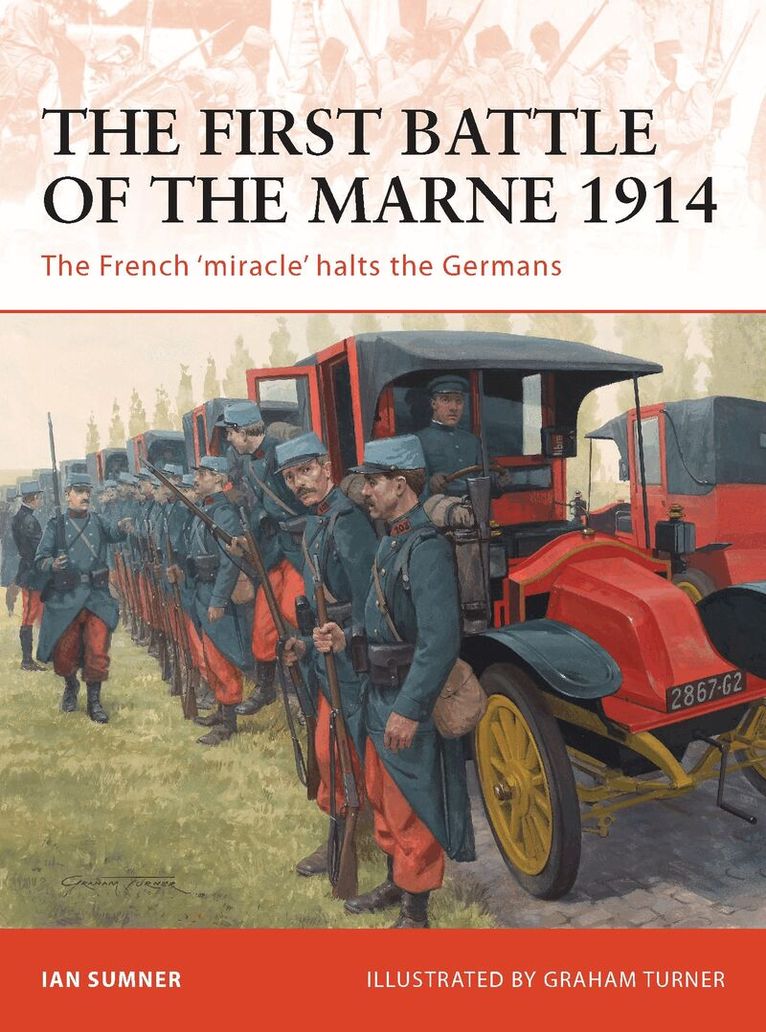
First Battle of the Marne 1914
The French ‘miracle’ halts the Germans
Häftad, Engelska, 2010
198 kr
Skickas inom 10-15 vardagar
A detailed, illustrated account of The First Battle of the Marne, which saved France from defeat in the First World War and led directly the establishment of the trenches.In 1914 the Germans launched an offensive that swept through Belgium and into France, threatening to crush French resistance in one fell swoop. However, through careful maneuvering and stubborn resistance, the French Army, aided by the BEF, blunted the assault, winning an important strategic victory that kept France in the war. This victory ensured that Germany would have to fight a two-front war, and the Western Front descended into the stalemate of trench warfare.One of the most important battles in the First World War, the First Battle of the Marne would be the last battle of maneuver to be seen on the Western Front for several years to come.
175 kr
Skickas inom 10-15 vardagar
This title explores the recruitment, training, and combat experiences of the famous ANZAC infantry in the opening years of World War I.When war broke out in 1914, men rushed to the colours even before their governments had formally offered troops to Britain. The decision to employ the ANZACs in the Dardanelles came as a complete surprise, but the events at the Anzac and Suvla beach-heads quickly revealed the discipline and bravery of the men involved. This book takes a close look at day-to-day life in the trenches of Gallipoli, and explores how the wounded were treated.The experience of Gallipoli had a profound effect on its survivors, and it continues to mark the psyche of the two nations down to the present day.
153 kr
Skickas inom 10-15 vardagar
Initially the strongest of all the Allied armies, France's metropolitan and colonial units bore the greatest burden during the first two years of the Great War, and made a great contribution to the final victory.In common with most European countries, the pre-war French Army was based on a system of national military service providing conscripts who could be subject to recall as reservists for several years after. However, the advent of war, the crisis in manpower, and the development of new tactics and weapons brought radical changes. The influence of these factors on the organisation, equipment, uniforms and tactics of the French Army during World War I is examined in detail in this concise text.
153 kr
Skickas inom 10-15 vardagar
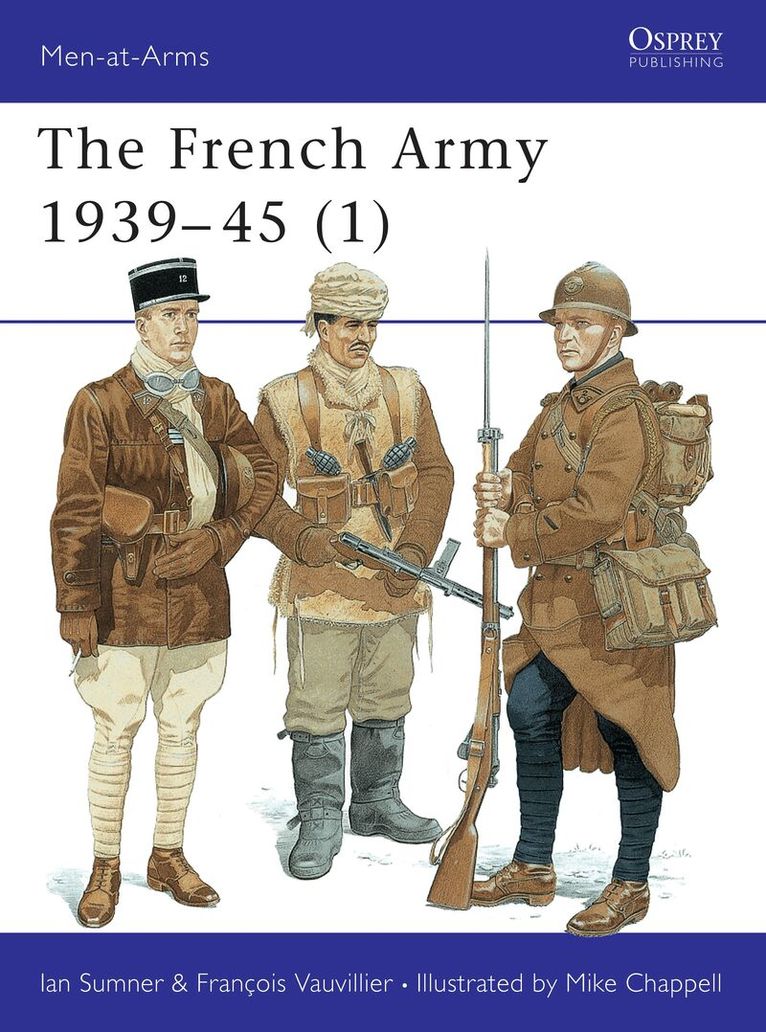
On paper at least the French army in 1939 was the most powerful land army in the world. Sheltered behind the fortifications of the Maginot line was an army which drew its troops from colonies and territories all over the world. It included spahis from algeria, calvary from Morocco, Chasseur Alpin from the high Vosges and some of the world's most modern and powerful tanks. The horrendous losses of the Great War had developed a psychological dependence on fortifications and a lack of flexibility in both tactics and strategy. It's officers were prepared to fight the positional warfare of 1914-18 not the 'Blitzkrieg' of 1940. This book, the first of a five volume set, looks at the uniforms, equipment and organisation of France's military forces during WW2. It details the French army on the eve of war and the troops which fought the "Phoney War", the campaign in Norway and the lightning invasion of France in May-June 1940. Also detailed are the forces of "Greater France" in North Africa, the Middle East and Indochina. Finally, it examines the army and armistice and Vichy France.
560 kr
Tillfälligt slut