Indra Levy - Böcker
Visar alla böcker från författaren Indra Levy. Handla med fri frakt och snabb leverans.
6 produkter
6 produkter
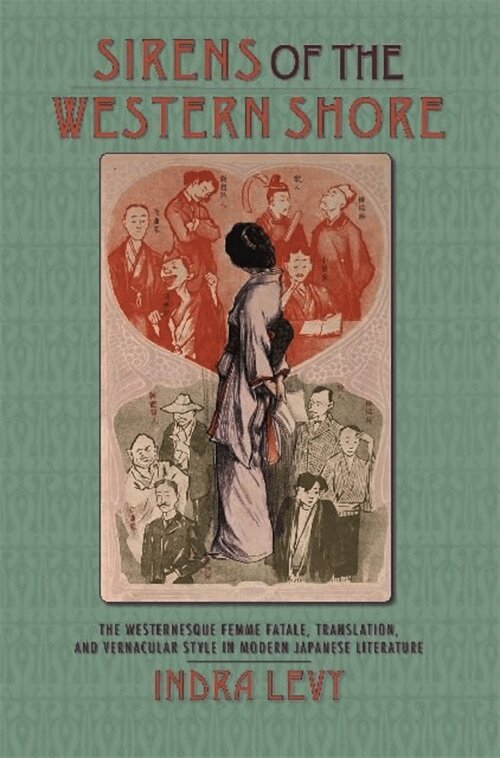
Sirens of the Western Shore
The Westernesque Femme Fatale, Translation, and Vernacular Style in Modern Japanese Literature
Inbunden, Engelska, 2006
1 280 kr
Skickas inom 7-10 vardagar
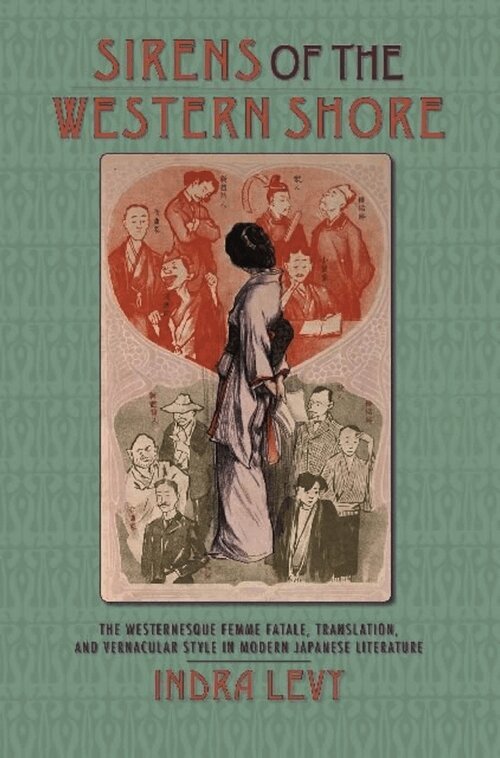
Indra Levy introduces a new archetype in the study of modern Japanese literature: the "Westernesque femme fatale," an alluring figure who is ethnically Japanese but evokes the West in her physical appearance, lifestyle, behavior, and, most important, her use of language. She played conspicuous roles in landmark works of modern Japanese fiction and theater. Levy traces the lineage of the Westernesque femme fatale from her first appearance in the vernacularist fiction of the late 1880s to her development in Naturalist fiction of the mid-1900s and, finally, to her spectacular embodiment by the modern Japanese actress in the early 1910s with the advent of Naturalist theater. In all cases the Westernesque femme fatale both attracts and confounds the self-consciously modern male intellectual through a convention-defying use of language. What does this sirenlike figure reveal about the central concerns of modern Japanese literature? Levy proposes that the Westernesque femme fatale be viewed as the hallmark of an intertextual exoticism that prizes the strange beauty of modern Western writing.By illuminating the exoticist impulses that gave rise to this archetype, Levy offers a new understanding of the relationships between vernacular style and translation, original and imitation, and writing and performance within a cross-cultural context. A seamless blend of narrative, performance, translation, and gender studies, this work will have a profound impact on the critical discourse on this formative period of modern Japanese literature.
Sirens of the Western Shore
The Westernesque Femme Fatale, Translation, and Vernacular Style in Modern Japanese Literature
Häftad, Engelska, 2010
326 kr
Skickas inom 7-10 vardagar
Indra Levy introduces a new archetype in the study of modern Japanese literature: the "Westernesque femme fatale," an alluring figure who is ethnically Japanese but evokes the West in her physical appearance, lifestyle, behavior, and, most important, her use of language. She played conspicuous roles in landmark works of modern Japanese fiction and theater. Levy traces the lineage of the Westernesque femme fatale from her first appearance in the vernacularist fiction of the late 1880s to her development in Naturalist fiction of the mid-1900s and, finally, to her spectacular embodiment by the modern Japanese actress in the early 1910s with the advent of Naturalist theater. In all cases the Westernesque femme fatale both attracts and confounds the self-consciously modern male intellectual through a convention-defying use of language. What does this sirenlike figure reveal about the central concerns of modern Japanese literature? Levy proposes that the Westernesque femme fatale be viewed as the hallmark of an intertextual exoticism that prizes the strange beauty of modern Western writing.By illuminating the exoticist impulses that gave rise to this archetype, Levy offers a new understanding of the relationships between vernacular style and translation, original and imitation, and writing and performance within a cross-cultural context. A seamless blend of narrative, performance, translation, and gender studies, this work will have a profound impact on the critical discourse on this formative period of modern Japanese literature.
2 490 kr
Skickas inom 10-15 vardagar
The role of translation in the formation of modern Japanese identities has become one of the most exciting new fields of inquiry in Japanese studies. This book marks the first attempt to establish the contours of this new field, bringing together seminal works of Japanese scholarship and criticism with cutting-edge English-language scholarship. Collectively, the contributors to this book address two critical questions: 1) how does the conception of modern Japan as a culture of translation affect our understanding of Japanese modernity and its relation to the East/West divide? and 2) how does the example of a distinctly East Asian tradition of translation affect our understanding of translation itself? The chapter engage a wide array of disciplines, perspectives, and topics from politics to culture, the written language to visual culture, scientific discourse to children's literature and the Japanese conception of a national literature.Translation in Modern Japan will be of huge interest to a diverse readership in both Japanese studies and translation studies as well as students and scholars of the theory and practice of Japanese literary translation, traditional and modern Japanese history and culture, and Japanese women’s studies.
932 kr
Skickas inom 10-15 vardagar
The role of translation in the formation of modern Japanese identities has become one of the most exciting new fields of inquiry in Japanese studies. This book marks the first attempt to establish the contours of this new field, bringing together seminal works of Japanese scholarship and criticism with cutting-edge English-language scholarship. Collectively, the contributors to this book address two critical questions: 1) how does the conception of modern Japan as a culture of translation affect our understanding of Japanese modernity and its relation to the East/West divide? and 2) how does the example of a distinctly East Asian tradition of translation affect our understanding of translation itself? The chapter engage a wide array of disciplines, perspectives, and topics from politics to culture, the written language to visual culture, scientific discourse to children's literature and the Japanese conception of a national literature.Translation in Modern Japan will be of huge interest to a diverse readership in both Japanese studies and translation studies as well as students and scholars of the theory and practice of Japanese literary translation, traditional and modern Japanese history and culture, and Japanese women’s studies.
2 490 kr
Skickas inom 10-15 vardagar
The role of translation in the formation of modern Japanese identities has become one of the most exciting new fields of inquiry in Japanese studies. This book marks the first attempt to establish the contours of this new field, bringing together seminal works of Japanese scholarship and criticism with cutting-edge English-language scholarship. Collectively, the contributors to this book address two critical questions: 1) how does the conception of modern Japan as a culture of translation affect our understanding of Japanese modernity and its relation to the East/West divide? and 2) how does the example of a distinctly East Asian tradition of translation affect our understanding of translation itself? The chapter engage a wide array of disciplines, perspectives, and topics from politics to culture, the written language to visual culture, scientific discourse to children's literature and the Japanese conception of a national literature.Translation in Modern Japan will be of huge interest to a diverse readership in both Japanese studies and translation studies as well as students and scholars of the theory and practice of Japanese literary translation, traditional and modern Japanese history and culture, and Japanese women’s studies.
Sirens of the Western Shore
The Westernesque Femme Fatale, Translation, and Vernacular Style in Modern Japanese Literature
Inbunden, Ryska, 2025
367 kr
Skickas inom 5-8 vardagar
Индра Леви вводит в исследование японской литературы новый образ — «роковую женщину западного типа»: героиню, этнически японскую, но «западную» с точки зрения внешности, манер, стиля жизни и речи. Такие персонажи занимают заметное место в ключевых произведениях японской прозы и театра конца XIX — начала XX века. Леви прослеживает эволюцию этого образа — от первых появлений в прозе 1880-х годов до его расцвета в натуралистическом театре 1910-х. «Западная роковая женщина» одновременно притягивала и дезориентировала современного японского интеллектуала, нарушая устоявшиеся литературные и языковые нормы.Автор предлагает рассматривать этот образ как символ интертекстуального экзотизма — стремления к чуждому и прекрасному, к эстетике Запада. Анализируя этот феномен, книга Леви заново осмысливает взаимосвязи между оригиналом и переводом, речью и сценой, локальной традицией и западным влиянием — открывая новые перспективы в понимании становления современной японской литературы.