Ingeborg Majer O'Sickey - Böcker
Visar alla böcker från författaren Ingeborg Majer O'Sickey. Handla med fri frakt och snabb leverans.
2 produkter
2 produkter
341 kr
Skickas inom 11-20 vardagar
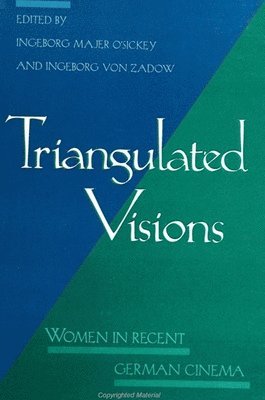
This broad-ranging collection, the first of its kind, gathers essays on the representation of women in recent German cinema, as well as recent interviews with German women filmmakers.This book illuminates some of the challenges feminist German filmmakers face and offers original insights into their filmmaking practices. It considers the intersections of race, ethnicity, gender, class, and sexuality as these are cinematically represented, and discusses narrative, documentary, "art," and essay films from both West and East Germany before and after unification. Several essays treat films by well-known filmmakers, including R.W. Fassbinder, Jutta Brückner, Ulrike Ottinger, Helke Sander, Helma Sanders-Brahms, Monika Treut, and Wim Wenders in ways that challenge the limits of major critical approaches in feminist film criticism today. Importantly, Triangulated Visions also offers suggestive and original analyses of works by filmmakers who, until now, have not received much scholarly treatment.
560 kr
Skickas inom 10-15 vardagar
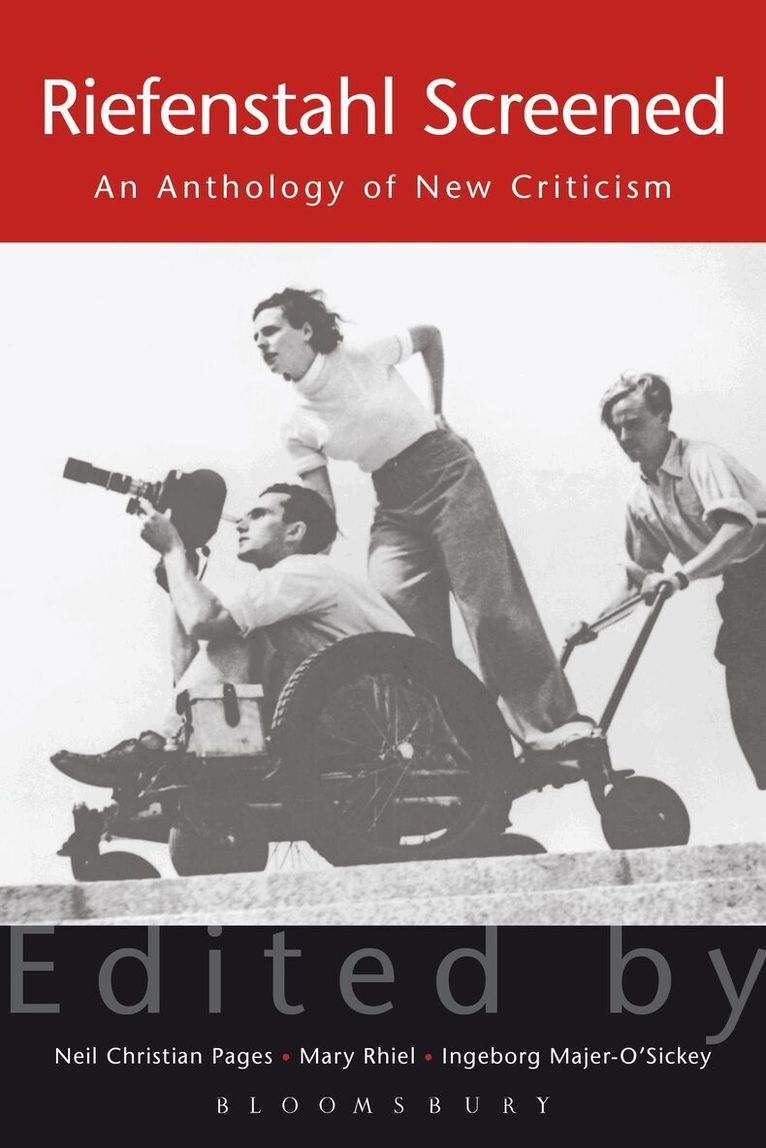
"Screening Riefenstahl" offers an opportunity to rethink the place of Leni Riefenstahl and her work in contemporary culture and in academic discourse.Leni Riefenstahl is larger than life. From the lure of her persona as it enters our homes via television to our pleasure in the recognition of film images at rock concerts, to her place as part of the history of the Nazi period, Riefenstahl lives on in our imagination and in our cultural productions. Thus, the editors' introduction to this volume examines the manner in which Riefenstahl 'haunts' debates on aesthetics and politics, and how her legacy reverberates in the contemporary cultural scene. The essays that follow explore our highly invested discursive struggles over the meaning of her persona and films in this particular historical moment: post-unification, post-twentieth century, post-Riefenstahl.The editors view the collection as a three-part framework. The essays in the opening section of the book show that Riefenstahl is still very much alive and well - and controversial - in popular culture.Fair game for the contemporary memory work, she is part of productions on the History Channel; her images provide inspiration for bands like Rammstein. Her films continue to determine the way in which we think about the Nazi period, providing instantly recognizable images and messages that often go unquestioned.We cannot separate these phenomena from Riefenstahl's years of avid self-fashioning. With that fact in mind, the second section of the book offers treatments of the shifting, mobile relationship between Riefenstahl's stubborn attempts to create and control her personae and her reactions to others' re-appropriations of the meanings of her life and work. Reading the texts and discourses surrounding 'Riefenstahl', these scholars treat her memories - and her repeated assertions about herself - as a springboard into understanding anew how we might approach her films in a productive way.The closing section of the volume comprises essays that go right to the heart of the matter: Riefenstahl's films and photography.The new contexts, theoretical discussions and emerging discourses that animate these essays include Scarry's treatise on beauty, justice and the global, the problems of history and memory, the place of Riefenstahl's filmmaking technique in contemporary cinema, and her appropriation of German musical traditions, to name only some of the critical trajectories addressed in these contributions.Fueled by the work of a diverse range of scholars, then, It insists upon a critical self-examination that maps a topography of how scholars and teachers avail themselves of Riefenstahl's corpus.