Ioannis Iglezakis – författare
2 361 kr
Skickas inom 5-8 vardagar
2 770 kr
Läs direkt efter köp
2 770 kr
Läs direkt efter köp
2 693 kr
Läs direkt efter köp
2 260 kr
Skickas inom 5-8 vardagar
2 770 kr
Läs direkt efter köp
963 kr
Skickas inom 5-8 vardagar
813 kr
Läs direkt efter köp
813 kr
Läs direkt efter köp
1 602 kr
Skickas inom 5-8 vardagar
1 359 kr
Läs direkt efter köp
This updated edition of a well-known comprehensive analysis of the criminalization of cyberattacks adds important new guidance to the legal framework on cybercrime, reflecting new legislation, technological developments, and the changing nature of cybercrime itself. The focus is not only on criminal law aspects but also on issues of data protection, jurisdiction, electronic evidence, enforcement, and digital forensics. It provides a thorough analysis of the legal regulation of attacks against information systems in the European, international, and comparative law contexts.
Among the new and continuing aspects of cybersecurity covered are the following:
the conflict of cybercrime investigation and prosecution with fundamental rights to privacy and freedom of expression; the 2016 Directive on security of network and information systems (NIS Directive); the General Data Protection Regulation (GDPR); the role of national computer security incident response teams (CSIRTs); the European Union (EU) response to new technologies involving payment instruments, including virtual currencies and digital wallets; the EU Commission’s legislative proposals to enhance cross-border gathering of electronic evidence; internet service providers’ role in fighting cybercrime; measures combatting identity theft, spyware, and malware; states and legal persons as perpetrators of cybercrime; and the security and data breach notification as a compliance and transparency tool.Technical definitions, case laws, and analysis of both substantive law and procedural law contribute to a comprehensive understanding of cybercrime regulation and its current evolution in practice.
Addressing a topic of growing importance in unprecedented detail, this new edition of a much-relied-upon resource will be welcomed by professionals and authorities dealing with cybercrime, including lawyers, judges, academics, security professionals, information technology experts, and law enforcement agencies.
1 312 kr
Läs direkt efter köp
This updated edition of a well-known comprehensive analysis of the criminalization of cyberattacks adds important new guidance to the legal framework on cybercrime, reflecting new legislation, technological developments, and the changing nature of cybercrime itself. The focus is not only on criminal law aspects but also on issues of data protection, jurisdiction, electronic evidence, enforcement, and digital forensics. It provides a thorough analysis of the legal regulation of attacks against information systems in the European, international, and comparative law contexts.
Among the new and continuing aspects of cybersecurity covered are the following:
the conflict of cybercrime investigation and prosecution with fundamental rights to privacy and freedom of expression; the 2016 Directive on security of network and information systems (NIS Directive); the General Data Protection Regulation (GDPR); the role of national computer security incident response teams (CSIRTs); the European Union (EU) response to new technologies involving payment instruments, including virtual currencies and digital wallets; the EU Commission’s legislative proposals to enhance cross-border gathering of electronic evidence; internet service providers’ role in fighting cybercrime; measures combatting identity theft, spyware, and malware; states and legal persons as perpetrators of cybercrime; and the security and data breach notification as a compliance and transparency tool.Technical definitions, case laws, and analysis of both substantive law and procedural law contribute to a comprehensive understanding of cybercrime regulation and its current evolution in practice.
Addressing a topic of growing importance in unprecedented detail, this new edition of a much-relied-upon resource will be welcomed by professionals and authorities dealing with cybercrime, including lawyers, judges, academics, security professionals, information technology experts, and law enforcement agencies.
1 438 kr
Skickas inom 5-8 vardagar
1 177 kr
Läs direkt efter köp
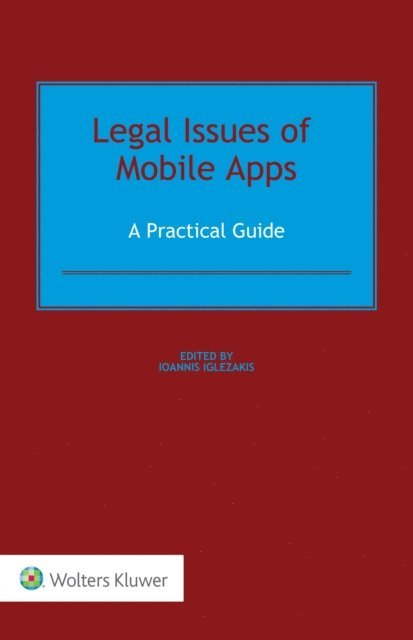
In less than ten years touchscreen smartphones and their apps have created an unprecedented technological revolution. Yet they are rife with serious potential for breaches of privacy and security, and a lack of uniform rules makes navigation of the legal landscape extremely difficult. Addressing this unstable regulatory environment, this concise, practical guide for the first time provides a measure of legal certainty. It examines case law and legislation in Europe and the United States to highlight the rights and obligations of all actors involved in the marketing of mobile apps, bring to light essential principles and recommend some viable solutions.
Nine experts, all versed in the latest developments in international and national laws and regulations affecting digital mobile technology, examine such key topics as the following:
contract law as applied to the sale and use of smartphone apps; intellectual property rights in mobile apps; protection of users; data protection; European Union (EU) medical device legislation and its safety implications for app users; fitness or wellness apps; apps’ collection of personal data; apps as hostile code and malware delivery mechanisms; competition law issues; taxation of mobile apps; liability issues for app developers and distributors; and implications of the EU’s new regulatory framework on online platforms.Because it is difficult for a basic user to understand how vulnerable everyday apps can be, and because every new information technology platform delivers new risks along with its benefits, legal practitioners working in a wide variety of fields will be increasingly called upon to engage with both personal and enterprise security and privacy breach cases arising from the use of mobile apps. This deeply informed practical analysis goes a long way toward ensuring appropriate handling of legal issues which arise in the mobile app context. Every practitioner, government official and software developer will welcome this much-needed volume.
1 219 kr
Läs direkt efter köp
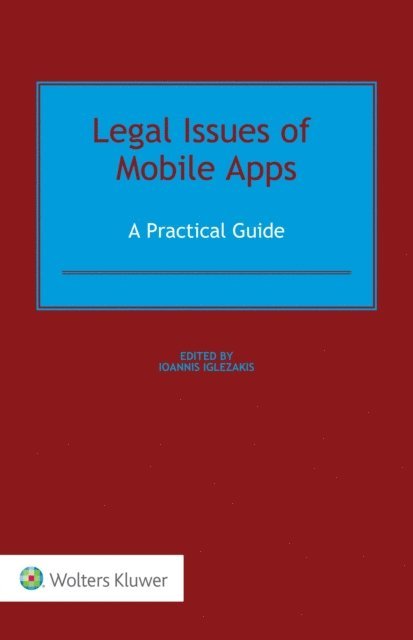
In less than ten years touchscreen smartphones and their apps have created an unprecedented technological revolution. Yet they are rife with serious potential for breaches of privacy and security, and a lack of uniform rules makes navigation of the legal landscape extremely difficult. Addressing this unstable regulatory environment, this concise, practical guide for the first time provides a measure of legal certainty. It examines case law and legislation in Europe and the United States to highlight the rights and obligations of all actors involved in the marketing of mobile apps, bring to light essential principles and recommend some viable solutions.
Nine experts, all versed in the latest developments in international and national laws and regulations affecting digital mobile technology, examine such key topics as the following:
contract law as applied to the sale and use of smartphone apps; intellectual property rights in mobile apps; protection of users; data protection; European Union (EU) medical device legislation and its safety implications for app users; fitness or wellness apps; apps’ collection of personal data; apps as hostile code and malware delivery mechanisms; competition law issues; taxation of mobile apps; liability issues for app developers and distributors; and implications of the EU’s new regulatory framework on online platforms.Because it is difficult for a basic user to understand how vulnerable everyday apps can be, and because every new information technology platform delivers new risks along with its benefits, legal practitioners working in a wide variety of fields will be increasingly called upon to engage with both personal and enterprise security and privacy breach cases arising from the use of mobile apps. This deeply informed practical analysis goes a long way toward ensuring appropriate handling of legal issues which arise in the mobile app context. Every practitioner, government official and software developer will welcome this much-needed volume.
996 kr
Skickas inom 5-8 vardagar
841 kr
Läs direkt efter köp
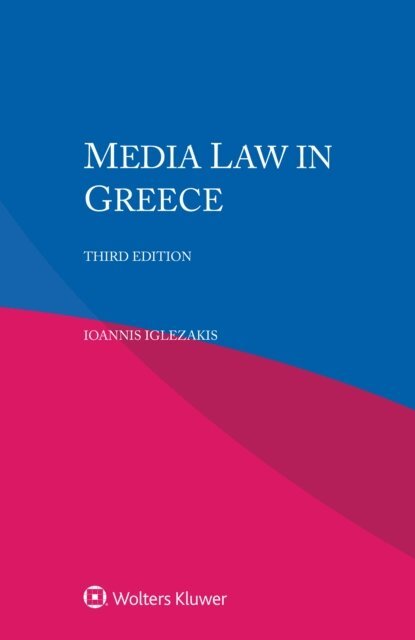
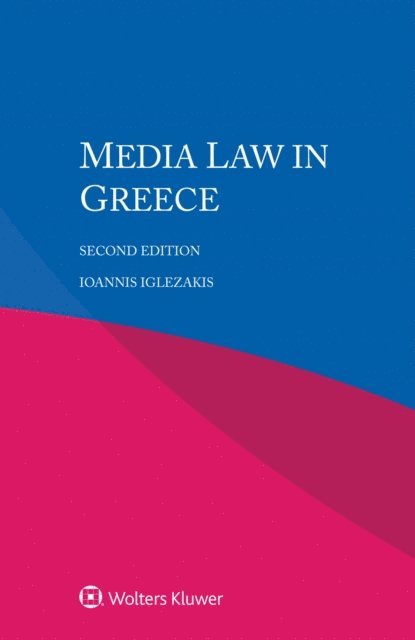
Derived from the renowned multi-volume International Encyclopaedia of Laws, this analysis of media law in Greece surveys the massively altered and enlarged legal landscape traditionally encompassed in laws pertaining to freedom of expression and regulation of communications. Everywhere, a shift from mass media to mass self-communication has put enormous pressure on traditional law models.
An introduction describing the main actors and salient aspects of media markets is followed by in-depth analyses of print media, radio and television broadcasting, the Internet, commercial communications, political advertising, concentration in media markets, and media regulation. Among the topics that arise for discussion are privacy, cultural policy, protection of minors, competition policy, access to digital gateways, protection of journalists’ sources, standardization and interoperability, and liability of intermediaries. Relevant case law is considered throughout, as are various ethical codes.
A clear, comprehensive overview of media legislation, case law, and doctrine, presented from the practitioner’s point of view, this book is a valuable time-saving resource for all concerned with media and communication freedom. Lawyers representing parties with interests in Greece will welcome this very useful guide, and academics and researchers will appreciate its value in the study of comparative media law.
841 kr
Läs direkt efter köp
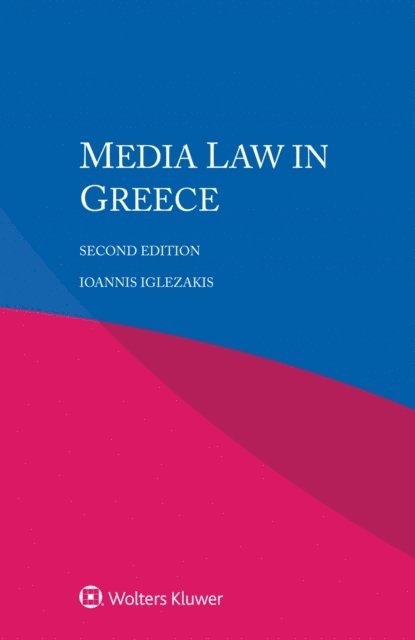
Derived from the renowned multi-volume International Encyclopaedia of Laws, this analysis of media law in Greece surveys the massively altered and enlarged legal landscape traditionally encompassed in laws pertaining to freedom of expression and regulation of communications. Everywhere, a shift from mass media to mass self-communication has put enormous pressure on traditional law models.
An introduction describing the main actors and salient aspects of media markets is followed by in-depth analyses of print media, radio and television broadcasting, the Internet, commercial communications, political advertising, concentration in media markets, and media regulation. Among the topics that arise for discussion are privacy, cultural policy, protection of minors, competition policy, access to digital gateways, protection of journalists’ sources, standardization and interoperability, and liability of intermediaries. Relevant case law is considered throughout, as are various ethical codes.
A clear, comprehensive overview of media legislation, case law, and doctrine, presented from the practitioner’s point of view, this book is a valuable time-saving resource for all concerned with media and communication freedom. Lawyers representing parties with interests in Greece will welcome this very useful guide, and academics and researchers will appreciate its value in the study of comparative media law.
865 kr
Skickas inom 5-8 vardagar
1 232 kr
Tillfälligt slut