Iqbal Singh Sevea – författare
Visar alla böcker från författaren Iqbal Singh Sevea. Handla med fri frakt och snabb leverans.
4 produkter
4 produkter
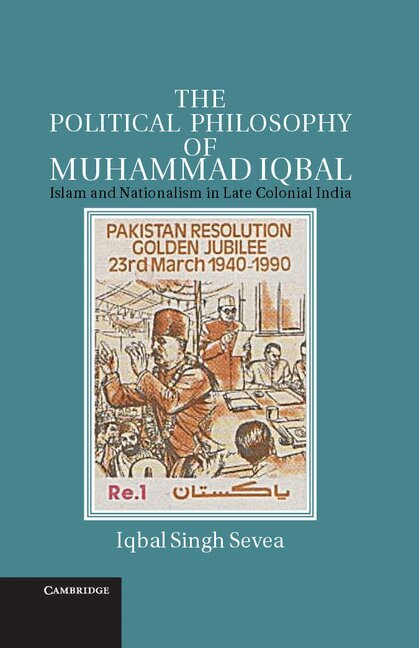
The Political Philosophy of Muhammad Iqbal
Islam and Nationalism in Late Colonial India
Inbunden, Engelska, 2012
1 245 kr
Skickas inom 7-10 vardagar
This book reflects upon the political philosophy of Muhammad Iqbal, a towering intellectual figure in South Asian history, revered by many for his poetry and his thought. He lived in India in the twilight years of the British Empire and, apart from a short but significant period studying in the West, he remained in Punjab until his death in 1938. The book studies Iqbal's critique of nationalist ideology and his attempts to chart a path for the development of the 'nation' by liberating it from the centralizing and homogenizing tendencies of the modern state structure. Iqbal frequently clashed with his contemporaries over his view of nationalism as 'the greatest enemy of Islam'. He constructed his own particular interpretation of Islam - forged through an interaction with Muslim thinkers and Western intellectual traditions - that was ahead of its time, and since his death both modernists and Islamists have continued to champion his legacy.
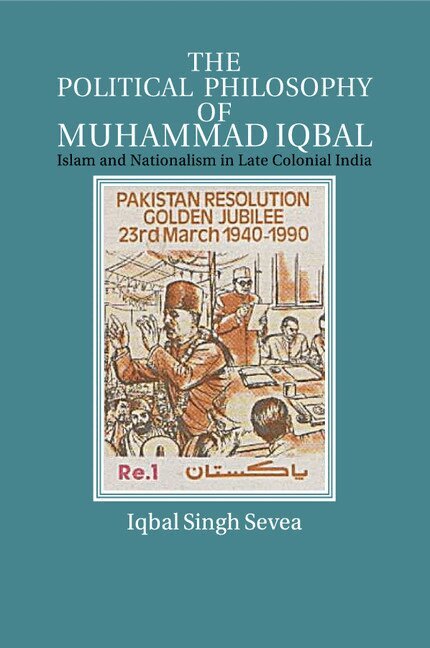
The Political Philosophy of Muhammad Iqbal
Islam and Nationalism in Late Colonial India
Häftad, Engelska, 2017
428 kr
Skickas inom 7-10 vardagar
This book reflects upon the political philosophy of Muhammad Iqbal, a towering intellectual figure in South Asian history, revered by many for his poetry and his thought. He lived in India in the twilight years of the British Empire and, apart from a short but significant period studying in the West, he remained in Punjab until his death in 1938. The book studies Iqbal's critique of nationalist ideology and his attempts to chart a path for the development of the 'nation' by liberating it from the centralizing and homogenizing tendencies of the modern state structure. Iqbal frequently clashed with his contemporaries over his view of nationalism as 'the greatest enemy of Islam'. He constructed his own particular interpretation of Islam - forged through an interaction with Muslim thinkers and Western intellectual traditions - that was ahead of its time, and since his death both modernists and Islamists have continued to champion his legacy.
278 kr
Kommande
1 174 kr
Kommande
In celebration of its 20th anniversary, the Institute of South Asian Studies (ISAS) at the National University of Singapore presents a milestone publication that examines important facets of contemporary South Asia. The region is increasingly important in the evolving global geopolitical and geoeconomic order. The region is home to some of the fastest-growing economies, a young population, and expanding digital infrastructure. Furthermore, the significance of the region has been accentuated by geopolitical reconfigurations and escalating contestations for influence in the Indian Ocean. At the same time, the South Asian countries continue to grapple with a multifaceted array of challenges. These range from internal ideological contestations and high rates of inflation to the urgent need to mitigate the impact of climate change. The diversity of the region underscores the complexity of these challenges. Apart from providing well researched insights into the state of play in contemporary South Asia, this book draws attention to the complexities of South Asia as well as the opportunities and challenges that lie ahead for the countries of the region.This publication is structured around five key themes: geopolitics and international relations; trade and economics; domestic politics; human development; and climate change. While structured along these themes, the book adopts an interdisciplinary approach. Such an approach is crucial for a critical understanding of a region that is as socio-economically, geographically, culturally, ideologically, and politically diverse as South Asia. This book also covers all the eight countries of contemporary South Asia: Afghanistan, Bangladesh, Bhutan, India, the Maldives, Nepal, Pakistan, and Sri Lanka. Each chapter in this book takes a deep dive into a specific topic. It brings together internationally renowned scholars and policymakers to study issues ranging from the state of democracy in South Asia and entrepreneurship in South Asia to the evolution of South Asia's relations with powers like the United States and China. Overall, this publication also draws attention to the links between South and Southeast Asia (financial, digital, and the blue economy).This book is a testament to ISAS' commitment to scholarly excellence and its enduring role as a thought leader in the understanding of contemporary South Asia.As ISAS celebrates its 20th anniversary, this book is viewed as an important means of not only presenting detailed analyses of key topics but also as a medium to encourage readers to immerse themselves in the diverse interplay of geopolitics, economics, politics, human development, and environmental sustainability.