Irena E. Kotowska – författare
Visar alla böcker från författaren Irena E. Kotowska. Handla med fri frakt och snabb leverans.
6 produkter
6 produkter
Inbunden, Engelska, 2008
1 633 kr
Skickas inom 10-15 vardagar
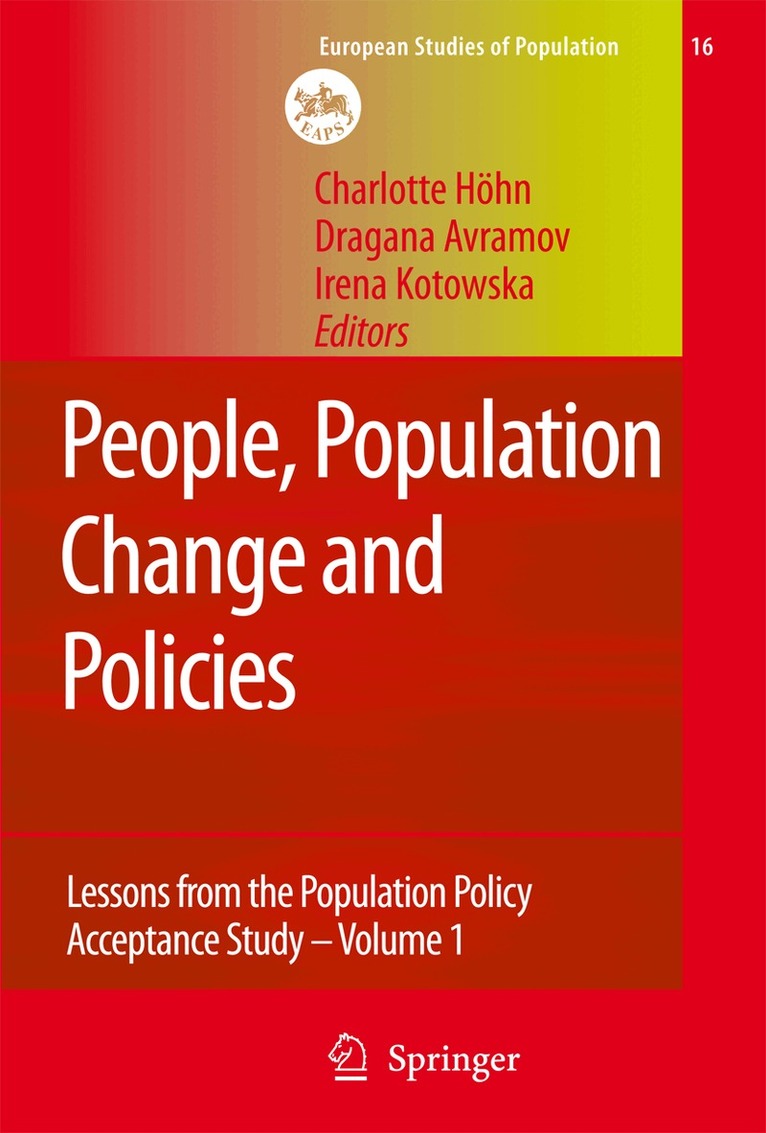
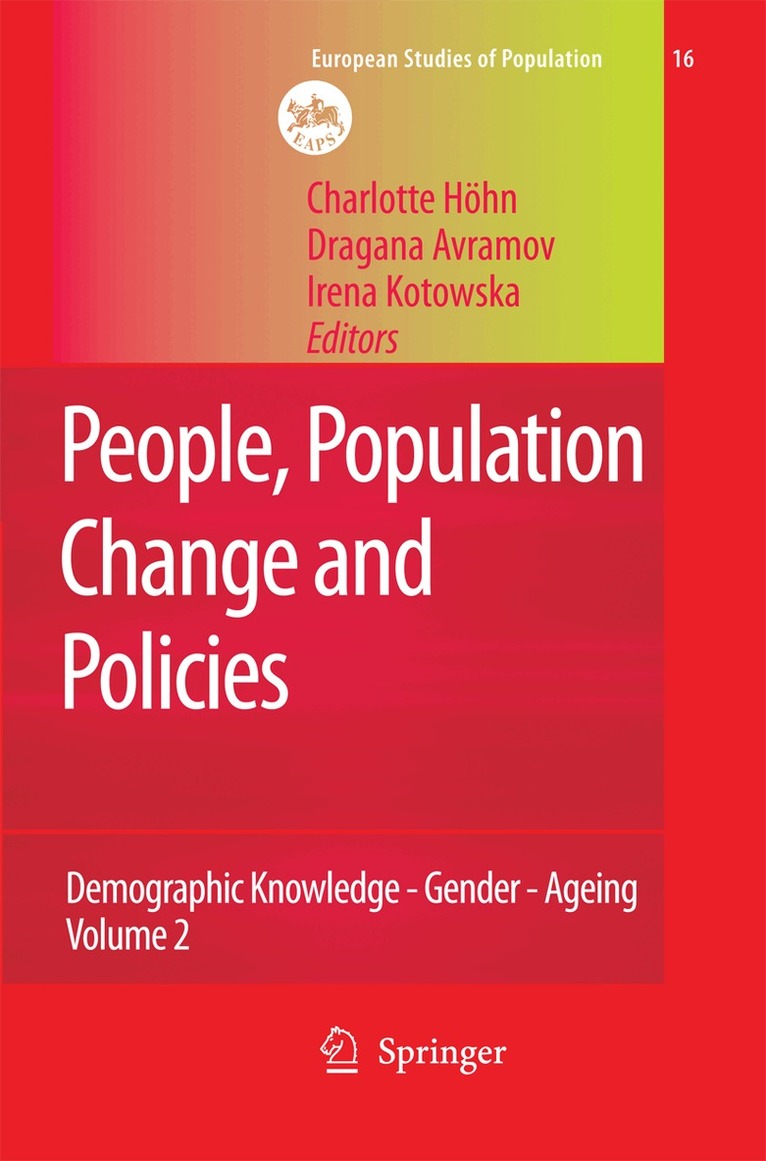
This two-volume work explores social cohesion and the demographic challenges of low birth rates and population aging. Authors approach the topic from the perspective of citizens and policymakers, analyzing attitudes from 14 European countries on demographic trends and expectations towards private networks and public policies. Volume 2 focuses on family and family change, value of children, fertility intentions, and views on work-family balance.
E-bok
PDF, Engelska, 20081 977 kr
Läs direkt efter köp
1 925 kr
Skickas inom 10-15 vardagar
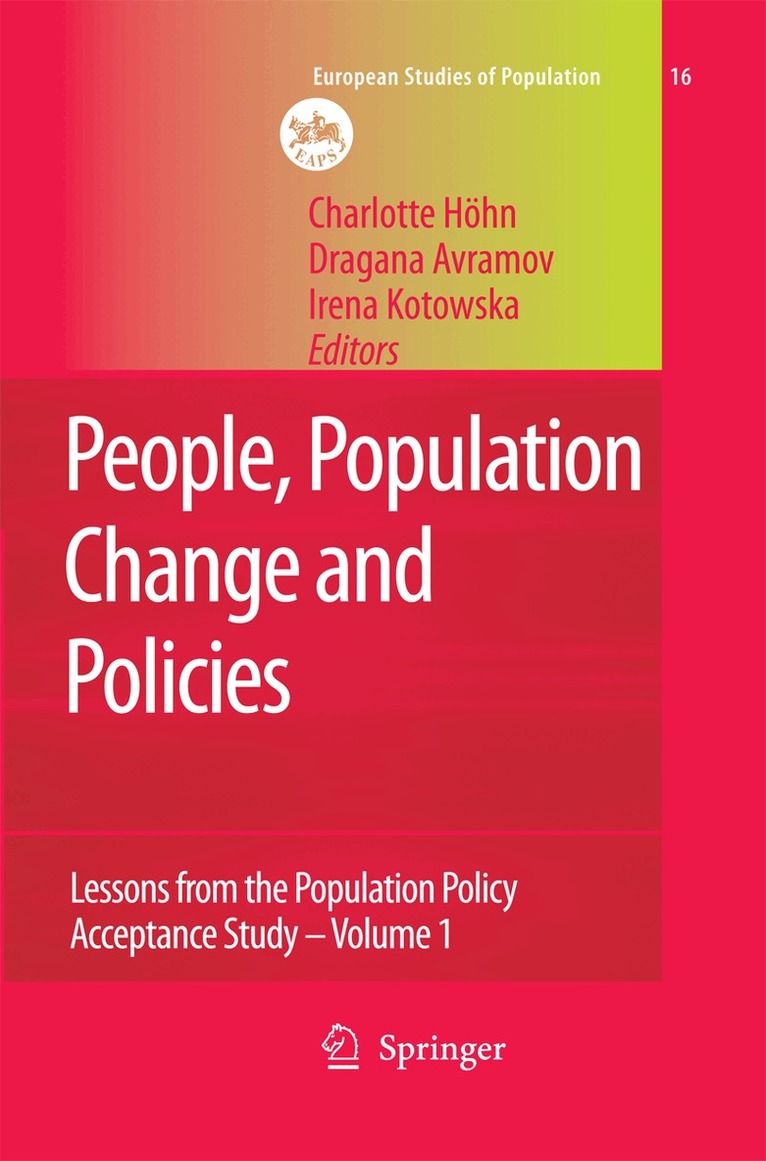
European countries, including the DIALOG countries, have faced a major de- graphic change and transition in the last thirty years. They are experiencing lo- term downward trends in fertility, leading to demographic ageing. Fertility rates are now below replacement level in nearly all countries. As a result, natural p- ulation growth rates are starting to decline, or population sizes are falling o- right. At the same time, the proportion of elderly dependants continues to grow while the working-age population declines in absolute and relative terms (see Kontula and Miettinen 2005). Moreover, net immigration, which potentially could offset declines in working-age population, remains generally low in most European countries (Grant et al. 2004). There are a great number of societal problems that arise from this demographic transition. The International Monetary Fund (2004) argues that the impact of - coming demographic changes on economical growth could be substantial. The h- toric association between demographicand macro-economicvariablessuggests that the projected increase in elderly dependency ratios and the projected decline in the share of the working-age population could result in slower per capita GDP growth, and lower saving and investment (IMF 2004, 147). For example, the estimates s- gest that demographic change could reduce annual real per capita GDP growth in 1 1 advanced countries by an average of / % point by 2050, i. e. , growth would be / % 2 2 point lower than if the demographic structure had remained the same as in 2000 (IMF 2004, 147).
E-bok
PDF, Engelska, 20081 977 kr
Läs direkt efter köp
European countries, including the DIALOG countries, have faced a major de- graphic change and transition in the last thirty years. They are experiencing lo- term downward trends in fertility, leading to demographic ageing. Fertility rates are now below replacement level in nearly all countries. As a result, natural p- ulation growth rates are starting to decline, or population sizes are falling o- right. At the same time, the proportion of elderly dependants continues to grow while the working-age population declines in absolute and relative terms (see Kontula and Miettinen 2005). Moreover, net immigration, which potentially could offset declines in working-age population, remains generally low in most European countries (Grant et al. 2004). There are a great number of societal problems that arise from this demographic transition. The International Monetary Fund (2004) argues that the impact of - coming demographic changes on economical growth could be substantial. The h- toric association between demographicand macro-economicvariablessuggests that the projected increase in elderly dependency ratios and the projected decline in the share of the working-age population could result in slower per capita GDP growth, and lower saving and investment (IMF 2004, 147). For example, the estimates s- gest that demographic change could reduce annual real per capita GDP growth in 1 1 advanced countries by an average of / % point by 2050, i. e. , growth would be / % 2 2 point lower than if the demographic structure had remained the same as in 2000 (IMF 2004, 147).
Häftad, Engelska, 2014
1 634 kr
Skickas inom 10-15 vardagar
European countries, including the DIALOG countries, have faced a major de- graphic change and transition in the last thirty years. They are experiencing lo- term downward trends in fertility, leading to demographic ageing. Fertility rates are now below replacement level in nearly all countries. As a result, natural p- ulation growth rates are starting to decline, or population sizes are falling o- right. At the same time, the proportion of elderly dependants continues to grow while the working-age population declines in absolute and relative terms (see Kontula and Miettinen 2005). Moreover, net immigration, which potentially could offset declines in working-age population, remains generally low in most European countries (Grant et al. 2004). There are a great number of societal problems that arise from this demographic transition. The International Monetary Fund (2004) argues that the impact of - coming demographic changes on economical growth could be substantial. The h- toric association between demographicand macro-economicvariablessuggests that the projected increase in elderly dependency ratios and the projected decline in the share of the working-age population could result in slower per capita GDP growth, and lower saving and investment (IMF 2004, 147). For example, the estimates s- gest that demographic change could reduce annual real per capita GDP growth in 1 1 advanced countries by an average of / % point by 2050, i. e. , growth would be / % 2 2 point lower than if the demographic structure had remained the same as in 2000 (IMF 2004, 147).
Häftad, Engelska, 2014
1 634 kr
Skickas inom 10-15 vardagar
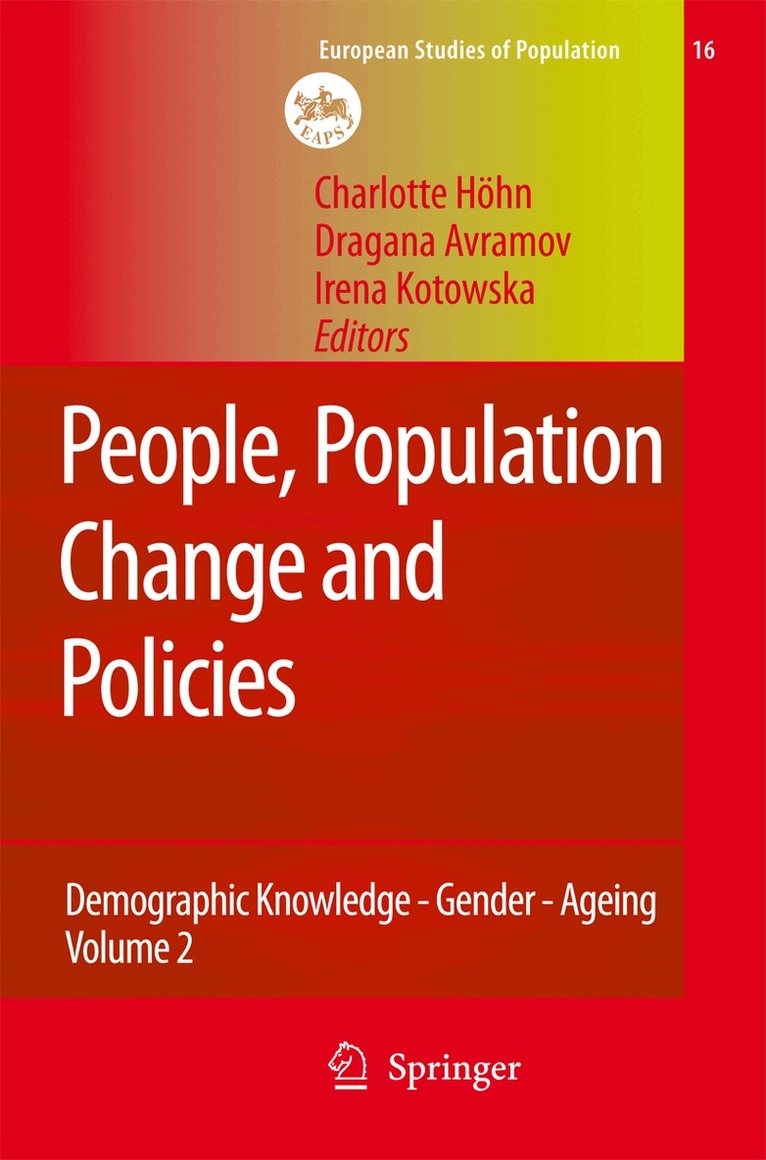
This two-volume work explores social cohesion and the demographic challenges of low birth rates and population aging. Authors approach the topic from the perspective of citizens and policymakers, analyzing attitudes from 14 European countries on demographic trends and expectations towards private networks and public policies. Volume 2 focuses on family and family change, value of children, fertility intentions, and views on work-family balance.