Irving Lewis Allen – författare
Visar alla böcker från författaren Irving Lewis Allen. Handla med fri frakt och snabb leverans.
4 produkter
4 produkter
E-bok
Engelska, 1995189 kr
Läs direkt efter köp
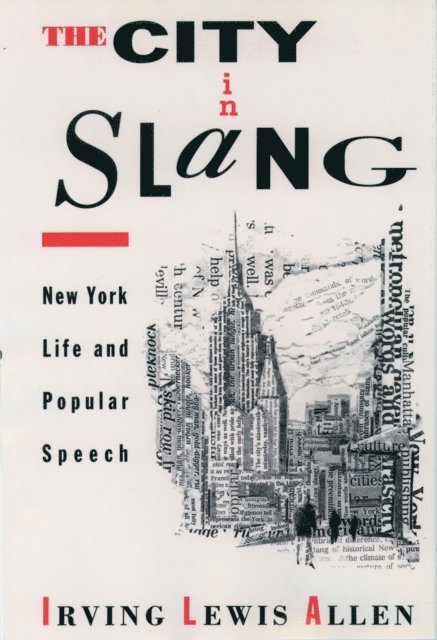
The American urban scene, and in particular New York''s, has given us a rich cultural legacy of slang words and phrases, a bonanza of popular speech. Hot dog, rush hour, butter-and-egg man, gold digger, shyster, buttinsky, smart aleck, sidewalk superintendent, yellow journalism, breadline, straphanger, tar beach, the Tenderloin, the Great White Way, to do a Brodie--these are just a few of the hundreds of popular words and phrases that were born or took on new meaning in the streets of New York. In The City in Slang, Irving Lewis Allen traces this flowering of popular expressions that accompanied the emergence of the New York metropolis from the early nineteenth century down to the present. This unique account of the cultural and social history of America''s greatest city provides in effect a lexicon of popular speech about city life. With many stories Allen shows how this vocabulary arose from city streets, often interplaying with vaudeville, radio, movies, comics, and the popular songs of Tin Pan Alley. Some terms of great pertinence to city people today have unexpectedly old pedigrees. Rush hour was coined by 1890, for instance, and rubberneck dates to the late 1890s and became popular in New York to describe the busloads of tourists who craned their necks to see the tall buildings and the sights of the Bowery and Chinatown. The Big Apple itself (since 1971 the official nickname of New York) appeared in the 1920s, though first in reference to the city''s top racetracks and to Broadway bookings as pinnacles of professional endeavor. Allen also tells fascinating stories behind once-popular slang that is no longer in use. Spielers, for example, were the little girls in tenement districts who danced ecstatically on the sidewalks to the music of the hurdy-gurdy men and, when they were old enough, frequented the dance halls of the Lower East Side. Following the trail of these words and phrases into the city''s East Side, West Side, and all around the town, from Harlem to Wall Street, and into the haunts of its high and low life, The City in Slang is a fascinating look at the rich cultural heritage of language about city life.
E-bok
PDF, Engelska, 1995213 kr
Läs direkt efter köp
The American urban scene, and in particular New York''s, has given us a rich cultural legacy of slang words and phrases, a bonanza of popular speech. Hot dog, rush hour, butter-and-egg man, gold digger, shyster, buttinsky, smart aleck, sidewalk superintendent, yellow journalism, breadline, straphanger, tar beach, the Tenderloin, the Great White Way, to do a Brodie--these are just a few of the hundreds of popular words and phrases that were born or took on new meaning in the streets of New York. In The City in Slang, Irving Lewis Allen traces this flowering of popular expressions that accompanied the emergence of the New York metropolis from the early nineteenth century down to the present. This unique account of the cultural and social history of America''s greatest city provides in effect a lexicon of popular speech about city life. With many stories Allen shows how this vocabulary arose from city streets, often interplaying with vaudeville, radio, movies, comics, and the popular songs of Tin Pan Alley. Some terms of great pertinence to city people today have unexpectedly old pedigrees. Rush hour was coined by 1890, for instance, and rubberneck dates to the late 1890s and became popular in New York to describe the busloads of tourists who craned their necks to see the tall buildings and the sights of the Bowery and Chinatown. The Big Apple itself (since 1971 the official nickname of New York) appeared in the 1920s, though first in reference to the city''s top racetracks and to Broadway bookings as pinnacles of professional endeavor. Allen also tells fascinating stories behind once-popular slang that is no longer in use. Spielers, for example, were the little girls in tenement districts who danced ecstatically on the sidewalks to the music of the hurdy-gurdy men and, when they were old enough, frequented the dance halls of the Lower East Side. Following the trail of these words and phrases into the city''s East Side, West Side, and all around the town, from Harlem to Wall Street, and into the haunts of its high and low life, The City in Slang is a fascinating look at the rich cultural heritage of language about city life.
Häftad, Engelska, 1983
677 kr
Skickas inom 3-6 vardagar
'
Inbunden, Engelska, 1990
835 kr
Skickas inom 10-15 vardagar
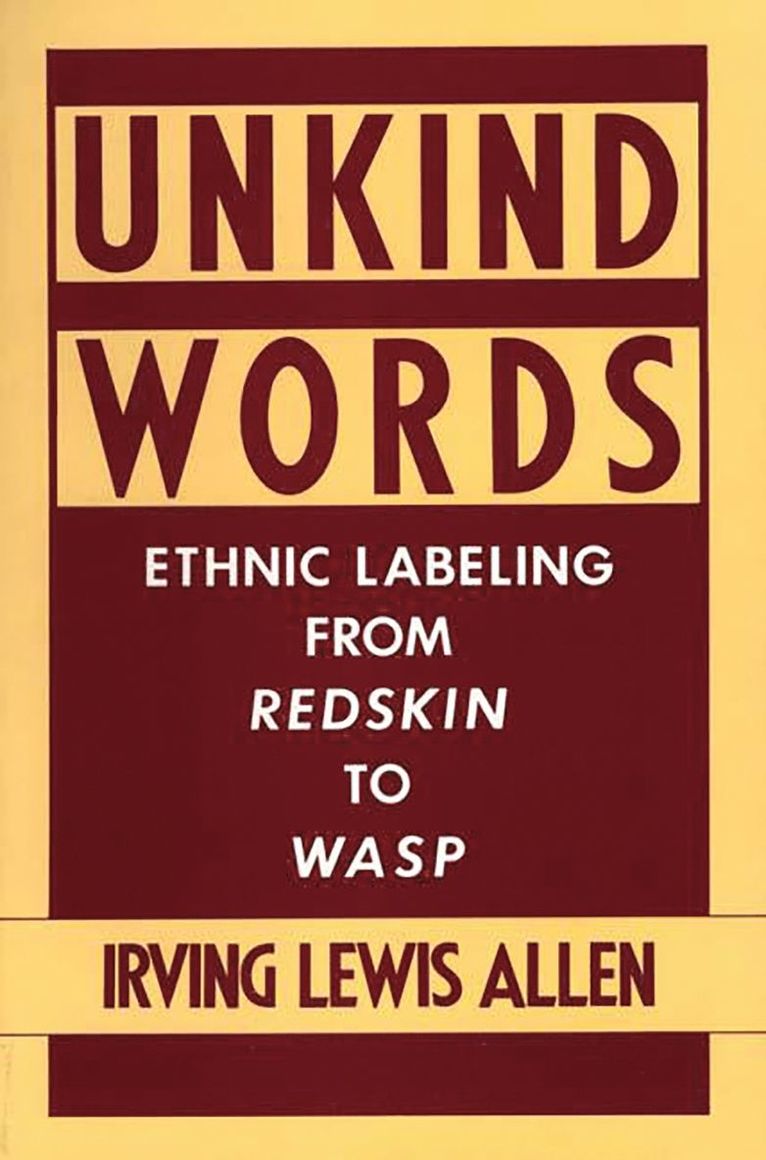
In this extensive study of ethnic labeling in the United States' popular speech and usage, Irving Lewis Allen explores the major traditional themes behind the making of ethnic slurs. Viewing U.S. slang as a reflection of social diversity, rapid change, and the complexity of U.S. society, Allen puts forth a special insight into the social workings of American culture, both past and present. The book offers an overview of the major traditional themes used in the development of ethnic slurs as well as the most recent fads of covert and devious slurring with codewords and various kinds of sly word games. Unkind Words delivers its message with unusual clarity, that too often shoddy language shapes our thinking about the politics of ethnicity.Divided into two parts, the book begins with a detailed study of the older and more traditional slurs in American vernacular. These words the author terms fighting words, which, when dropped, often raised fists in schoolyards and barrooms. The book uncovers the origins of these slurs--few are heard in today's public discourse--and places them in a word museum where the reader can view the foolish viciousness of a cultural past. In one chapter, the author singles out the derogatory labels that have been applied specifically to women and reveals slurs that originate in both gender and ethnic conflict. The second part of the book focuses on labels that have appeared in the last few decades, often more genteel and less confrontational. While more subtle than their forerunners, these words often serve the same old psychological and social needs to stereotype and express hostility. Anyone interested in ethnic identity in the United States, in the workings of a plural society, or the origins and uses of American ethnic slurs, will find Unkind Words fascinating reading.