Irving Seidman - Böcker
Visar alla böcker från författaren Irving Seidman. Handla med fri frakt och snabb leverans.
5 produkter
5 produkter
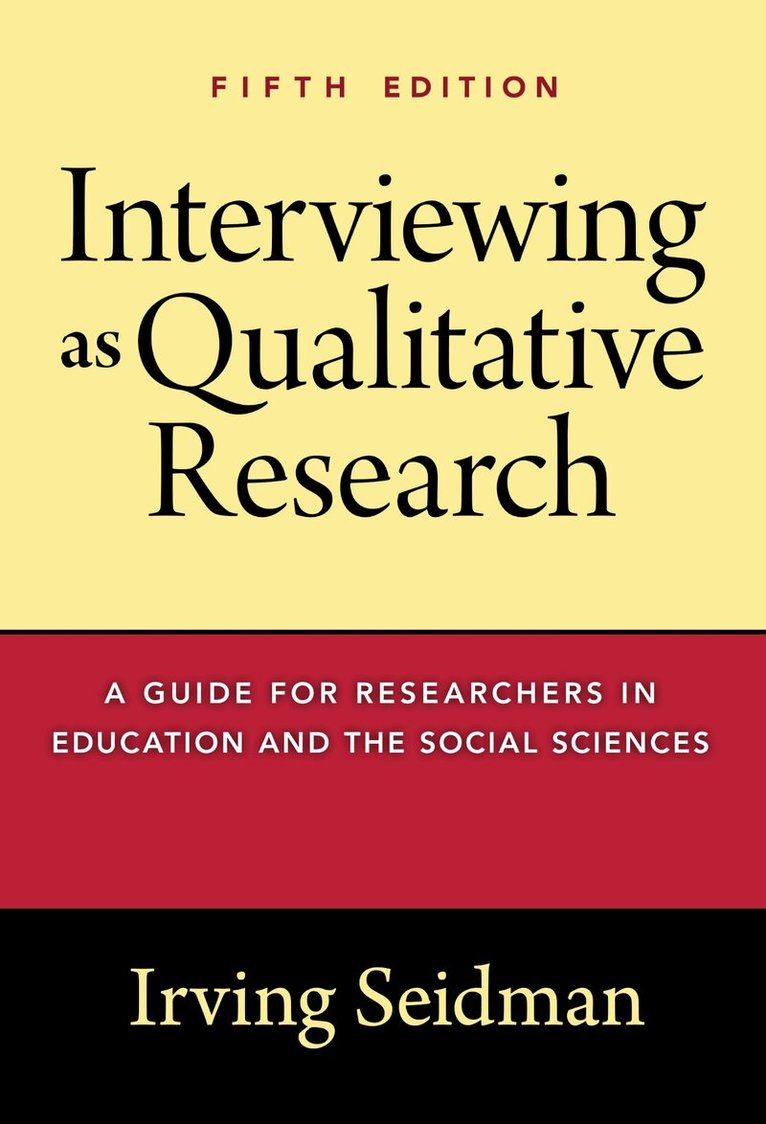
Interviewing As Qualitative Research
A Guide for Researchers in Education and the Social Sciences
Häftad, Engelska, 2019
376 kr
Skickas inom 7-10 vardagar
This popular text, now in its fifth edition, provides step-by-step guidance for new and experienced researchers who want to use interviewing as a research method. This user-friendly guide explains the rationale for interviewing and the complexity of selecting interview participants, important interviewing techniques, and how to work with the results of interviews. Appropriate for individual and classroom use, this expanded edition includes: a revised assessment of the utility of Computer-Assisted Qualitative Data Analysis systems; contributions by Julie Simpson, the Director of Research Integrity Services at the University of New Hampshire, about preparing research for local Institutional Review Boards; and guidance for obtaining informed consent when using technology to interview, when interviewing abroad, and when hoping to include children as participants.Book Features:Principles and methods that can be adapted to a range of interviewing approaches.A clear and inviting presentation appropriate for both individual use and for classes.Ideas to help readers analyze and improve their own approach, as well as suggestions for group practice.An interviewing technique that stresses listening, with guidance for avoiding leading questions.Examples of doctorial students’ research demonstrating that interviewing can deal with life and death issues, as well as everyday life.Updated references to help readers deepen their understanding of interviewing as qualitative research.
Interviewing As Qualitative Research
A Guide for Researchers in Education and the Social Sciences
Inbunden, Engelska, 2019
1 263 kr
Skickas inom 11-20 vardagar
This popular text, now in its fifth edition, provides step-by-step guidance for new and experienced researchers who want to use interviewing as a research method. This user-friendly guide explains the rationale for interviewing and the complexity of selecting interview participants, important interviewing techniques, and how to work with the results of interviews. Appropriate for individual and classroom use, this expanded edition includes: a revised assessment of the utility of Computer-Assisted Qualitative Data Analysis systems; contributions by Julie Simpson, the Director of Research Integrity Services at the University of New Hampshire, about preparing research for local Institutional Review Boards; and guidance for obtaining informed consent when using technology to interview, when interviewing abroad, and when hoping to include children as participants.Book Features:Principles and methods that can be adapted to a range of interviewing approaches.A clear and inviting presentation appropriate for both individual use and for classes.Ideas to help readers analyze and improve their own approach, as well as suggestions for group practice.An interviewing technique that stresses listening, with guidance for avoiding leading questions.Examples of doctorial students’ research demonstrating that interviewing can deal with life and death issues, as well as everyday life.Updated references to help readers deepen their understanding of interviewing as qualitative research.
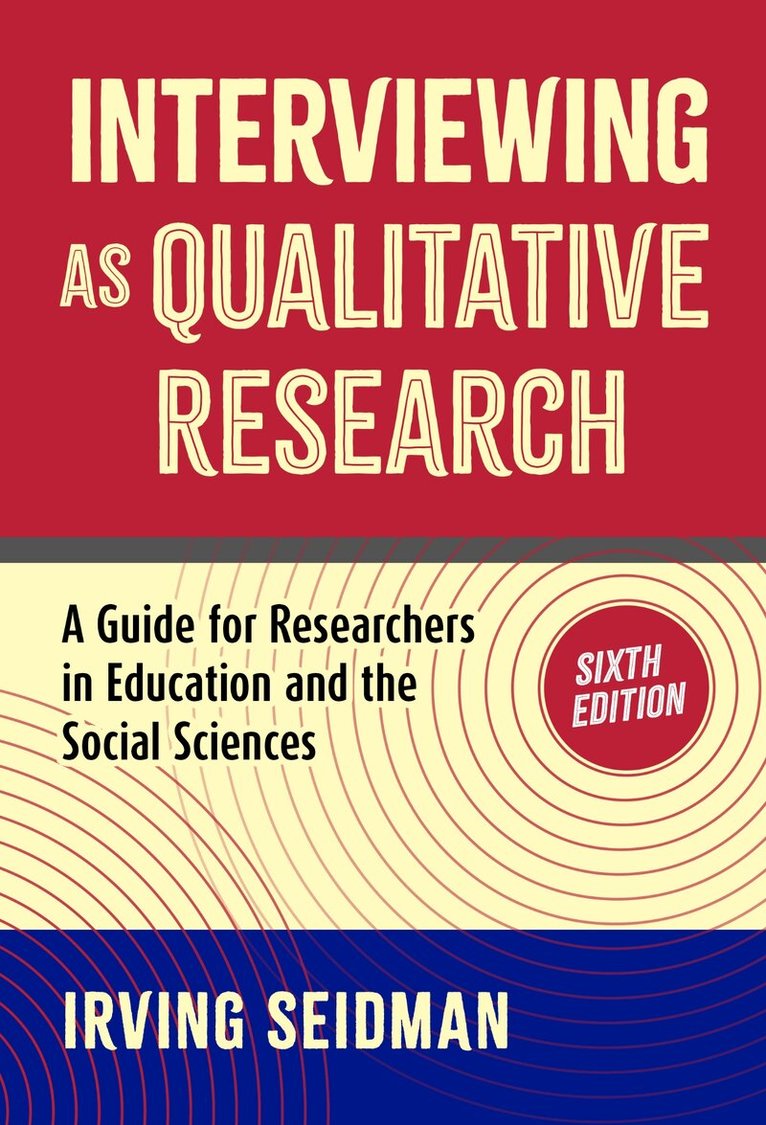
Interviewing As Qualitative Research
A Guide for Researchers in Education and the Social Sciences
Inbunden, Engelska, 2026
1 362 kr
Kommande
The Definitive Guide to Qualitative Interviewing—Updated for the Age of AIFor decades, Irving Seidman’s Interviewing as Qualitative Research has served as the leading resource for both new and experienced researchers in education, the social sciences, and the humanities. Now in its sixth edition, this popular text continues to provide comprehensive, step-by-step guidance on phenomenological interviewing, offering a clear and inviting rationale for using in-depth interviewing as a research method.This significant revision introduces a groundbreaking new chapter by Robert W. Maloy which grapples with the ethical complexities and practical potentials of artificial intelligence. Readers will discover how AI can make vast sets of transcripts accessible and assist in tracking themes and generating profiles—all while maintaining the researcher's vital direct engagement with their participants' stories.From selecting participants and obtaining informed consent to analyzing and working with final results, this edition addresses the quickly changing challenges of the modern research landscape. With updated references and guidance for interviewing abroad or with children, this book remains an essential resource for doctoral and master’s students and professional researchers across the humanities and social sciences.Key Features of the Sixth Edition:Integrating AI in Research: A dedicated new chapter on the possibilities and problems of using AI to analyze data and manage large-scale transcript sets.Ethical Guidance for New Technologies: Critical discussions on the ethical concerns that must guide the use of AI and other digital technologies in contemporary research settings.Phenomenological Focus: Refined techniques that stress the art of listening and avoiding leading questions to deepen understanding of participant experiences.Step-by-Step Methodology: Practical advice on the entire process, including navigating Institutional Review Boards (IRBs) and obtaining informed consent in diverse contexts.Real-World Examples: Features doctoral students’ research to demonstrate how interviewing can effectively address both everyday life and critical life-and-death issues.Contemporary Research Tools: Guidance for using technology to interview, including specific considerations for interviewing international participants and children.
Interviewing As Qualitative Research
A Guide for Researchers in Education and the Social Sciences
Häftad, Engelska, 2026
459 kr
Kommande
The Definitive Guide to Qualitative Interviewing—Updated for the Age of AIFor decades, Irving Seidman’s Interviewing as Qualitative Research has served as the leading resource for both new and experienced researchers in education, the social sciences, and the humanities. Now in its sixth edition, this popular text continues to provide comprehensive, step-by-step guidance on phenomenological interviewing, offering a clear and inviting rationale for using in-depth interviewing as a research method.This significant revision introduces a groundbreaking new chapter by Robert W. Maloy which grapples with the ethical complexities and practical potentials of artificial intelligence. Readers will discover how AI can make vast sets of transcripts accessible and assist in tracking themes and generating profiles—all while maintaining the researcher's vital direct engagement with their participants' stories.From selecting participants and obtaining informed consent to analyzing and working with final results, this edition addresses the quickly changing challenges of the modern research landscape. With updated references and guidance for interviewing abroad or with children, this book remains an essential resource for doctoral and master’s students and professional researchers across the humanities and social sciences.Key Features of the Sixth Edition:Integrating AI in Research: A dedicated new chapter on the possibilities and problems of using AI to analyze data and manage large-scale transcript sets.Ethical Guidance for New Technologies: Critical discussions on the ethical concerns that must guide the use of AI and other digital technologies in contemporary research settings.Phenomenological Focus: Refined techniques that stress the art of listening and avoiding leading questions to deepen understanding of participant experiences.Step-by-Step Methodology: Practical advice on the entire process, including navigating Institutional Review Boards (IRBs) and obtaining informed consent in diverse contexts.Real-World Examples: Features doctoral students’ research to demonstrate how interviewing can effectively address both everyday life and critical life-and-death issues.Contemporary Research Tools: Guidance for using technology to interview, including specific considerations for interviewing international participants and children.
980 kr
Skickas inom 10-15 vardagar
Throughout the country, a growing number of college students, recent college graduates, and mid-career adults are thinking about becoming teachers. Teaching in middle and high schools combines a lifelong pursuit of learning, a long-held dream of joining a field that they respect, a chance to work with young people, and an opportunity to make a difference in society.The Essential Career Guide to Becoming a Middle and High School Teacher offers a step-by-step guide to preparation, certification, and employment as a teacher. It provides guidance about issues and choices facing prospective educators, including making the decision to teach, assessing the differences between middle schools and high schools, identifying an excellent teacher education program, understanding alternative pathways to certification, taking state-mandated teacher tests, succeeding as a student teacher, and finding a first job in the profession. A complete state-by-state listing of programs, including current U.S. News & World Report Top Fifty rankings and certification requirements rounds out this valuable guide.