Isolde Woittiez – författare
Visar alla böcker från författaren Isolde Woittiez. Handla med fri frakt och snabb leverans.
3 produkter
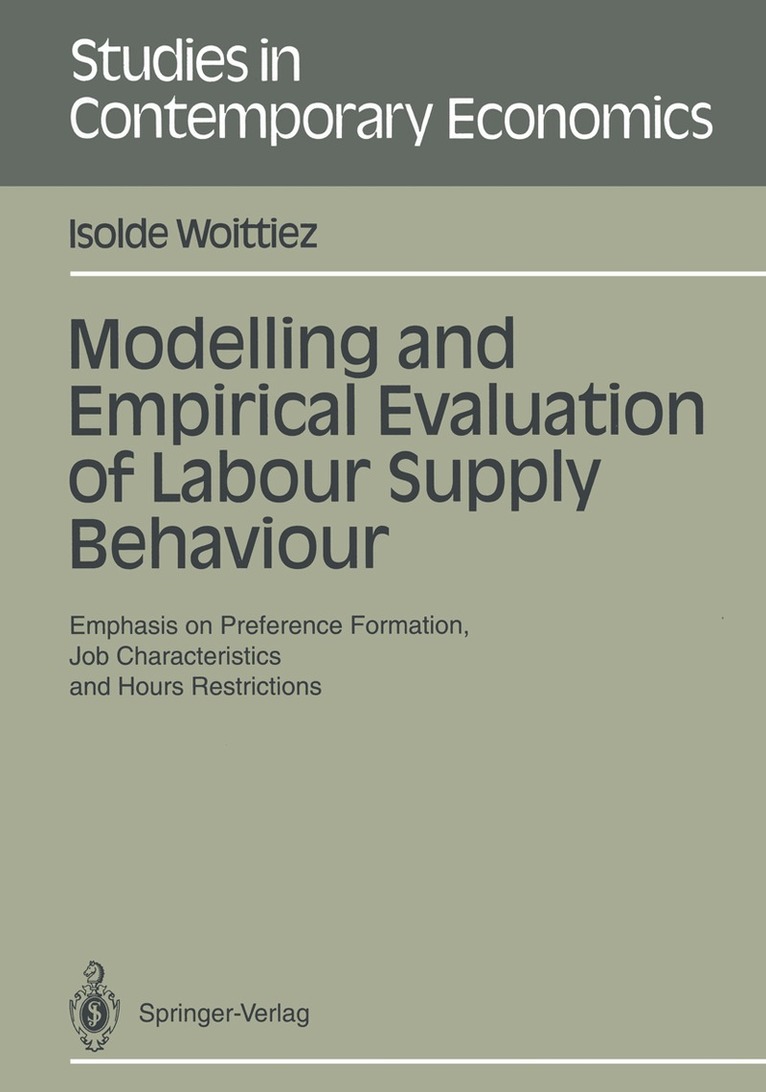
Modelling and Empirical Evaluation of Labour Supply Behaviour
Emphasis on Preference Formation, Job Characteristics and Hours Restrictions
Häftad, 1991
1129 kr
Lägg i varukorg
This study deals with modelling of neoclassical labour supply models for one-adult and two-adult households. A standard labour supply model is presented and estimated on Dutch data from 1985. A modification of the standard model is formulated, taking explicit account of nonconvexities in the budget …
Modelling and Empirical Evaluation of Labour Supply Behaviour
Emphasis on Preference Formation, Job Characteristics and Hours Restrictions
E-bok, 2012
1470 kr
Lägg i varukorg
One of the major issues of policy makers in The Netherlands is to reduce the high unemployment rate. In 1988 economic growth was substantial in all OECD countries, which led to an increase in employment. The economic growth also induced extra labour supply, especially of married women, which …
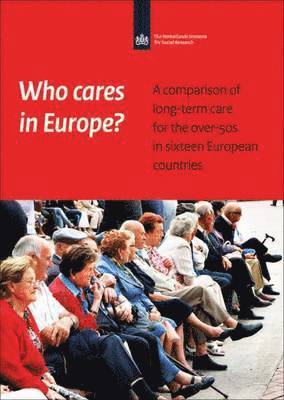
Who Cares in Europe?
A comparison of long-term care for the over-50s in sixteen European countries
Av Debbie Verbeek-Oudijk, Isolde Woittiez m. fl.
Häftad, 2014
633 kr
Lägg i varukorg
As in many other European countries, the sustainability of the long-term care system is a key issue in the Dutch policy debate. In order to shed light on this issue this book compares the way elderly persons are supported in sixteen European countries. Based on the latest SHARE data it provides an …