J. A. John - Böcker
Visar alla böcker från författaren J. A. John. Handla med fri frakt och snabb leverans.
3 produkter
3 produkter
536 kr
Skickas inom 10-15 vardagar
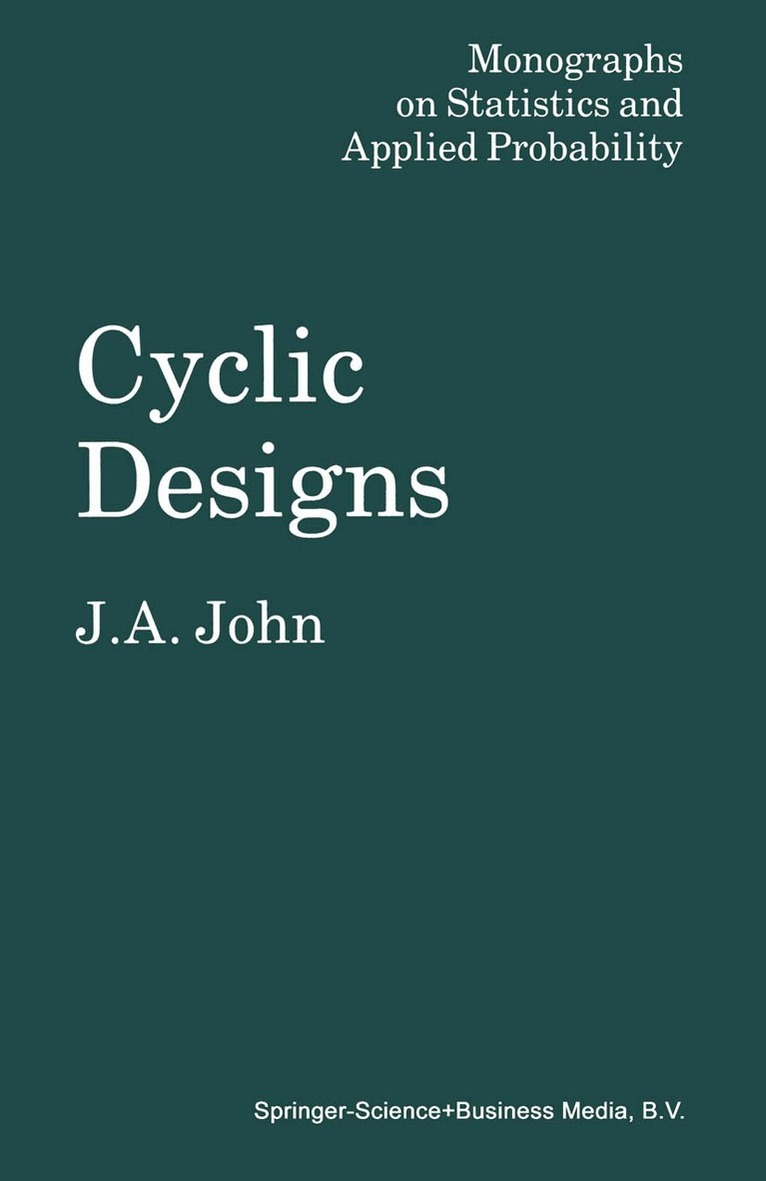
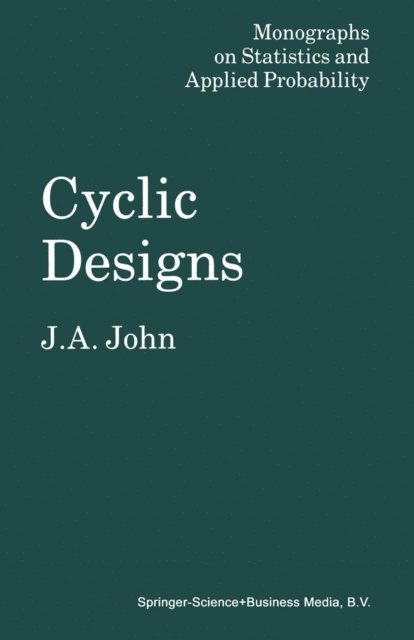
The biggest single influence on the development of the subject of design of experiments over the past quarter-century has been the availability of computers. Prior to the computer it was essential that any design had a straightforward method of analysis, which meant that the mathematical and combinatorial properties of the designs were of primary importance. Many of the designs proposed and studied also possessed important statistical properties and thus continue to be practically useful but, now that ease of analysis is less important, a very large number of these designs no longer have any real value. With the advent ofthe computer it has become possible to study families of designs which have relatively simple methods of construction and which provide large numbers of designs. Within a family, the designs which satisfy certain desirable statistical, rather than mathematical, properties can then be identified using a combin ation of theory and computing. One of the primary aims of this monograph is to study families of block and row-column designs, both unifactor and multifactor, whose methods of construction are cyclical in nature; hence the title Cyclic Designs. The usual practice adopted in books on the design of experiments is to follow the description of a particular design by its method of analysis and, possibly, a numerical example.
2 703 kr
Skickas inom 10-15 vardagar
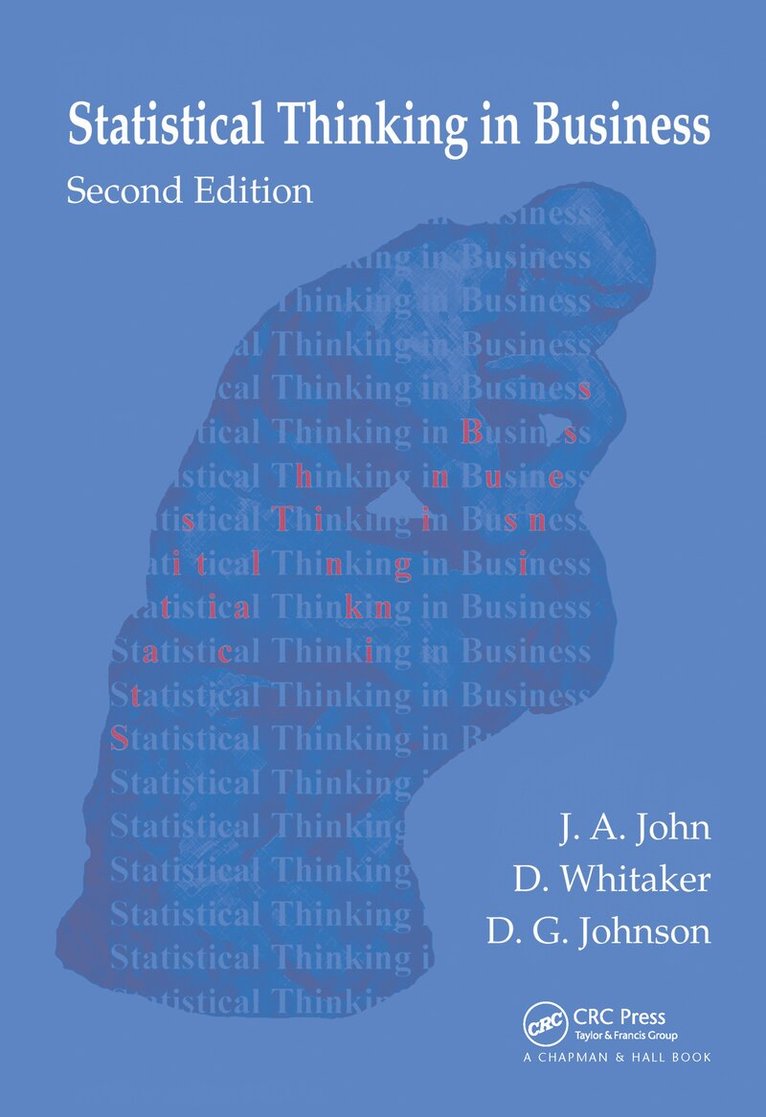
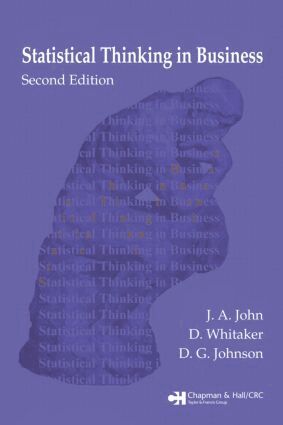
Business students need the ability to think statistically about how to deal with uncertainty and its effect on decision-making in business and management. Traditional statistics courses and textbooks tend to focus on probability, mathematical detail, and heavy computation, and thus fail to meet the needs of future managers. Statistical Thinking in Business, Second Edition responds to the growing recognition that we must change the way business statistics is taught. It shows how statistics is important in all aspects of business and equips students with the skills they need to make sensible use of data and other information. The authors take an interactive, scenario-based approach and use almost no mathematical formulas, opting to use Excel for the technical work. This allows them to focus on using statistics to aid decision-making rather than how to perform routine calculations.New in the Second EditionA completely revised chapter on forecasting Re-arrangement of the material on data presentation with the inclusion of histograms and cumulative line plotsA more thorough discussion of the analysis of attribute dataCoverage of variable selection and model building in multiple regressionEnd-of-chapter summariesMore end-of-chapter problemsA variety of case studies throughout the bookThe second edition also comes with a wealth of ancillary materials provided on downloadable resources packaged with the book. These include automatically-marked multiple-choice questions, answers to questions in the text, data sets, Excel experiments and demonstrations, an introduction to Excel, and the StiBstat Add-In for stem and leaf plots, box plots, distribution plots, control charts and summary statistics.
983 kr
Skickas inom 10-15 vardagar
Business students need the ability to think statistically about how to deal with uncertainty and its effect on decision-making in business and management. Traditional statistics courses and textbooks tend to focus on probability, mathematical detail, and heavy computation, and thus fail to meet the needs of future managers. Statistical Thinking in Business, Second Edition responds to the growing recognition that we must change the way business statistics is taught. It shows how statistics is important in all aspects of business and equips students with the skills they need to make sensible use of data and other information. The authors take an interactive, scenario-based approach and use almost no mathematical formulas, opting to use Excel for the technical work. This allows them to focus on using statistics to aid decision-making rather than how to perform routine calculations.New in the Second EditionA completely revised chapter on forecasting Re-arrangement of the material on data presentation with the inclusion of histograms and cumulative line plotsA more thorough discussion of the analysis of attribute dataCoverage of variable selection and model building in multiple regressionEnd-of-chapter summariesMore end-of-chapter problemsA variety of case studies throughout the bookThe second edition also comes with a wealth of ancillary materials provided on downloadable resources packaged with the book. These include automatically-marked multiple-choice questions, answers to questions in the text, data sets, Excel experiments and demonstrations, an introduction to Excel, and the StiBstat Add-In for stem and leaf plots, box plots, distribution plots, control charts and summary statistics.