J. B. Condliffe – författare
535 kr
Läs direkt efter köp
First published in 1941, The Reconstruction of World Trade analyses the collapse of the international trading model after the First World War; the challenges presented by totalitarian methods of bilateral trade, and the problems anticipated in the attempt to reconstruct world trade after the end of the Second World War. The author studies national economic policies of several countries to argue that while economic problems are not contained with national borders, these still are an outcome of conflicting national economic policies. This book will be of interest to students of history, political science and economy.
535 kr
Läs direkt efter köp
First published in 1941, The Reconstruction of World Trade analyses the collapse of the international trading model after the First World War; the challenges presented by totalitarian methods of bilateral trade, and the problems anticipated in the attempt to reconstruct world trade after the end of the Second World War. The author studies national economic policies of several countries to argue that while economic problems are not contained with national borders, these still are an outcome of conflicting national economic policies. This book will be of interest to students of history, political science and economy.
714 kr
Läs direkt efter köp
First published in 1930, New Zealand in the Making is an economic history of the democratic experiments in New Zealand. The geography, population, government ownership of public utilities, compulsory arbitration, pensions and all other factors have been covered in detail. The book will be of interest to anyone keen on learning about New Zealand as well as to students of economy, history, agriculture, and government.
714 kr
Läs direkt efter köp
First published in 1930, New Zealand in the Making is an economic history of the democratic experiments in New Zealand. The geography, population, government ownership of public utilities, compulsory arbitration, pensions and all other factors have been covered in detail. The book will be of interest to anyone keen on learning about New Zealand as well as to students of economy, history, agriculture, and government.
524 kr
Skickas inom 5-8 vardagar
400 kr
Skickas inom 5-8 vardagar
395 kr
Skickas inom 5-8 vardagar
308 kr
Skickas inom 5-8 vardagar
496 kr
Skickas inom 5-8 vardagar
386 kr
Skickas inom 5-8 vardagar
1 958 kr
Skickas inom 10-15 vardagar
470 kr
Skickas inom 10-15 vardagar
2 182 kr
Skickas inom 10-15 vardagar
624 kr
Skickas inom 10-15 vardagar
1 308 kr
Skickas inom 10-15 vardagar
441 kr
Skickas inom 10-15 vardagar
501 kr
Läs direkt efter köp
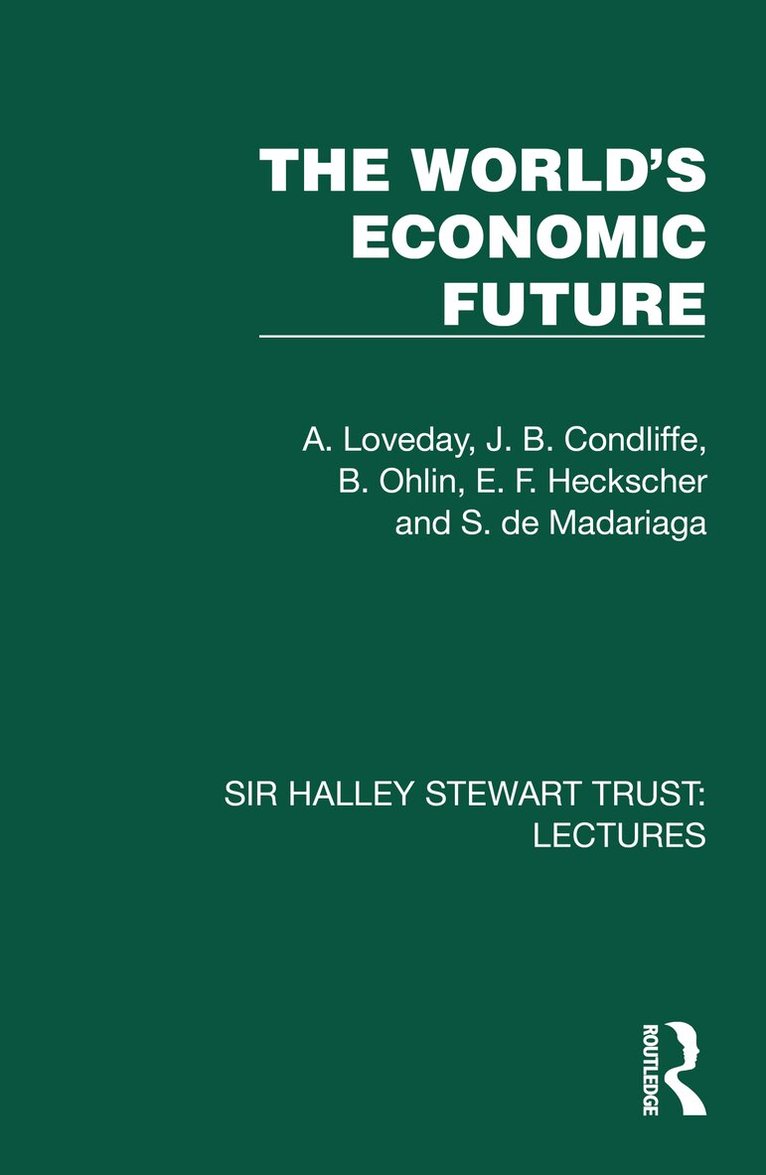
Originally published in 1938, this symposium, based on the Sir Halley Stewart lectures for 1937, numbers among its contributors some of the world’s most distinguished economists and the subjects of which they treat are of vital interest. Professor Heckscher deals with some recent important tendencies in economic and social life; Professor Ohlin with the future relations of Government and industry – he believes that both state socialism and nineteenth-century liberalism are unsuited for present and future circumstances and that the world will see not a “planned economy” but a “frame economy.” Professor Condliffe’s chapter is concerned with the possible transference from Europe to America of economic power and leadership, and Mr Alex Loveday has chosen as his subject certain problems of economic insecurity. Señor Madariaga’s closing chapter admirably sums up the main purport of the lectures.
This book is a re-issue originally published in 1938. The language used and views portrayed are a reflection of its era and no offence is meant by the Publishers to any reader by this re-publication.
501 kr
Läs direkt efter köp
Originally published in 1938, this symposium, based on the Sir Halley Stewart lectures for 1937, numbers among its contributors some of the world’s most distinguished economists and the subjects of which they treat are of vital interest. Professor Heckscher deals with some recent important tendencies in economic and social life; Professor Ohlin with the future relations of Government and industry – he believes that both state socialism and nineteenth-century liberalism are unsuited for present and future circumstances and that the world will see not a “planned economy” but a “frame economy.” Professor Condliffe’s chapter is concerned with the possible transference from Europe to America of economic power and leadership, and Mr Alex Loveday has chosen as his subject certain problems of economic insecurity. Señor Madariaga’s closing chapter admirably sums up the main purport of the lectures.
This book is a re-issue originally published in 1938. The language used and views portrayed are a reflection of its era and no offence is meant by the Publishers to any reader by this re-publication.