
J. Comyn – författare
Visar alla böcker från författaren . Handla med fri frakt och snabb leverans.
4 produkter
4 produkter
Inbunden, Engelska, 1985
2 158 kr
Skickas inom 10-15 vardagar
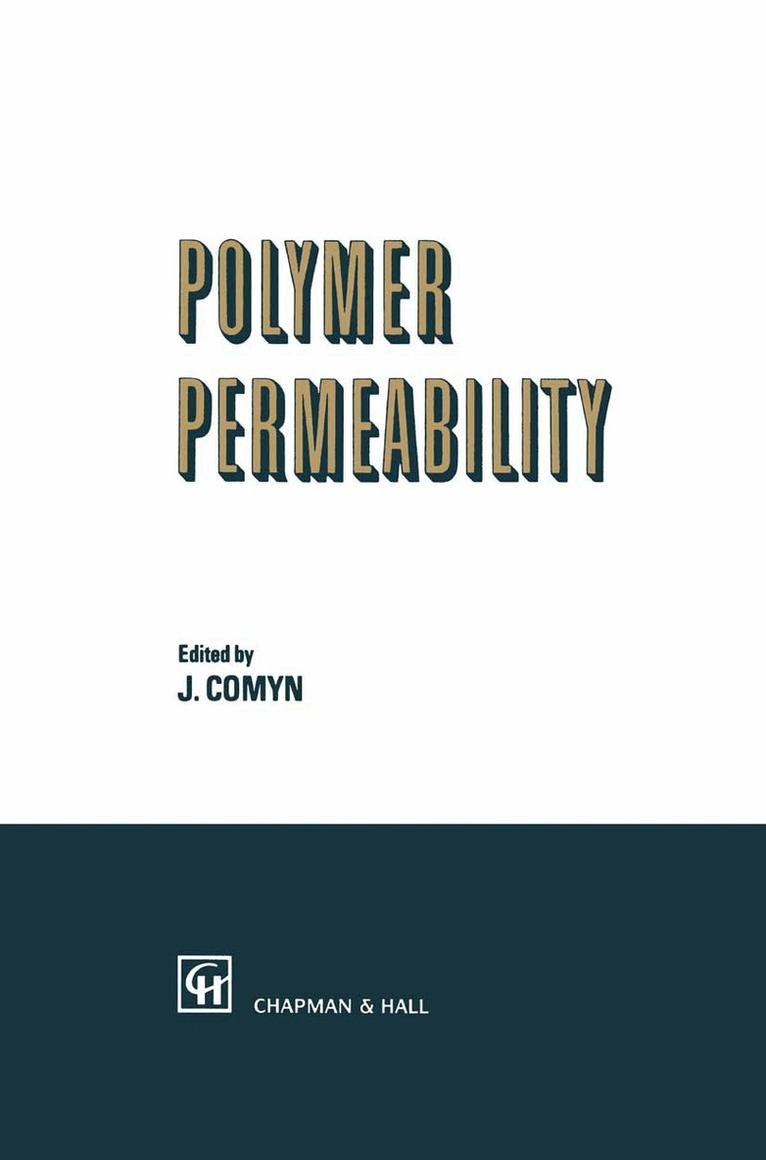
Polymers are permeable, whilst ceramics, glasses and metals are gener ally impermeable. This may seem a disadvantage in that polymeric containers may allow loss or contamination of their contents and aggressive substances such as water will diffuse into polymeric struc tures such as adhesive joints or fibre-reinforced composites and cause weakening. However, in some cases permeability is an advantage, and one particular area where this is so is in the use of polymers in drug delivery systems. Also, without permeable polymers, we would not enjoy the wide range of dyed fabrics used in clothing and furnishing. The fundamental reason for the permeability of polymers is their relatively high level of molecular motion, a factor which also leads to their high levels of creep in comparison with ceramics, glasses and metals. The aim of this volume is to examine some timely applied aspects of polymer permeability. In the first chapter basic issues in the mathema tics of diffusion are introduced, and this is followed by two chapters where the fundamental aspects of diffusion in polymers are presented. The following chapters, then, each examine some area of applied science where permeability is a key issue. Each chapter is reasonably self-contained and intended to be informative without frequent outside reference. This inevitably leads to some repetition, but it is hoped that this is not excessive.
Inbunden, Engelska, 1997
3 019 kr
Skickas inom 10-15 vardagar
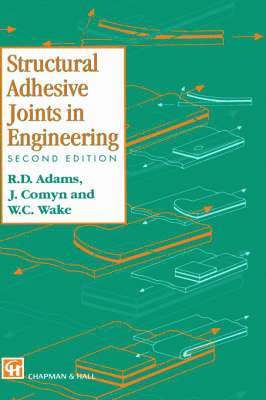
The use of adhesives has many advantages over other methods of fastening. Presenting a smooth exterior, spreading of the load and ease of joining thin or dissimilar materials are all reasons why the use of adhesives for bonding structures is steadily growing and finding new applications. Structural Adhesive Joints in Engineering is a concise guide to adhesive joints within structures, especially those capable of bearing high loads. The book covers all aspects of design, materials selection and testing, including the physical properties and cure-chemistry of structural adhesives and how to select adhesives for particular applications; surface preparation by physical or chemical methods (with or without the use of primers and coupling agents); and new sections on surface analysis and water durability. There is also a detailed guide to stresses in adhesive joints and joint design. Thoroughly revised and updated since the first edition, the Second Edition contains new sections on recent topics of importance, such as water durability. This book contains everyhting an engineer needs to know to be able to design and produce adhesively bonded joints that are required to carry significant loads. Advantages and disadvantages are given, together with a sufficient description of the necessary mechanics and chemistry involved to enable the designer to make a sound engineering judgement in each particular case.
E-bok
PDF, Engelska, 20122 741 kr
Läs direkt efter köp
Polymers are permeable, whilst ceramics, glasses and metals are gener ally impermeable. This may seem a disadvantage in that polymeric containers may allow loss or contamination of their contents and aggressive substances such as water will diffuse into polymeric struc tures such as adhesive joints or fibre-reinforced composites and cause weakening. However, in some cases permeability is an advantage, and one particular area where this is so is in the use of polymers in drug delivery systems. Also, without permeable polymers, we would not enjoy the wide range of dyed fabrics used in clothing and furnishing. The fundamental reason for the permeability of polymers is their relatively high level of molecular motion, a factor which also leads to their high levels of creep in comparison with ceramics, glasses and metals. The aim of this volume is to examine some timely applied aspects of polymer permeability. In the first chapter basic issues in the mathema tics of diffusion are introduced, and this is followed by two chapters where the fundamental aspects of diffusion in polymers are presented. The following chapters, then, each examine some area of applied science where permeability is a key issue. Each chapter is reasonably self-contained and intended to be informative without frequent outside reference. This inevitably leads to some repetition, but it is hoped that this is not excessive.
Häftad, Engelska, 2011
2 158 kr
Skickas inom 10-15 vardagar
Polymers are permeable, whilst ceramics, glasses and metals are gener ally impermeable. This may seem a disadvantage in that polymeric containers may allow loss or contamination of their contents and aggressive substances such as water will diffuse into polymeric struc tures such as adhesive joints or fibre-reinforced composites and cause weakening. However, in some cases permeability is an advantage, and one particular area where this is so is in the use of polymers in drug delivery systems. Also, without permeable polymers, we would not enjoy the wide range of dyed fabrics used in clothing and furnishing. The fundamental reason for the permeability of polymers is their relatively high level of molecular motion, a factor which also leads to their high levels of creep in comparison with ceramics, glasses and metals. The aim of this volume is to examine some timely applied aspects of polymer permeability. In the first chapter basic issues in the mathema tics of diffusion are introduced, and this is followed by two chapters where the fundamental aspects of diffusion in polymers are presented. The following chapters, then, each examine some area of applied science where permeability is a key issue. Each chapter is reasonably self-contained and intended to be informative without frequent outside reference. This inevitably leads to some repetition, but it is hoped that this is not excessive.