J. Kiranmai – författare
Visar alla böcker från författaren J. Kiranmai. Handla med fri frakt och snabb leverans.
2 produkter
2 produkter
E-bok
Engelska, 20071 261 kr
Läs direkt efter köp
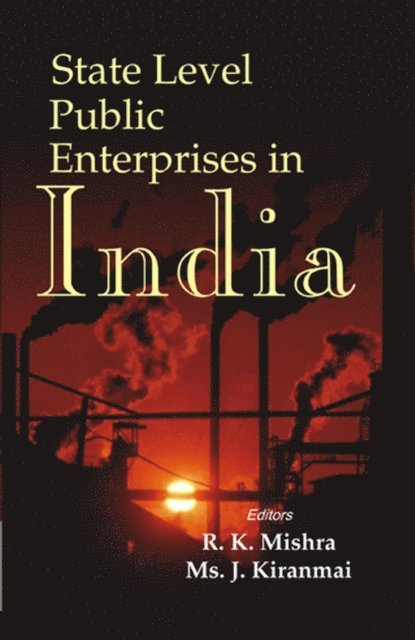
This book is an attempt to study and analyse the functioning of the State Level Public Enterprises (SLPEs) in India. The book is based on a study completed for the Department of Public Enterprises, Ministry of Heavy Industries and Public Enterprises, Government of India, New Delhi and Planning Commission, Government of India, New Delhi. The book covers all the States and some Union Territories. The information contained in the book has been culled out from primary and secondary sources. The book presents an executive summary in its first few pages. This is followed by a macro analysis of the functioning of these SLPEs in India. The analysis is based on the data collected on a few vital parameters for the period 1990-91 to 2004-05. The parameters range from total investment, typology, capital employed, net worth and total resources to total revenue, net profits / losses, accumulated losses and total impact on state finances. A survey of restructuring and privatisation has also been incorporated as a part of analysis. The macro analysis is followed by state-wise analysis of the SLPEs. This analysis includes the position of the SLPRs in each state with regard to there financial profile, sectoral classification, budgetary support, social safety net, and problems and issues.
E-bok
Engelska, 1981742 kr
Läs direkt efter köp
A great deal is talked about today regarding icnewable and non-renewable resources of the earth. What is not often borne in mind is the fact that even the so called renewable resources are not nearly always so. Once the eco-system has been degraded so that the critical threshold is crossed, the process is irreversible. Recovery, if at all possible, may take centuries. Genetic diversity is the result of biological evolution over thousands of years What is needed is the protection of whole ecosystems so that their diversity and that of their species can be ensured for their contribution to man''s survival and well being. Mere protection of endangered species is not enough. Hence the zeal for development among the nations of the world must be tempered by an equally fervent concern for maintaining environmental stability. Balanced integrated planning must anticipate the all round consequences from which both man and nature can benefit. Ideally, economic productivity should go hand in hand with environmental stability. Dr. Bhag Singh''s monograph on the Citrus Gene Sanctuary highlights the efforts of Government of India towards the conservation of genetic diversity of this economic crop and the urgent need for such conservation. The north eastern Himalayan region is the natural home of the citrus species including Citrus indica which is believed to be the progenitor of the mandarin orange. This wild orange has a very wide adaptability under diverse conditions and could be useful for developing genetic stocks resistant to diseases and pests. Recent exploratory and ecological surveys have made it possible to identify a site in the Tura range in Garo Hills where the wild orange locally known as Emang Narang is found. This first Gene Sanctuary for Citrus in the world will help to preserve the environmental conditions under which certain genotypes will flourish. It will also create an awareness to preserve such environmental wealth in the country. This book should help to stimulate interest among educated youth in the genetic endowments of our country apart from its contribution to the literature on conservation and plant genetics.