J. Leplin – författare
Visar alla böcker från författaren J. Leplin. Handla med fri frakt och snabb leverans.
6 produkter
6 produkter
Inbunden, Engelska, 1995
1 080 kr
Skickas inom 10-15 vardagar
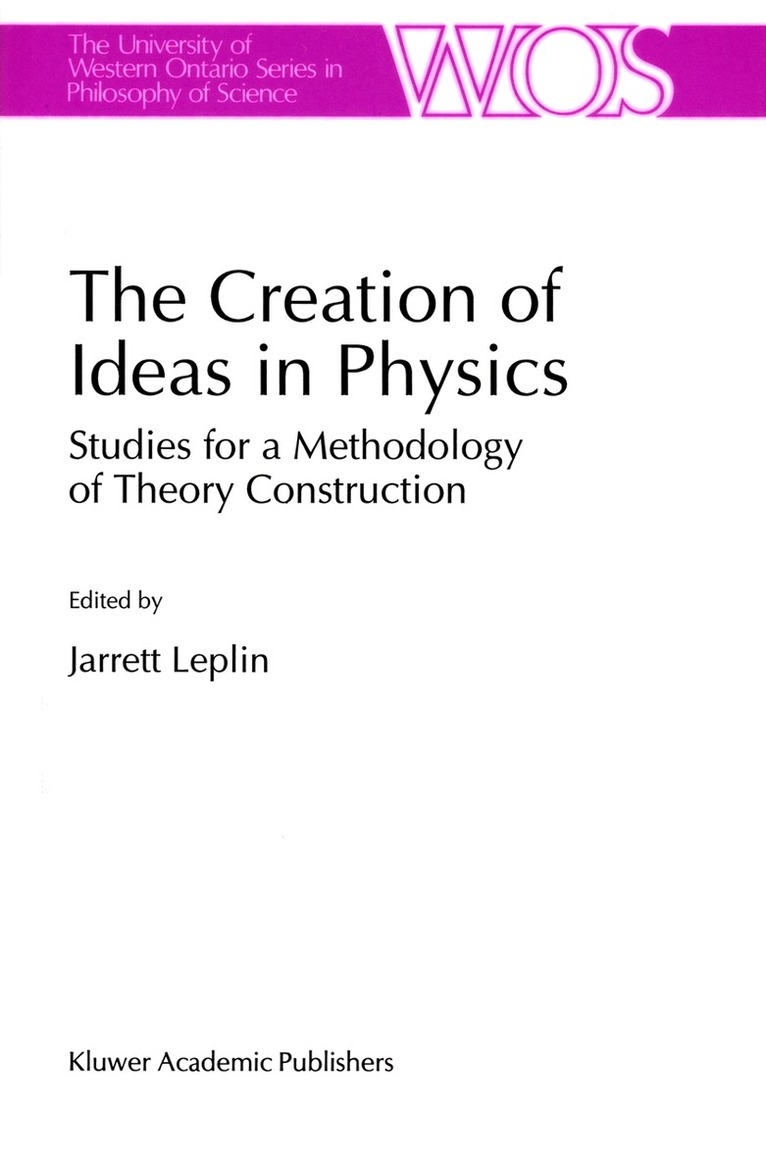
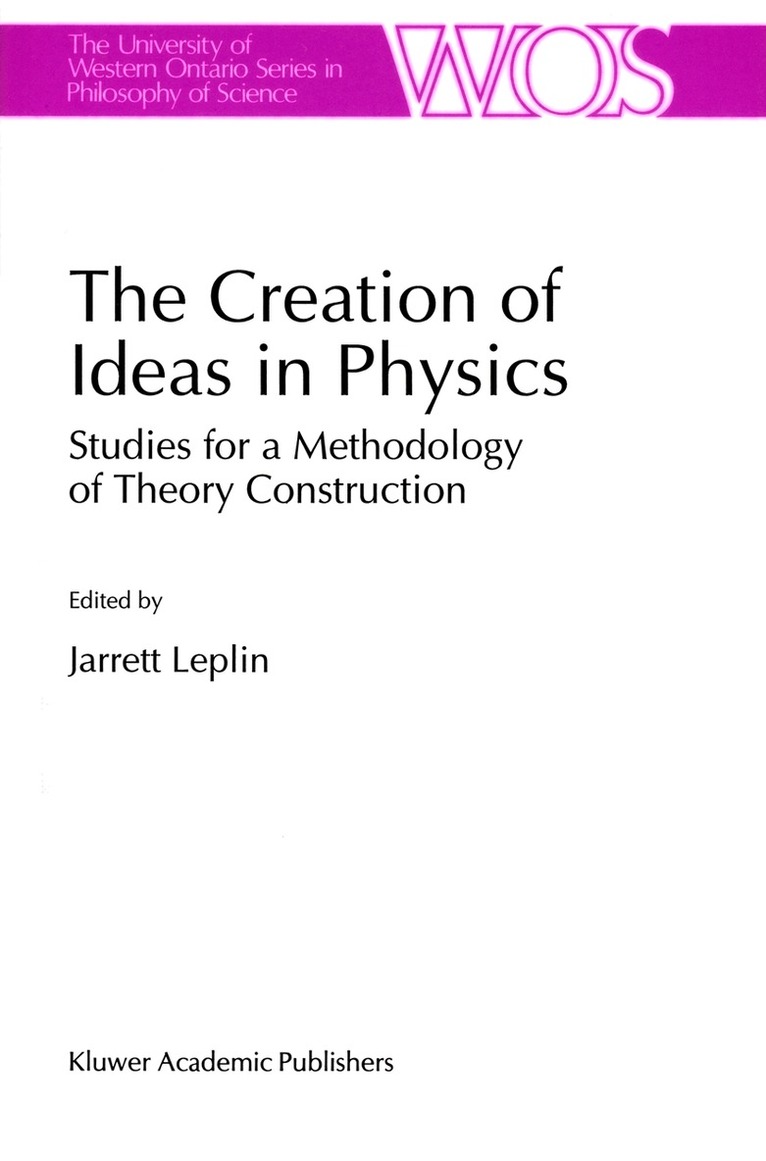
The unusual ambition of this volume is to engage scientists, historians, and philosophers in a common quest to delineate the structure of the creative thinking responsible for major advances in physical theory. The topic does not fit anyone discipline's proprietary interests, and can only be pursued cooperatively. This volume was conceived in the hope that the importance of learning something general about how theories are developed and what makes the difference between productive and abortive directions of theo retical inquiry could overcome well-known barriers to such cooperation. The volume originated in a conference held at the University of North Carolina, Greensboro in 1988, as an installment of the annual Greensboro Symposium in Philosophy. Most of the papers descend from papers pre sented on that occasion. The authors are well known in their own disciplines, but should be identified to the wider audience for interdisciplinary work in science studies. Rafael Sorkin, of Syracuse University, and Don Page, of the University of Alberta, are theoretical physicists who have done research in quantum gravity and cosmology. John Stachel, a physicist at Boston University, is widely known as the Director of the Einstein Project and editor of Einstein's papers. William Harper, a historian of science and philosopher at the University of Western Ontario, is a Newton scholar and specialist in decision theory.
Inbunden, Engelska, 2009
1 080 kr
Skickas inom 10-15 vardagar
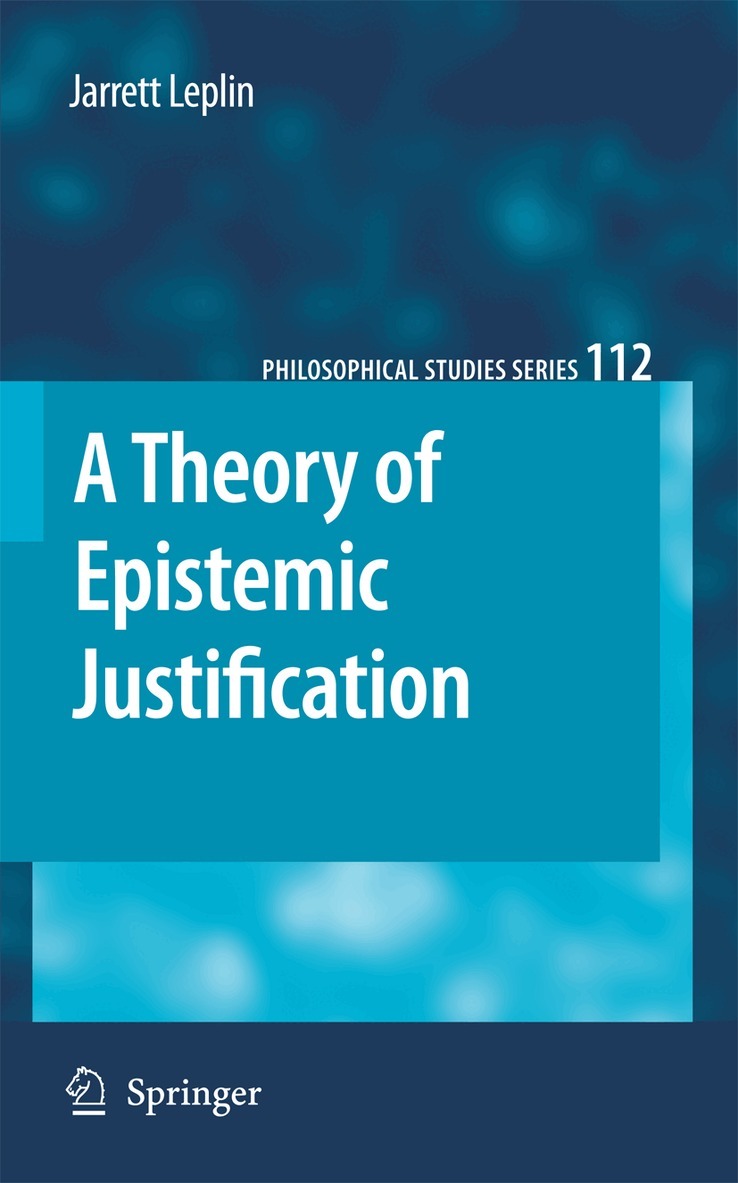
One goal of epistemology is to refute the skeptic. Another, with an equally dist- guished if briefer pedigree, is to make sense of science as a knowledge-acquiring enterprise. The goals are incompatible, in that the latter presupposes that the skeptic is wrong. The incompatibility is not strict. One could have both goals, conditi- ing the latter upon success at the former. In fact, however, epistemologies aimed at the skeptic tend not to get anywhere near science. They’ve got all they can handle guring out how we can know we have hands. I come to epistemology from the philosophy of science, my original interest in which was epistemological. Philosophers of science are concerned with epistemic justi cation, but their question about it is how far it extends. They take justi cation to be unproblematic at the level of ordinary experience; their worries begin with the interpretation of experience as evidence for theory. They are interested in the scope of scienti c knowledge. Having taken a position on this question (1997), - guing that justi cation extends to theoretical hypotheses, I came to wonder about the nature of justi cation generally. This is not a belated discovery of the skeptical problem or a reconsideration of what I took to be unproblematic. It is simply an interest in the possibility of locating epistemic advance in science within a broader understanding of the nature of epistemic justi cation. Now that I know that just- cation extends to theory, I am taking a step back and asking what justi cation is.
E-bok
PDF, Engelska, 20091 367 kr
Läs direkt efter köp
One goal of epistemology is to refute the skeptic. Another, with an equally dist- guished if briefer pedigree, is to make sense of science as a knowledge-acquiring enterprise. The goals are incompatible, in that the latter presupposes that the skeptic is wrong. The incompatibility is not strict. One could have both goals, conditi- ing the latter upon success at the former. In fact, however, epistemologies aimed at the skeptic tend not to get anywhere near science. They’ve got all they can handle guring out how we can know we have hands. I come to epistemology from the philosophy of science, my original interest in which was epistemological. Philosophers of science are concerned with epistemic justi cation, but their question about it is how far it extends. They take justi cation to be unproblematic at the level of ordinary experience; their worries begin with the interpretation of experience as evidence for theory. They are interested in the scope of scienti c knowledge. Having taken a position on this question (1997), - guing that justi cation extends to theoretical hypotheses, I came to wonder about the nature of justi cation generally. This is not a belated discovery of the skeptical problem or a reconsideration of what I took to be unproblematic. It is simply an interest in the possibility of locating epistemic advance in science within a broader understanding of the nature of epistemic justi cation. Now that I know that just- cation extends to theory, I am taking a step back and asking what justi cation is.
Del 112 - Philosophical Studies Series
Theory of Epistemic Justification
Häftad, Engelska, 2010
1 091 kr
Skickas inom 10-15 vardagar
One goal of epistemology is to refute the skeptic. Another, with an equally dist- guished if briefer pedigree, is to make sense of science as a knowledge-acquiring enterprise. The goals are incompatible, in that the latter presupposes that the skeptic is wrong. The incompatibility is not strict. One could have both goals, conditi- ing the latter upon success at the former. In fact, however, epistemologies aimed at the skeptic tend not to get anywhere near science. They’ve got all they can handle guring out how we can know we have hands. I come to epistemology from the philosophy of science, my original interest in which was epistemological. Philosophers of science are concerned with epistemic justi cation, but their question about it is how far it extends. They take justi cation to be unproblematic at the level of ordinary experience; their worries begin with the interpretation of experience as evidence for theory. They are interested in the scope of scienti c knowledge. Having taken a position on this question (1997), - guing that justi cation extends to theoretical hypotheses, I came to wonder about the nature of justi cation generally. This is not a belated discovery of the skeptical problem or a reconsideration of what I took to be unproblematic. It is simply an interest in the possibility of locating epistemic advance in science within a broader understanding of the nature of epistemic justi cation. Now that I know that just- cation extends to theory, I am taking a step back and asking what justi cation is.
Del 55 - Western Ontario Series in Philosophy of Science
Creation of Ideas in Physics
Studies for a Methodology of Theory Construction
Häftad, Engelska, 2012
1 123 kr
Skickas inom 10-15 vardagar
The unusual ambition of this volume is to engage scientists, historians, and philosophers in a common quest to delineate the structure of the creative thinking responsible for major advances in physical theory. The topic does not fit anyone discipline's proprietary interests, and can only be pursued cooperatively. This volume was conceived in the hope that the importance of learning something general about how theories are developed and what makes the difference between productive and abortive directions of theo retical inquiry could overcome well-known barriers to such cooperation. The volume originated in a conference held at the University of North Carolina, Greensboro in 1988, as an installment of the annual Greensboro Symposium in Philosophy. Most of the papers descend from papers pre sented on that occasion. The authors are well known in their own disciplines, but should be identified to the wider audience for interdisciplinary work in science studies. Rafael Sorkin, of Syracuse University, and Don Page, of the University of Alberta, are theoretical physicists who have done research in quantum gravity and cosmology. John Stachel, a physicist at Boston University, is widely known as the Director of the Einstein Project and editor of Einstein's papers. William Harper, a historian of science and philosopher at the University of Western Ontario, is a Newton scholar and specialist in decision theory.
E-bok
PDF, Engelska, 20121 408 kr
Läs direkt efter köp
The unusual ambition of this volume is to engage scientists, historians, and philosophers in a common quest to delineate the structure of the creative thinking responsible for major advances in physical theory. The topic does not fit anyone discipline''s proprietary interests, and can only be pursued cooperatively. This volume was conceived in the hope that the importance of learning something general about how theories are developed and what makes the difference between productive and abortive directions of theo retical inquiry could overcome well-known barriers to such cooperation. The volume originated in a conference held at the University of North Carolina, Greensboro in 1988, as an installment of the annual Greensboro Symposium in Philosophy. Most of the papers descend from papers pre sented on that occasion. The authors are well known in their own disciplines, but should be identified to the wider audience for interdisciplinary work in science studies. Rafael Sorkin, of Syracuse University, and Don Page, of the University of Alberta, are theoretical physicists who have done research in quantum gravity and cosmology. John Stachel, a physicist at Boston University, is widely known as the Director of the Einstein Project and editor of Einstein''s papers. William Harper, a historian of science and philosopher at the University of Western Ontario, is a Newton scholar and specialist in decision theory.