J. Mortimer – författare
Visar alla böcker från författaren J. Mortimer. Handla med fri frakt och snabb leverans.
12 produkter
12 produkter
Häftad, Engelska, 2010
263 kr
Skickas inom 5-8 vardagar
304 kr
Skickas inom 5-8 vardagar
Häftad, Engelska, 2010
304 kr
Skickas inom 5-8 vardagar
Häftad, Engelska, 2010
304 kr
Skickas inom 5-8 vardagar
Inbunden, Engelska, 2018
386 kr
Skickas inom 5-8 vardagar
Inbunden, Engelska, 2018
427 kr
Skickas inom 5-8 vardagar
Inbunden, Engelska, 2018
431 kr
Skickas inom 5-8 vardagar
Inbunden, Engelska, 2018
427 kr
Skickas inom 5-8 vardagar
Häftad, Engelska, 1983
539 kr
Skickas inom 10-15 vardagar
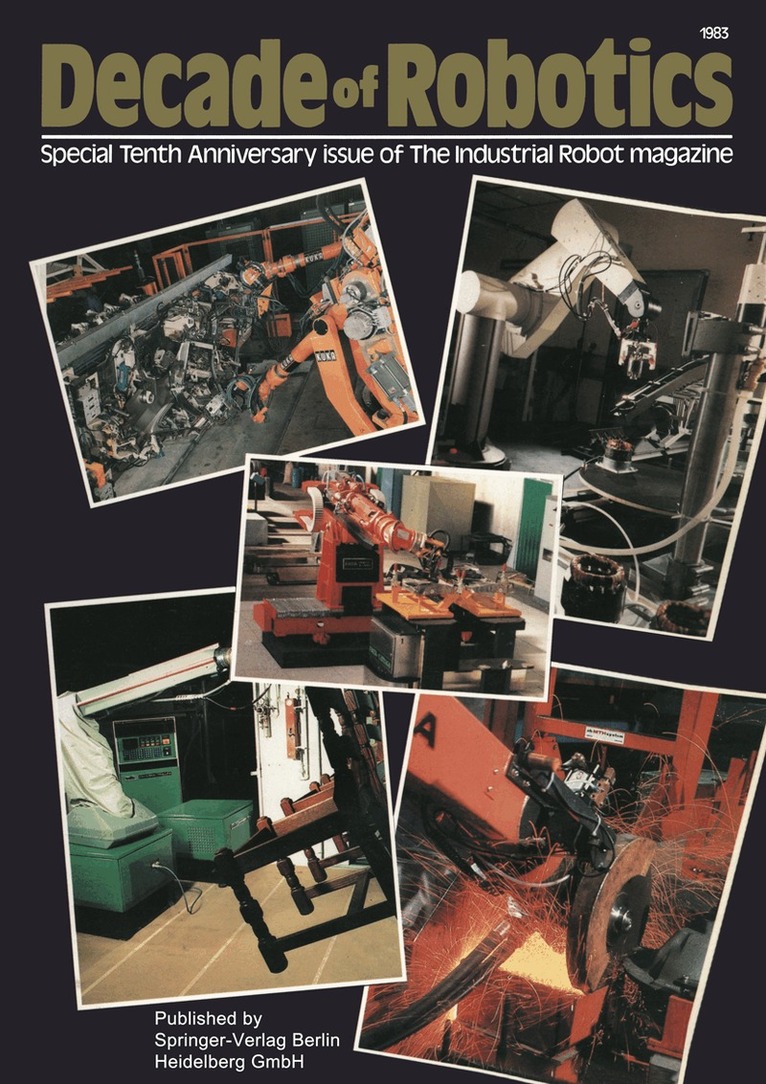
HERE are two views about the story of King T Canute and the incoming tide. One version has it that he was stupid enough to think that he was such a powerful King that he could stop the tide coming in. The other version suggests that he was demonstrating to his stick-in-the-mud advisers that not even a King as powerful as himself could tum back the tide. Either version has obvious applications to a number ofBritish industrial enterprises. The simple fact is that there is no way the incoming tide of robots can be turned back. There are three options. Face it out and drown; retreat before it, that roughly equates to importing foreign made robots which means exporting employment; or make the most ofit, which entails investing in the rapidly developing robot industry and thereby creating wealth and employment at home. There is no doubt that the design and manufacturing talent is available. I only hope that the Captains of British Industry will take heed of the second version of the story ofKing Canute . .
Häftad, Engelska, 1984
1 071 kr
Skickas inom 10-15 vardagar
ompanies are turning increasingly to FMS, or Flexible C Manufacturing Systems, to improve their performance. They see FMS as a business-driven route to improved profitability through reduced lead-times, rapid response to market conditions, increased flexibility and lower manning. However, since The FMS Report was first written many more firms have begun the exciting task of evaluating, and in some cases, adopting, flexible manufacturing systems to improve their business position and their manufacturing effectiveness. The practical experiences of these firms have not only served to reinforce the need for The FMS Report in the first place, but they have underscored its message. But these practical experiences have had another effect. They have pulled into even sharper focus than before the four pivotal issues which are fundamental to the successful implementation of FMS: namely, principles; simplicity; software; and people. On the matter of establishing principles it is important to determine what level of flexibility is right for your FMS to be compatible with your company's business objectives. It can be unrealistic and expensive to think in terms of an FMS which is too flexible for your needs. So it is important to approach FMS from a 'top down' attitude born out of a thorough evaluation of the company's business strategy. This must be backed-up by an operational strategy to ensure that the right human and financial resources and attitudes are available to implement the business plan and achieve the objectives-especially those centring on FMS.