J. Smeets – författare
Visar alla böcker från författaren J. Smeets. Handla med fri frakt och snabb leverans.
4 produkter
4 produkter
Inbunden, Engelska, 2000
2 898 kr
Skickas inom 10-15 vardagar
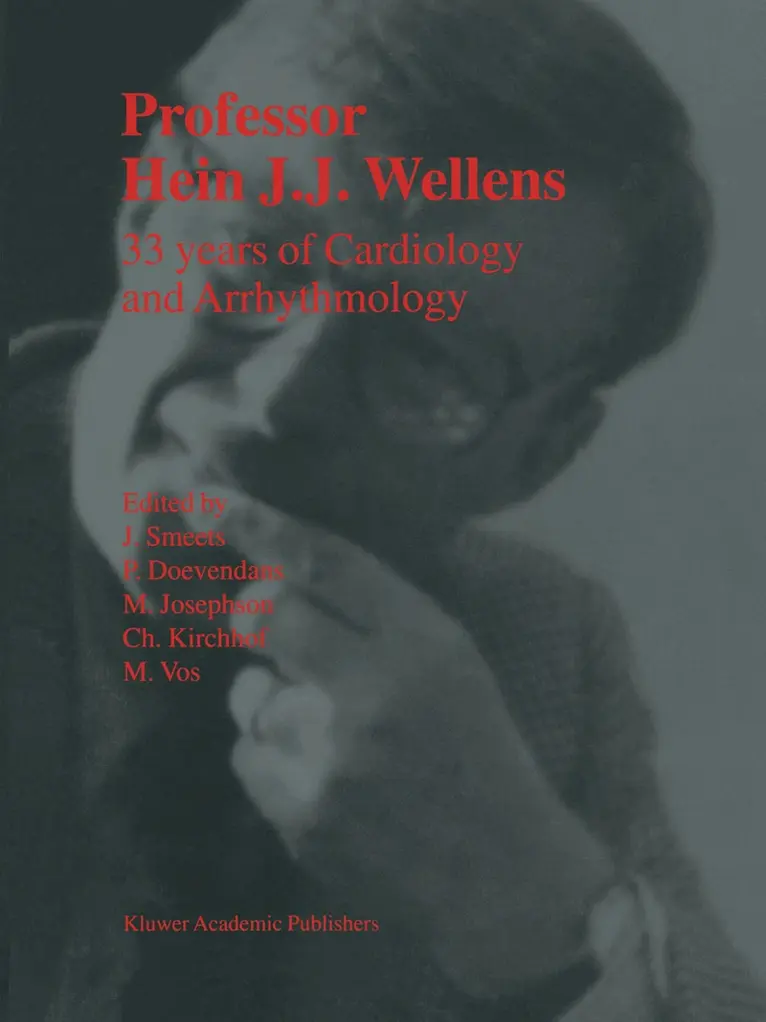
The first invasive evaluation of cardiac arrhythmias in humans was performed in 1967 in Paris (Prof. P. Coumel) and Amsterdam (Prof. D. Durrer). This was the start of a rapid increase in our knowledge of the diagnosis, mechanism and treatment of cardiac arrhythmias. In that same year Prof. Hein J.J. Wellens became cardiologist in the Wilhelmina Gasthuis in Amsterdam. Initially in Amsterdam (1967-1977) and later on in Maastricht (from 1977), he was the driving force for many breakthroughs in clinical cardiac electrophysiology. With an active interplay between the knowledge derived from the 12-lead electrocardiogram and the recordings made with invasive electrophysiology, he composed new ideas leading to major contributions in clinical cardiac electrophysiology and, more generally, in arrhythmology. He published over 650 scientific papers and 14 books, and had numerous functions within scientific boards of prestigious journals. In addition he trained more than 120 cardiologists in clinical cardiac electrophysiology. On the occasion of the congress `2000, Future of Arrhythmology: Lessons From the Past, Promises For Tomorrow', we highlight the scientific work of Prof. Hein J.J. Wellens. A selection of more than 60 articles over the whole time span has been selected. These articles are accompanied by comments from an expert, co-worker and/or former fellow in order to place the paper in a scientific time frame, including the relationship of the author with Prof. Hein J.J. Wellens.
E-bok
PDF, Engelska, 2013979 kr
Läs direkt efter köp
Principles and Methods for Determining Ecological Criteria on Hydrobiocenoses is a collection of papers presented at the 1975 European Scientific Colloquium on Principles and Methods for Determining Ecological Criteria on Hydrobiocenoses, held in Luxembourg. This Colloquium aims to define a scientific basis for assessing the results of pollution on aquatic fauna and flora, as well as the biological methods to be used in assessing the extent of such pollution. This book is organized into four parts encompassing 29 chapters. After a brief overview of a series of parameters for the specific uses of different water classifications and regional evaluation of water pollution, this book goes on examining the ecological consequences of water pollution establishment of criteria and the ecological variable and their effect on aquatic fauna. These topics are followed by a discussion of the value of aquatic plants in water quality characterization, as well as the principles of the methods used. The succeeding parts highlight the concepts and practical methods used in the biological monitoring of surface waters. These parts particularly consider the benefits of using bioindicators and laboratory bioassays. The concluding discusses a comparative study of biological-ecological water assessment methods of water quality. This book will be of value to environmental scientists, engineers, and researchers.
Häftad, Engelska, 2012
1 683 kr
Skickas inom 10-15 vardagar
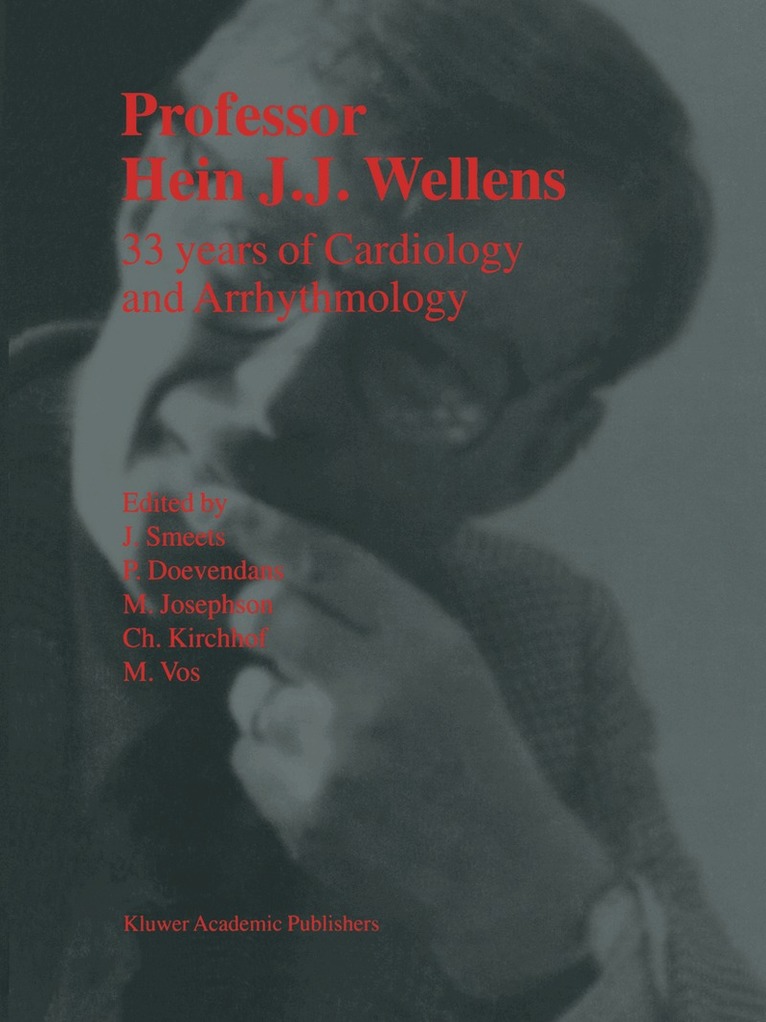
The first invasive evaluation of cardiac arrhythmias in humans was performed in 1967 in Paris (Prof. P. Coumel) and Amsterdam (Prof. D. Durrer). This was the start of a rapid increase in our knowledge of the diagnosis, mechanism and treatment of cardiac arrhythmias. In that same year Prof. Hein J.J. Wellens became cardiologist in the Wilhelmina Gasthuis in Amsterdam. Initially in Amsterdam (1967-1977) and later on in Maastricht (from 1977), he was the driving force for many breakthroughs in clinical cardiac electrophysiology. With an active interplay between the knowledge derived from the 12-lead electrocardiogram and the recordings made with invasive electrophysiology, he composed new ideas leading to major contributions in clinical cardiac electrophysiology and, more generally, in arrhythmology. He published over 650 scientific papers and 14 books, and had numerous functions within scientific boards of prestigious journals. In addition he trained more than 120 cardiologists in clinical cardiac electrophysiology. On the occasion of the congress `2000, Future of Arrhythmology: Lessons From the Past, Promises For Tomorrow', we highlight the scientific work of Prof. Hein J.J. Wellens. A selection of more than 60 articles over the whole time span has been selected. These articles are accompanied by comments from an expert, co-worker and/or former fellow in order to place the paper in a scientific time frame, including the relationship of the author with Prof. Hein J.J. Wellens.
E-bok
PDF, Engelska, 20122 036 kr
Läs direkt efter köp
The first invasive evaluation of cardiac arrhythmias in humans was performed in 1967 in Paris (Prof. P. Coumel) and Amsterdam (Prof. D. Durrer). This was the start of a rapid increase in our knowledge of the diagnosis, mechanism and treatment of cardiac arrhythmias. In that same year Prof. Hein J.J. Wellens became cardiologist in the Wilhelmina Gasthuis in Amsterdam. Initially in Amsterdam (1967-1977) and later on in Maastricht (from 1977), he was the driving force for many breakthroughs in clinical cardiac electrophysiology. With an active interplay between the knowledge derived from the 12-lead electrocardiogram and the recordings made with invasive electrophysiology, he composed new ideas leading to major contributions in clinical cardiac electrophysiology and, more generally, in arrhythmology. He published over 650 scientific papers and 14 books, and had numerous functions within scientific boards of prestigious journals. In addition he trained more than 120 cardiologists in clinical cardiac electrophysiology. On the occasion of the congress `2000, Future of Arrhythmology: Lessons From the Past, Promises For Tomorrow'', we highlight the scientific work of Prof. Hein J.J. Wellens. A selection of more than 60 articles over the whole time span has been selected. These articles are accompanied by comments from an expert, co-worker and/or former fellow in order to place the paper in a scientific time frame, including the relationship of the author with Prof. Hein J.J. Wellens.