J. W. Vaughn – författare
Visar alla böcker från författaren J. W. Vaughn. Handla med fri frakt och snabb leverans.
4 produkter
4 produkter
Häftad, Engelska, 1972
250 kr
Skickas inom 10-15 vardagar
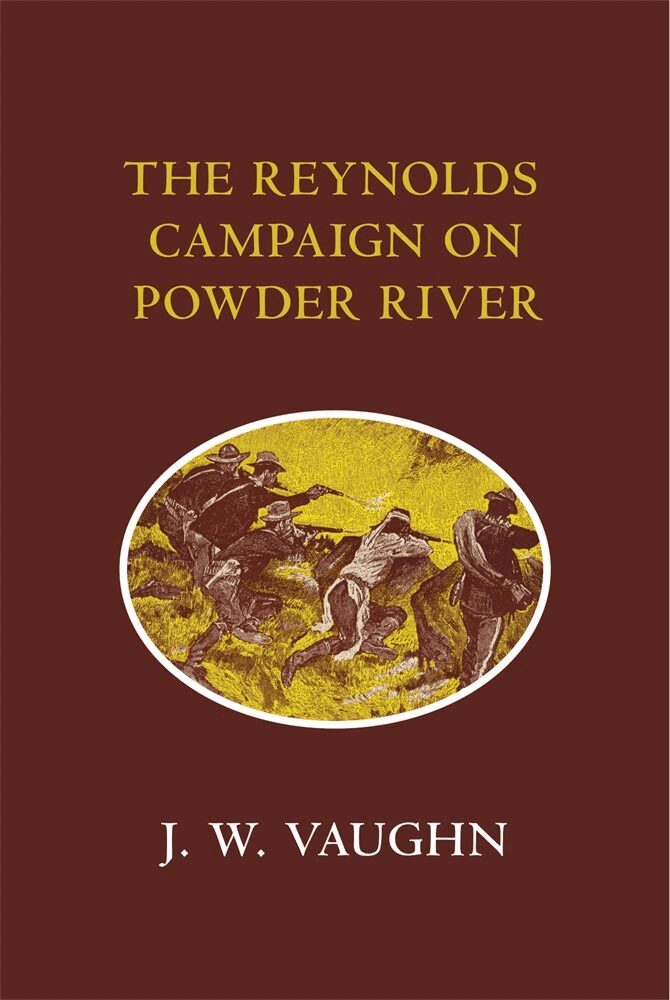
On March 17, 1876, against the backdrop of the frenzied gold rush to the Black Hills, Colonel Joseph J. Reynolds led a now obscure attack on a Cheyenne Indian village. Although it was considered a military failure and lacked the renown of the Rosebud and the Little Bighorn battles, the engagement marked the decision of the U.S. government to force a final showdown with the Indians.The author scoured the battlefield with a metal detector and examined the thousand pages of testimony in the court-martial proceedings that followed the retreat. He has reconstructed the battle in detail and placed the campaign in perspective as the immediate cause of the Indian Wars that followed. In presenting the point of view of both soldiers and Indians, he has ascertained the facts surrounding this misunderstood engagement.
Häftad, Engelska, 2002
250 kr
Skickas inom 10-15 vardagar
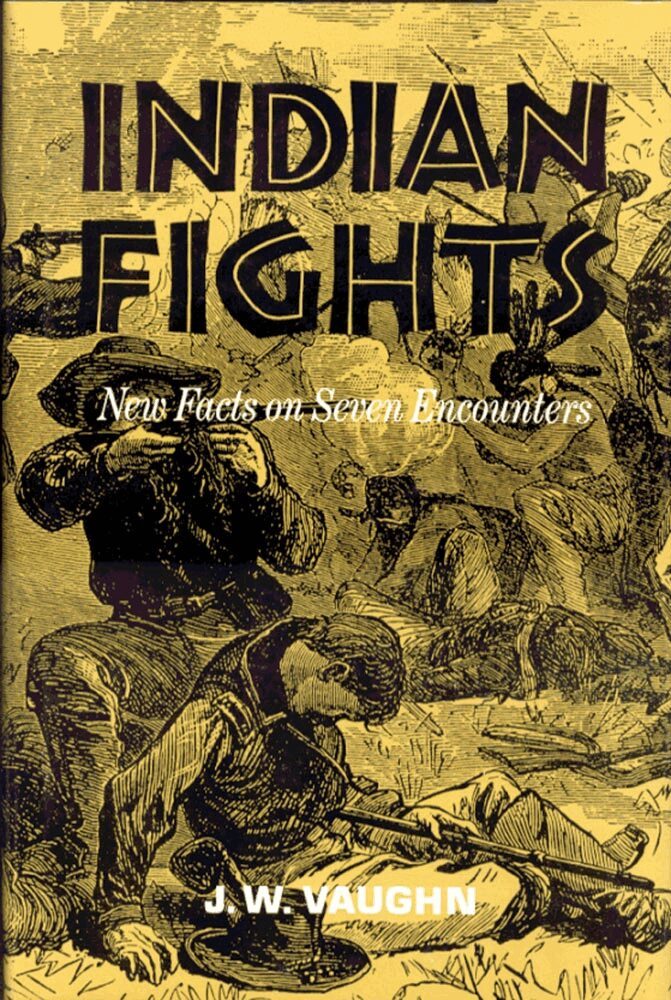
In Indian Fights, J. W. Vaughn gives detailed accounts of the battles, careful descriptions of the battlefields, and interesting asides on the U.S. Army officers and soldiers serving in the West during and after the Civil War. Using a metal detector, Vaughn uncovered cartridge cases, bullets, and other debris marking battle situations, allowing him to reconstruct many little-known battles in detail. He analyzed a number of engagements that occurred around Cheyenne Fork, Wyoming, a popular camping place on the old Bozeman Trail, comparing his findings with the mass of conflicting testimonies, government records, newspaper accounts, and other sources covering the battles. New light is shed on the Fetterman disaster, partly absolving Brevet Lieutenant Colonel William H. Fetterman of the blame many historians have placed on him for disobeying orders. Vaughn also discusses a mostly forgotten engagement near Fort C. F. Smith, battles near Fort Laramie, the Rosebud campaign, and the aftermath of the defeat of General George Armstrong Custer at the Battle of the Little Bighorn.
E-bok
Engelska, 2017627 kr
Läs direkt efter köp
“The stories contained herein are all of actual happenings and actual participants; here are no fictitious names, no colored circumstances. They are part of the real history of the West, and for that reason I am not ashamed to place this volume in the hands of any interested boy or girl, youth or elderly person, who may desire to know the truth about one of the leading Indian battles, and other important frontier happenings pertaining thereto, and the men who played leading parts therein. Every character mentioned in each chapter was a living, breathing person, and every incident related in this book can be vouched for and verified.” From Troopers with Custer.Although everyone in Custer’s immediate command was killed during the fighting at the Battle of Little Big Horn on June 25-26, 1876, others who participated in the battle survived. Troopers with Custer tells their stories, often in their own words.
E-bok
Engelska, 2017627 kr
Läs direkt efter köp
“Crook always maintained that, since his command occupied the field after the battle, he was not defeated at the Rosebud, and that if the battle had gone according to his orders, it would have resulted in a real triumph for his men. This view was also held by his superiors, although they called it a ‘barren victory.’ His part in the campaign was to form a junction with the other advancing columns, combining with them in returning the infractious Sioux to their reservations. His immediate purpose was to find and destroy the village of Crazy Horse. He accomplished none of these objectives. Instead he retired from the scene, permitting the forces of Crazy Horse to concentrate their strength against the troops to the north.” From With Crook at the RosebudThe 1868 Treaty of Fort Laramie gave the Sioux and Cheyenne Indian tribes control over a wide region, covering Montana, Wyoming, Nebraska, and part of the Dakotas. But in the 1870s gold was discovered in the Black Hills, and white settlers invaded Indian territory in desperate search for the precious mineral. Clashes between miners and Indians erupted. After trying other means of settling the disputes, the U.S. government decreed that all Indians in the northwest should be living on reservations by January 1876. The Sioux and the Cheyenne refused to obey, so the Bureau of Indian Affairs called in the military to enforce the order. Brigadier General George Crook led the Big Horn and Yellowstone Expeditionary forces into southern Montana against rebellious Sioux. But Crazy Horse, leading a party of Sioux and Cheyenne, defeated a portion of Crooks command at Powder River in March 1876. In his chagrin and determination for revenge, Crook led his troops to the Rosebud canyon to destroy Crazy Horse’s village.The two powerful forces, each numbering more than one thousand men, met at the Rosebud River on June 17. At the end of the fierce, day-long battle, Crook returned to his base nearly forty miles away, convinced that he had won. Time would prove, however, that the battle resulted in a stalemate. Crook’s force was removed from the larger campaign and he was unable to come to Custer’s aid at the Little Big Horn eight days later.Though the Battle of the Rosebud had a significant impact on the rest of the campaign against the Sioux, it has often been eclipsed by publicity surrounding the Battle of the Little Big Horn. It was not until 1956, when With Crook at the Rosebud was first published by Stackpole, that the first clear history of the battle emerged.