J. Warren Smith – författare
Visar alla böcker från författaren J. Warren Smith. Handla med fri frakt och snabb leverans.
13 produkter
13 produkter
Inbunden, Engelska, 2011
2 038 kr
Skickas inom 3-6 vardagar
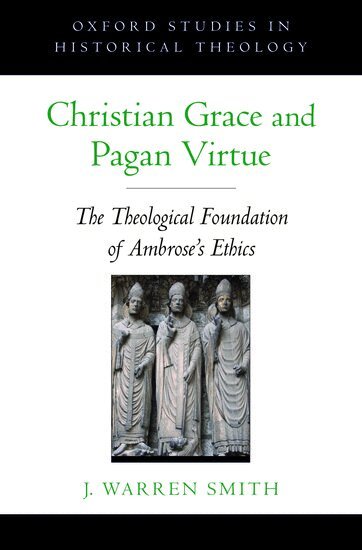
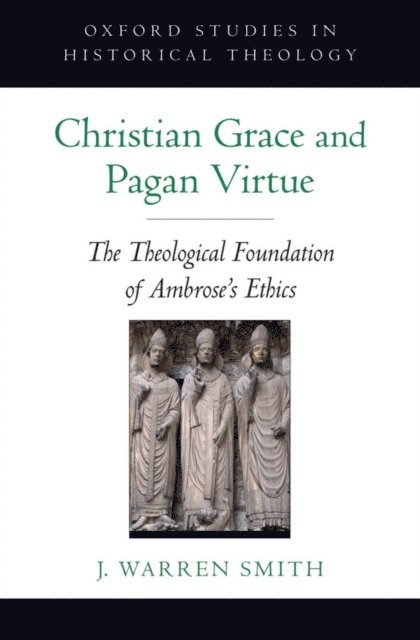
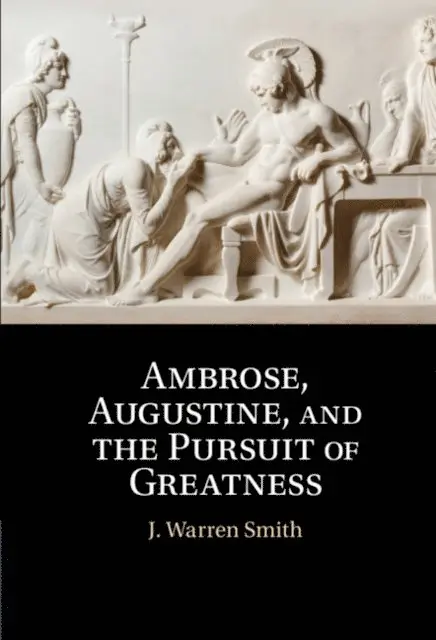
Ambrose of Milan (340-397) was the first Christian bishop to write a systematic account of Christian ethics, in the treatise De Officiis, variously translated as "on duties" or "on responsibilities." But Ambrose also dealt with the moral life in other works, notably his sermons on the patriarchs and his addresses to catechumens and newly baptized. There is a vast modern literature on Ambrose, but only in recent decades has he begun to be taken seriously as a thinker, not just as a working bishop and ecclesiastical politician. Because Ambrose was one of the few Latin Christian writers in antiquity who knew Greek, another major area of Ambrose scholarship has been the study of his sources, notably the Jewish philosopher Philo, and Christian writers such as Origen of Alexandria. In this book, Warren Smith examines the neglected biblical, liturgical and theological foundations of Ambrose's thought on ethics. Earlier studies have found little that was distinctively Christian in Ambrose's image of the virtuous person. Smith shows that though, like the pagans, Ambrose emphasized moderation, courage, justice, and prudence, for him these characteristics were shaped by the church's beliefs about God's salvific economy. The courage of a Christian facing persecution, for example, was an expression of faith in Christ's resurrection and the church's eschatological hope. Eschatology, for Ambrose, was not pagan wisdom clothed in pious language, but the very logic upon which virtue rests.
E-bok
PDF, Engelska, 20101 151 kr
Läs direkt efter köp
Ambrose of Milan (340-397) was the first Christian bishop to write a systematic account of Christian ethics, in the treatise De Officiis, variously translated as "on duties" or "on responsibilities." But Ambrose also dealt with the moral life in other works, notably his sermons on the patriarchs and his addresses to catechumens and newly baptized. There is a vast modern literature on Ambrose, but only in recent decades has he begun to be taken seriously as a thinker, not just as a working bishop and ecclesiastical politician. Because Ambrose was one of the few Latin Christian writers in antiquity who knew Greek, another major area of Ambrose scholarship has been the study of his sources, notably the Jewish philosopher Philo, and Christian writers such as Origen of Alexandria. In this book, Warren Smith examines the neglected biblical, liturgical and theological foundations of Ambrose''s thought on ethics. Earlier studies have found little that was distinctively Christian in Ambrose''s image of the virtuous person. Smith shows that though, like the pagans, Ambrose emphasized moderation, courage, justice, and prudence, for him these characteristics were shaped by the church''s beliefs about God''s salvific economy. The courage of a Christian facing persecution, for example, was an expression of faith in Christ''s resurrection and the church''s eschatological hope. Eschatology, for Ambrose, was not pagan wisdom clothed in pious language, but the very logic upon which virtue rests.
Inbunden, Engelska, 2026
575 kr
Skickas inom 3-6 vardagar
Häftad, Engelska, 2004
559 kr
Skickas inom 3-6 vardagar
Does God suffer, and can we be close to God when we suffer? Gregory of Nyssa, one of the three most influential theologians of the early Church, offers a vision of suffering as part of our progress to final union with God.
Inbunden, Engelska, 2022
386 kr
Skickas inom 5-8 vardagar
Häftad, Engelska, 2022
276 kr
Skickas inom 5-8 vardagar
Inbunden, Engelska, 2020
1 136 kr
Skickas inom 7-10 vardagar
Since Aristotle, the concept of the magnanimous or great-souled man was employed by philosophers of antiquity to describe individuals who attained the highest degree of virtue. Greatness of soul (magnitudo animi or magnanimitas) was part of the language of Classical and Hellenistic virtue theory central to the education of Ambrose and Augustine. Yet as bishops they were conscious of fundamental differences between Christian and pagan visions of virtue. Greatness of soul could not be appropriated whole cloth. Instead, the great-souled man had to be baptized to conform with Christian understandings of righteousness, compassion, and humility. In this book, J. Warren Smith traces the development of the ideal of the great-souled man from Plato and Aristotle to latter adaptions by Cicero, Seneca, and Plutarch. He then examines how Ambrose's and Augustine's theological commitments influenced their different critiques, appropriations, and modifications of the language of magnanimity.
E-bok
Engelska, 20201 329 kr
Läs direkt efter köp
Since Aristotle, the concept of the magnanimous or great-souled man was employed by philosophers of antiquity to describe individuals who attained the highest degree of virtue. Greatness of soul (magnitudo animi or magnanimitas) was part of the language of Classical and Hellenistic virtue theory central to the education of Ambrose and Augustine. Yet as bishops they were conscious of fundamental differences between Christian and pagan visions of virtue. Greatness of soul could not be appropriated whole cloth. Instead, the great-souled man had to be baptized to conform with Christian understandings of righteousness, compassion, and humility. In this book, J. Warren Smith traces the development of the ideal of the great-souled man from Plato and Aristotle to latter adaptions by Cicero, Seneca, and Plutarch. He then examines how Ambrose''s and Augustine''s theological commitments influenced their different critiques, appropriations, and modifications of the language of magnanimity.
E-bok
PDF, Engelska, 20201 329 kr
Läs direkt efter köp
Since Aristotle, the concept of the magnanimous or great-souled man was employed by philosophers of antiquity to describe individuals who attained the highest degree of virtue. Greatness of soul (magnitudo animi or magnanimitas) was part of the language of Classical and Hellenistic virtue theory central to the education of Ambrose and Augustine. Yet as bishops they were conscious of fundamental differences between Christian and pagan visions of virtue. Greatness of soul could not be appropriated whole cloth. Instead, the great-souled man had to be baptized to conform with Christian understandings of righteousness, compassion, and humility. In this book, J. Warren Smith traces the development of the ideal of the great-souled man from Plato and Aristotle to latter adaptions by Cicero, Seneca, and Plutarch. He then examines how Ambrose''s and Augustine''s theological commitments influenced their different critiques, appropriations, and modifications of the language of magnanimity.
Inbunden, Engelska, 2015
363 kr
Skickas inom 5-8 vardagar
Häftad, Engelska, 2015
211 kr
Skickas inom 5-8 vardagar
E-bok
Engelska, 2015337 kr
Läs direkt efter köp
We have all had the experience of being at church and hearing the pastor say, "And now with the confidence of children we are bold to pray, ''Our Father . . .''" but before we know it we are saying "for Thine is the kingdom, and the power, and the glory, forever. Amen." In the very moment of intimacy when we are given the privilege of entering the presence of our heavenly Father, our minds have drifted off. We speak the words of the prayer, not from our hearts, but from the autopilot of memory. This is mere recitation, not prayer. If in relationships familiarity breeds contempt, in the case of the Lord''s Prayer, familiarity breeds thoughtlessness.The Lord''s Prayer: A Confession of the New Covenant is not a Bible study in the traditional sense. It challenges us to think about the Lord''s Prayer anew by understanding it as a confession of the New Covenant that Christ makes with us when we are made children of God in baptism. In hearing these familiar words afresh we learn to remember our baptismal covenant so that we might live more fully into that new relationship with God and with one another.
E-bok
Engelska, 2015503 kr
Läs direkt efter köp
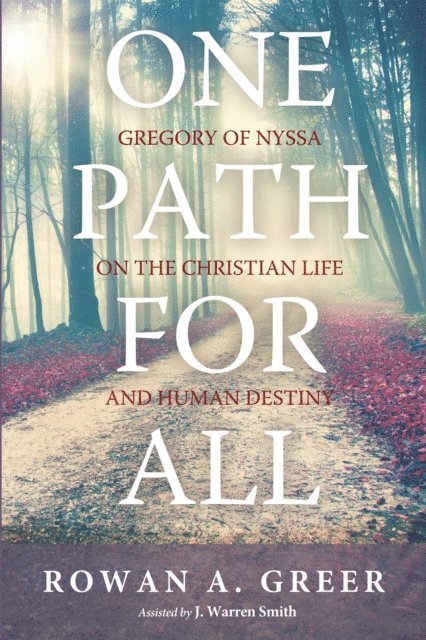
In his writings and his career Gregory of Nyssa assumes many roles. He is a Christian Platonist, a spiritual guide for ascetics and those seeking the vision of God, as well as one of those who shaped the Trinitarian doctrine of God espoused at Constantinople in 381. But he is also a popular preacher and, paradoxically, someone unafraid of deeper speculations regarding the meaning of the Christian ideal. The translations in Part One illustrate these various concerns, but are not a sufficient basis for the thesis of Part Two, one that attempts to answer the question of how to describe the coherence of a thinker far from systematic. One solution is to appeal to Gregory''s conviction that after this world all Christians, indeed all humans, will be united in diversity, and that this means that all are now on the one path to their destiny, however much their progress may differ. This answer does not pretend to solve all problems, nor does it rule out other approaches to Gregory''s thought. But it locates Gregory''s work in the liturgical and sacramental life of the church that includes ordinary as well as elite Christians.