J.A. Yoder – författare
Visar alla böcker från författaren J.A. Yoder. Handla med fri frakt och snabb leverans.
8 produkter
8 produkter
Häftad, Engelska, 2025
151 kr
Skickas
E-bok
Engelska, 2025138 kr
Läs direkt efter köp
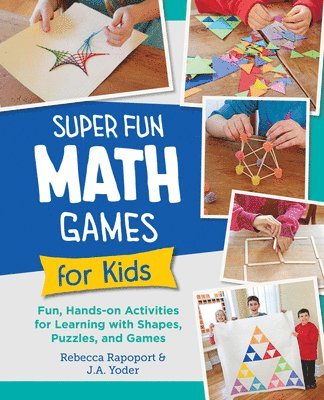
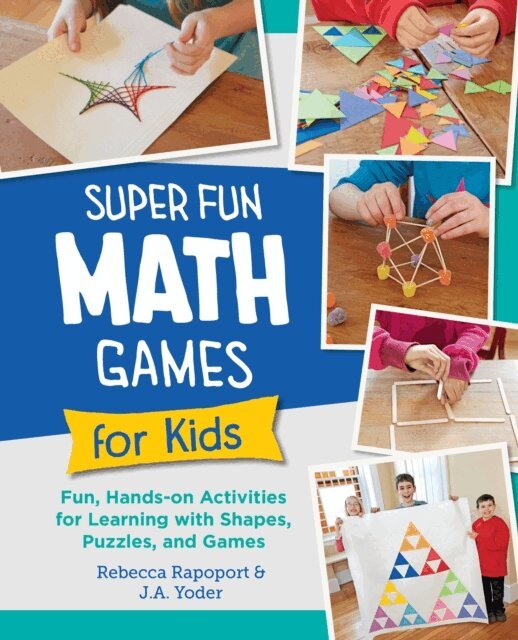
Make learning about math fun for kids with these hands-on activities that include drawing and building shapes, solving puzzles, and playing games.Math is the foundation of all sciences and key to understanding the world around us. Based on the best-selling Math Games Lab for Kids, Super Fun Math Games for Kids engages kids with exciting projects that build these critical math skills. They will have a blast:Exploring geometry and topology by making prisms, antiprisms, Platonic solids, and Möbius strips.Building logic skills by playing and strategizing through tangrams, toothpick puzzles, and the game of Nim.Drawing and charting graphs to learn the language of connections.Discovering how to color maps like a mathematician by using the fewest colors possible.Creating mind bending fractals with straight lines and repeat shapes.Each lab contains a complete materials list, clear step-by-step photographs of the process, as well as finished samples. The labs can be used as singular projects or as part of a yearlong curriculum of experiential learning. The activities are open-ended, designed to be explored over and over, often with different results. Geared toward being taught or guided by adults, they are enriching for a range of ages and skill levels.Everything you need to complete the activities can be found in the book or around the house. Learn to think like a mathematician—see how much you’ll discover!
Häftad, Engelska, 2017
195 kr
Skickas
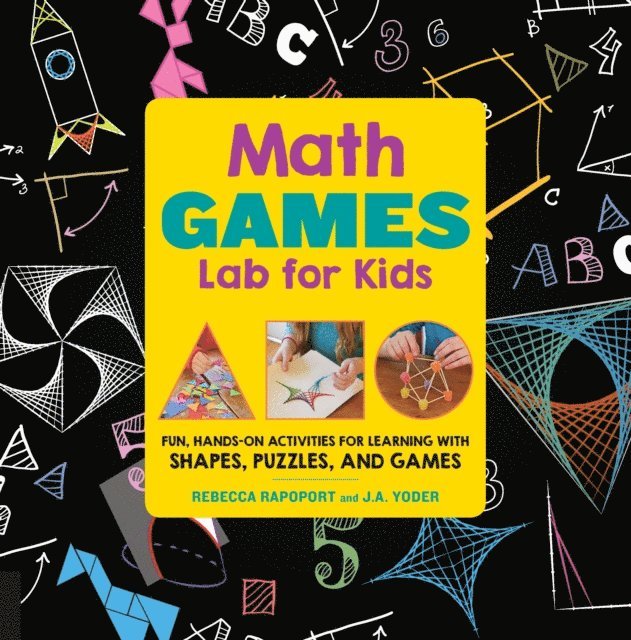
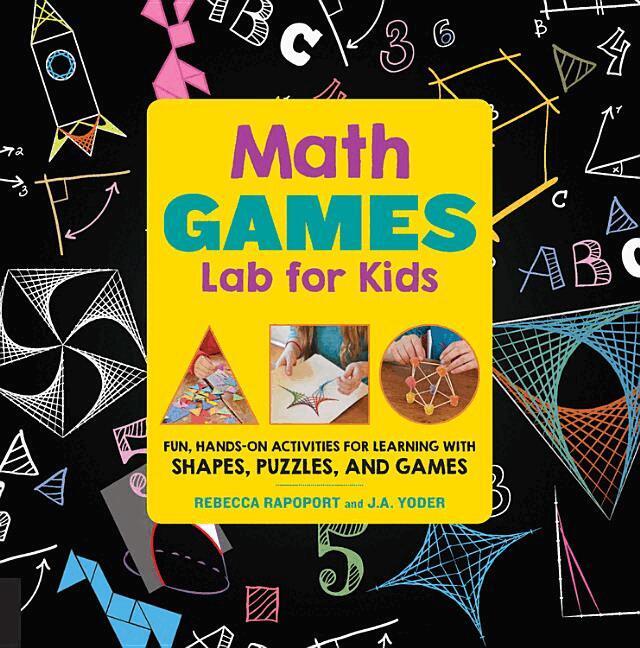
Math is the foundation of all sciences and key to understanding the world around us. Math Games Lab for Kids shares more than 50 hands-on activities that make learning about math fun by drawing and building shapes, solving puzzles, and playing games.Have fun:exploring geometry and topology by making prisms, antiprisms, Platonic solids, and Möbius strips.building logic skills by playing and strategizing through tangrams, toothpick puzzles, and the game of Nim.drawing and charting graphs to learn the language of connections.discovering how to color maps like a mathematician by using the fewest colors possible.creating mind bending fractals with straight lines and repeat shapes.Everything you need to complete the activities can be found in the book or around the house. Learn to think like a mathematician—see how much you'll discover! The popular Lab for Kids series features a growing list of books that share hands-on activities and projects on a wide host of topics, including art, astronomy, clay, geology, energy, and even how to create your own circus—all authored by established experts in their fields. Each lab contains a complete materials list, clear step-by-step photographs of the process, as well as finished samples. The labs can be used as singular projects or as part of a yearlong curriculum of experiential learning. The activities are open-ended, designed to be explored over and over, often with different results. Geared toward being taught or guided by adults, they are enriching for a range of ages and skill levels. Gain firsthand knowledge on your favorite topic with Lab for Kids.
E-bok
Engelska, 2017452 kr
Läs direkt efter köp
Math is the foundation of all sciences and key to understanding the world around us. Math Games Lab for Kids shares more than 50 hands-on activities that make learning about math fun by drawing and building shapes, solving puzzles, and playing games.Have fun:exploring geometry and topology by making prisms, antiprisms, Platonic solids, and Möbius strips.building logic skills by playing and strategizing through tangrams, toothpick puzzles, and the game of Nim.drawing and charting graphs to learn the language of connections.discovering how to color maps like a mathematician by using the fewest colors possible.creating mind bending fractals with straight lines and repeat shapes.Everything you need to complete the activities can be found in the book or around the house. Learn to think like a mathematician—see how much you'll discover!The popular Lab for Kids series features a growing list of books that share hands-on activities and projects on a wide host of topics, including art, astronomy, clay, geology, energy, and even how to create your own circus—all authored by established experts in their fields. Each lab contains a complete materials list, clear step-by-step photographs of the process, as well as finished samples. The labs can be used as singular projects or as part of a yearlong curriculum of experiential learning. The activities are open-ended, designed to be explored over and over, often with different results. Geared toward being taught or guided by adults, they are enriching for a range of ages and skill levels. Gain firsthand knowledge on your favorite topic with Lab for Kids.
Häftad, Engelska, 2019
210 kr
Skickas inom 5-8 vardagar
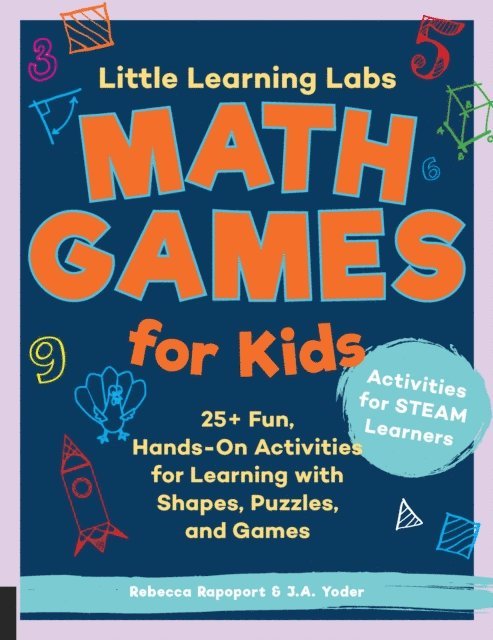
Little Learning Labs: Math Games for Kids makes math fun through games, puzzles, and playing with shapes.
E-bok
Engelska, 2019307 kr
Läs direkt efter köp
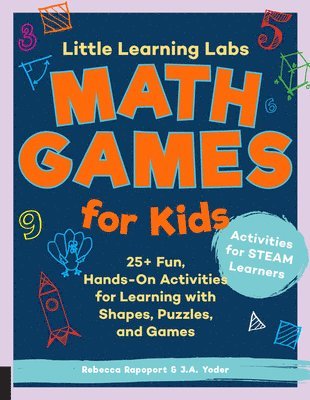
Little Learning Labs: Math Games for Kids—an abridged paperback edition of Math Games Lab for Kids—presents 25+ hands-on activities that include coloring, art, puzzles, and more that make learning about math fun.Explore geometry and topology by building, drawing, and transforming shapes.Discover how to color maps like a mathematician by using the fewest colors possible.Draw graphs to learn the language of connections.Create mind-bending fractals with straight lines and repeat shapes.Everything you need to complete the activities can either be found in the book or around the house.The popular Little Learning Labs series (based on the larger format Lab for Kids series) features a growing list of books that share hands-on activities and projects on a wide host of topics, including art, astronomy, geology, math, and even bugs—all authored by established experts in their fields. Each lab contains a complete materials list, clear step-by-step photographs of the process, as well as finished samples. The activities are open-ended, designed to be explored over and over, often with different results. Geared toward being taught or guided by adults, they are enriching for a range of ages and skill levels. Gain firsthand knowledge on your favorite topic with Little Learning Labs.Open Little Learning Labs: Math Games for Kids and start exploring the exciting world of math!
E-bok
PDF, Engelska, 2012687 kr
Läs direkt efter köp
The historic Binnenhof, seat of the Dutch government in The Hague, provided the setting (January 1985) for a conference in which participants from eleven countries met to consider the theme: Support networks in a caring community: research and policy, fact and fiction. At the outset, conference leadership - provided by Professors J.M.L. Jonker (The Netherlands) and R.A.B. Leaper (United Kingdom) urged the conferees not to allow their enthusiasm for informal support networks to combine with the pervasive awareness of the failures of welfare states into a simplistic stance of advocacy, with a consequent appeal to politicians to direct state funds accordingly. Legitimate criticisms of the responses of welfare states to the needs of citizens were to be seen as the context for discussion, not the substance of conference deliberations. More specifically, if it is now apparent to many people that governmental assistance of individuals with social needs can lead to an undesirable dependency on the part of increasingly passive citizens, that awareness does not lend logical support to an ideological position that governmental expenditures are pern~c~ous per se - to be replaced as rapidly as possible by a return to reliance on self, family, friends and associations that are developed voluntarily and financed by those who are sufficiently interested.
Häftad, Engelska, 2011
548 kr
Skickas inom 10-15 vardagar
The historic Binnenhof, seat of the Dutch government in The Hague, provided the setting (January 1985) for a conference in which participants from eleven countries met to consider the theme: Support networks in a caring community: research and policy, fact and fiction. At the outset, conference leadership - provided by Professors J.M.L. Jonker (The Netherlands) and R.A.B. Leaper (United Kingdom) urged the conferees not to allow their enthusiasm for informal support networks to combine with the pervasive awareness of the failures of welfare states into a simplistic stance of advocacy, with a consequent appeal to politicians to direct state funds accordingly. Legitimate criticisms of the responses of welfare states to the needs of citizens were to be seen as the context for discussion, not the substance of conference deliberations. More specifically, if it is now apparent to many people that governmental assistance of individuals with social needs can lead to an undesirable dependency on the part of increasingly passive citizens, that awareness does not lend logical support to an ideological position that governmental expenditures are pern~c~ous per se - to be replaced as rapidly as possible by a return to reliance on self, family, friends and associations that are developed voluntarily and financed by those who are sufficiently interested.