Jack W. Coburn – författare
Visar alla böcker från författaren Jack W. Coburn. Handla med fri frakt och snabb leverans.
5 produkter
5 produkter
Inbunden, Engelska, 1990
2 238 kr
Skickas inom 10-15 vardagar
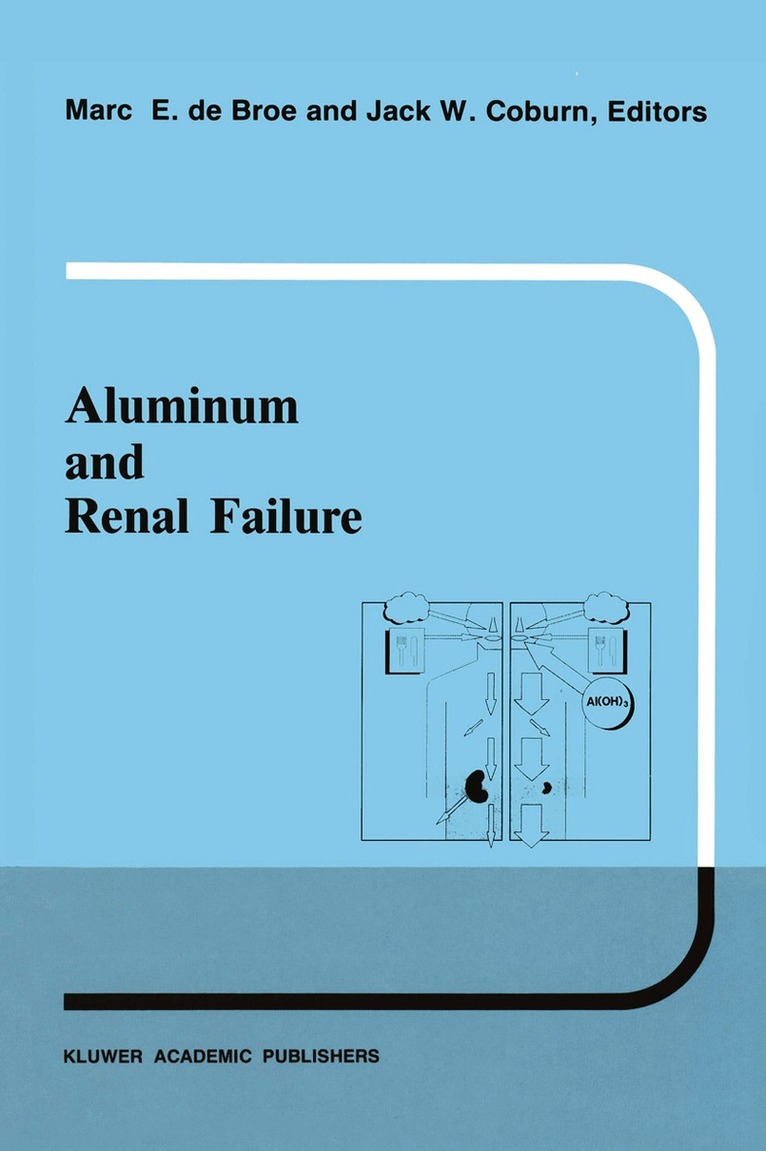
Increasing the accumulation of aluminum in the bone (body) in cases of renal osteodystrophy may influence the histopathologic aspect of the bones. Alumi- num blunts the effect of increased PTH secretion and favours the genesis of osteoid. That means, in cases of renal failure combined with aluminum accumulation, a relatively low bone tunover is found and no fibrosis of the bone marrow. Furthermore the amount of osteoid is increased. This means that there is evidence of osteomalacia especially when the latter is defined as an increased amount of osteoid covered with a relatively low number of cubic osteoblasts. To a certain extent the effect of aluminum accumulation is comparable to the effect of PTX. Treatment with DFO may normalize the bone, although not necessarily with a concomittant disappearance of alumi- num from the bone. The presence of aluminum in the bone can be suggested by routine histologic investigation of the bone and can be made rather probably by the aluminum staining combined with iron-staining, but can only be proven by more advanced techniques like ET AAS and LAMMA. References 1.Boyce BF, Elder HY, Elliot HL, Fogelman I, Gell GS, lunor Bl, Beastall G, Boyle YT, 1982: Hypercaicaemic ostemalacia due to aluminium toxicity. Lancet 6: 1009. 2. Verbueken AH, Visser Wl, Van de Vyver FL, Van Grieken RE, De Broe ME, 1986: The use of laser microprobe mass analysis (LAMMA) to control the staining of aluminum by aurin tricarboxylate (aluminon). Stain Technology 61: 287.
E-bok
PDF, Engelska, 20141 008 kr
Läs direkt efter köp
Disorders of Mineral Metabolism, Volume II: Calcium Physiology is a nine-chapter text that deals with the normal function of calcium, with much emphasis on a host of intracellular functions. This volume discusses the calcium absorption, excretion, and homeostasis, as well as the hormonal modifiers of its metabolism. The role of connective tissue and bone, the major storehouse of body calcium, is reviewed in terms of collagen metabolism. This book will prove useful to biochemists, pathophysiologists, and workers in the medical field.
E-bok
PDF, Engelska, 20141 008 kr
Läs direkt efter köp
Disorders of Mineral Metabolism, Volume I: Trace Minerals covers the pathophysiology of clinically relevant minerals and elements. This volume focuses on minerals whose average daily intake is under 50 mg. This text is composed of 12 chapters that tackle the clinical relevance and essentiality of various trace minerals in the human body, with particular emphasis on the disorders due to their abnormal metabolism. The trace mineral and elements considered in this volume include iron, coppers, zinc, lead, nickel, manganese, chromium, molybdenum, cadmium, aluminum, tin, lithium, and fluoride. Each chapter discusses the properties, body requirements, analysis, nutritional interactions, and toxicity of the mineral. This book will prove useful to biochemists, pathophysiologists, and workers in the medical field.
E-bok
PDF, Engelska, 20122 822 kr
Läs direkt efter köp
Häftad, Engelska, 2011
2 238 kr
Skickas inom 10-15 vardagar
Increasing the accumulation of aluminum in the bone (body) in cases of renal osteodystrophy may influence the histopathologic aspect of the bones. Alumi- num blunts the effect of increased PTH secretion and favours the genesis of osteoid. That means, in cases of renal failure combined with aluminum accumulation, a relatively low bone tunover is found and no fibrosis of the bone marrow. Furthermore the amount of osteoid is increased. This means that there is evidence of osteomalacia especially when the latter is defined as an increased amount of osteoid covered with a relatively low number of cubic osteoblasts. To a certain extent the effect of aluminum accumulation is comparable to the effect of PTX. Treatment with DFO may normalize the bone, although not necessarily with a concomittant disappearance of alumi- num from the bone. The presence of aluminum in the bone can be suggested by routine histologic investigation of the bone and can be made rather probably by the aluminum staining combined with iron-staining, but can only be proven by more advanced techniques like ET AAS and LAMMA. References 1.Boyce BF, Elder HY, Elliot HL, Fogelman I, Gell GS, lunor Bl, Beastall G, Boyle YT, 1982: Hypercaicaemic ostemalacia due to aluminium toxicity. Lancet 6: 1009. 2. Verbueken AH, Visser Wl, Van de Vyver FL, Van Grieken RE, De Broe ME, 1986: The use of laser microprobe mass analysis (LAMMA) to control the staining of aluminum by aurin tricarboxylate (aluminon). Stain Technology 61: 287.