Jacob Saliba – författare
Visar alla böcker från författaren Jacob Saliba. Handla med fri frakt och snabb leverans.
3 produkter
3 produkter
Inbunden, Engelska, 2026
1 386 kr
Kommande
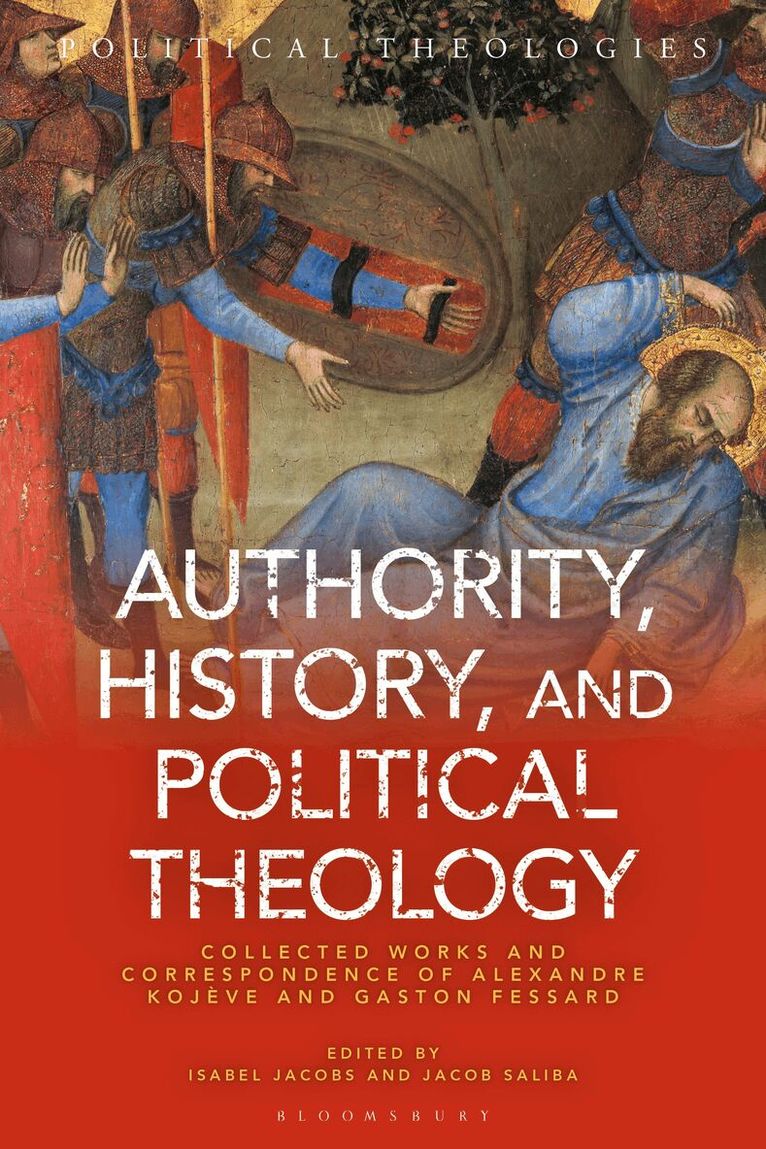
For the first time, this volume brings together the writings, lectures, and correspondence of two of the most distinctive voices in twentieth-century French thought: Alexandre Kojève (1902–1968) and Gaston Fessard (1897–1978). Kojève is widely regarded as one of the most influential philosophers in France. His Hegel seminars of the 1930s shaped an entire generation of intellectuals, including Georges Bataille, Jacques Lacan, and Raymond Aron. Among his closest interlocutors was Gaston Fessard, a leading Jesuit theologian and himself a member of the seminar.Authority, History, and Political Theology charts Kojève and Fessard’s friendship through their reviews of each other’s work, lectures, letters, and unpublished essays. These texts, many translated into English for the very first time, show how each thinker grappled with urgent political-theological issues, such as the rise of totalitarianism, secularism, and Marxism.Including a historical introduction, the volume situates their exchange at the intersection of Hegelian philosophy, Catholic theology, and global politics. It shows how two readers of Hegel– one an atheist philosopher, the other a Jesuit theologian – challenge how we think about political life, the role of religion in the public sphere, and the meaning of the end of history. Part of Bloomsbury’s Political Theologies series, this book is essential for readers interested in political theology, continental philosophy, and intellectual history.
E-bok
PDF, Engelska, 20261 286 kr
Läs direkt efter köp
For the first time, this volume brings together the writings, lectures, and correspondence of two of the most distinctive voices in twentieth-century French thought: Alexandre Koj ve (1902 1968) and Gaston Fessard (1897 1978). Koj ve is widely regarded as one of the most influential philosophers in France. His Hegel seminars of the 1930s shaped an entire generation of intellectuals, including Georges Bataille, Jacques Lacan, and Raymond Aron. Among his closest interlocutors was Gaston Fessard, a leading Jesuit theologian and himself a member of the seminar.Authority, History, and Political Theology charts Koj ve and Fessard's friendship through their reviews of each other's work, lectures, letters, and unpublished essays. These texts, many translated into English for the very first time, show how each thinker grappled with urgent political-theological issues, such as the rise of totalitarianism, secularism, and Marxism.Including a historical introduction, the volume situates their exchange at the intersection of Hegelian philosophy, Catholic theology, and global politics. It shows how two readers of Hegel one an atheist philosopher, the other a Jesuit theologian challenge how we think about political life, the role of religion in the public sphere, and the meaning of the end of history. Part of Bloomsbury's Political Theologies series, this book is essential for readers interested in political theology, continental philosophy, and intellectual history.
E-bok
Engelska, 20261 241 kr
Läs direkt efter köp
For the first time, this volume brings together the writings, lectures, and correspondence of two of the most distinctive voices in twentieth-century French thought: Alexandre Koj ve (1902 1968) and Gaston Fessard (1897 1978). Koj ve is widely regarded as one of the most influential philosophers in France. His Hegel seminars of the 1930s shaped an entire generation of intellectuals, including Georges Bataille, Jacques Lacan, and Raymond Aron. Among his closest interlocutors was Gaston Fessard, a leading Jesuit theologian and himself a member of the seminar.Authority, History, and Political Theology charts Koj ve and Fessard's friendship through their reviews of each other's work, lectures, letters, and unpublished essays. These texts, many translated into English for the very first time, show how each thinker grappled with urgent political-theological issues, such as the rise of totalitarianism, secularism, and Marxism.Including a historical introduction, the volume situates their exchange at the intersection of Hegelian philosophy, Catholic theology, and global politics. It shows how two readers of Hegel one an atheist philosopher, the other a Jesuit theologian challenge how we think about political life, the role of religion in the public sphere, and the meaning of the end of history. Part of Bloomsbury's Political Theologies series, this book is essential for readers interested in political theology, continental philosophy, and intellectual history.