Jacques Rupnik – författare
Visar alla böcker från författaren Jacques Rupnik. Handla med fri frakt och snabb leverans.
8 produkter
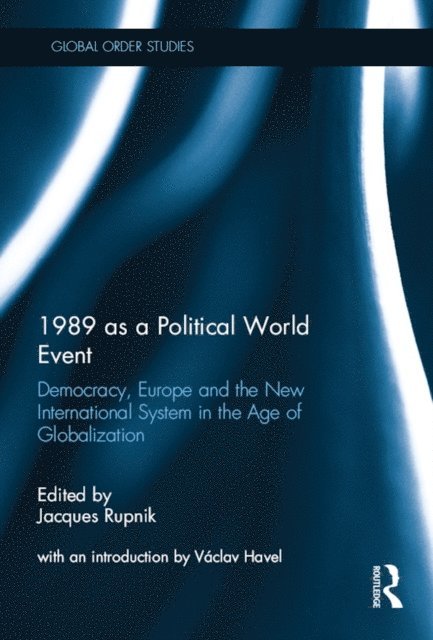
1989 as a Political World Event
Democracy, Europe and the New International System in the Age of Globalization
Inbunden, 2013
2586 kr
Lägg i varukorg
This book is not about the events of 1989, but about 1989 as a world event. Starting with the fall of the Berlin Wall and the collapse of the Soviet bloc it examines the historical significance and the world brought about by 1989. When the Cold War ended in Europe it ushered in a world in which the …
1989 as a Political World Event
Democracy, Europe and the New International System in the Age of Globalization
E-bok, 2013
830 kr
Lägg i varukorg
This book is not about the events of 1989, but about 1989 as a world event. Starting with the fall of the Berlin Wall and the collapse of the Soviet bloc it examines the historical significance and the world brought about by 1989. When the Cold War ended in Europe it ushered in a world in which the …
1989 as a Political World Event
Democracy, Europe and the New International System in the Age of Globalization
E-bok, 2013
830 kr
Lägg i varukorg
This book is not about the events of 1989, but about 1989 as a world event. Starting with the fall of the Berlin Wall and the collapse of the Soviet bloc it examines the historical significance and the world brought about by 1989. When the Cold War ended in Europe it ushered in a world in which the …
1989 as a Political World Event
Democracy, Europe and the New International System in the Age of Globalization
Häftad, 2015
742 kr
Lägg i varukorg
This book is not about the events of 1989, but about 1989 as a world event. Starting with the fall of the Berlin Wall and the collapse of the Soviet bloc it examines the historical significance and the world brought about by 1989. When the Cold War ended in Europe it ushered in a world in which the …
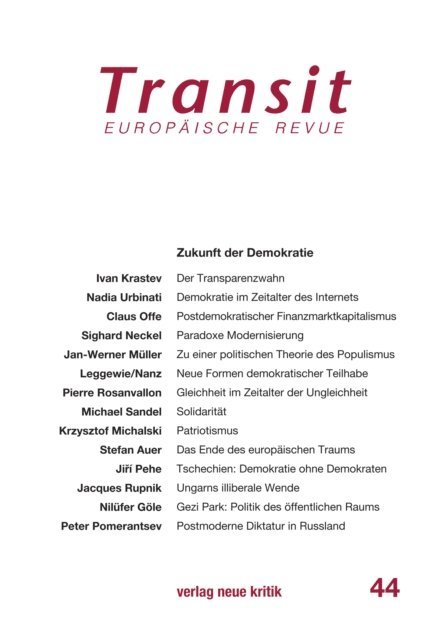
Transit 44. Europäische Revue
Zukunft der Demkoratie
Av Jacques Rupnik, Michael Sandel m. fl.
E-bok, 2014
125 kr
Lägg i varukorg
Während sich in den letzten drei Jahrzehnten im Rest der Welt mehr Menschen als je zuvor an demokratischen Wahlen beteiligten, hat in vielen europäischen Ländern die Mehrheit der Bevölkerung den Glauben daran verloren, mit ihrer Stimme etwas bewirken zu können. Hier sinkt die Wahlbeteiligung seit …
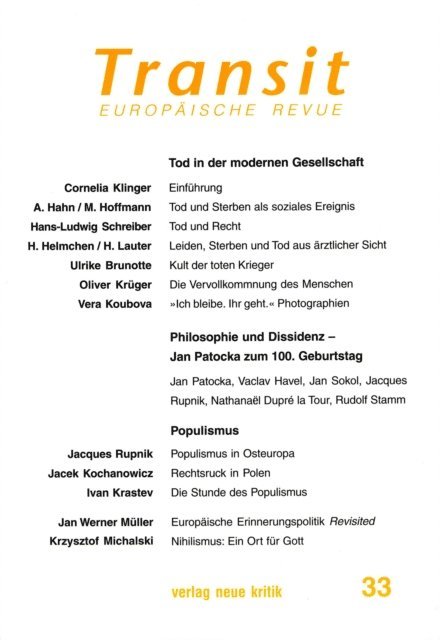
Transit 33. Europäische Revue
Tod in der modernen Gesellschaft
Av Jacques Rupnik, Hans-Ludwig Schreiber m. fl.
E-bok, 2007
125 kr
Lägg i varukorg
Unter den Bedingungen des Planeten Erde wird zu allen Zeiten und an allen Orten gestorben. Dennoch hängt die Frage, was es heißt zu sterben, in hohem Maße davon ab, an welchem Ort und zu welcher Zeit dies geschieht. Das invariante physiologische Faktum ist offen für fast unendlich viele Varianten …
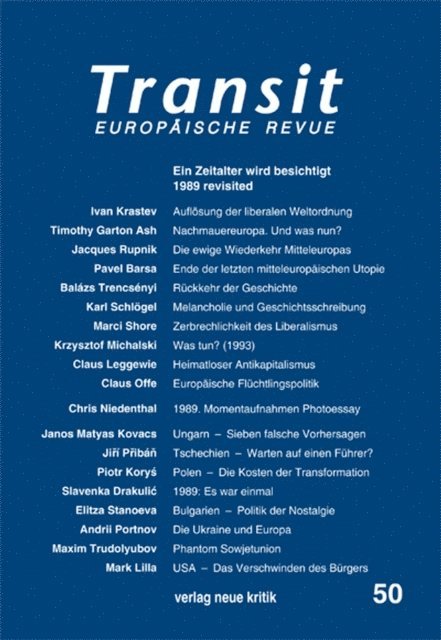
Transit 50. Europäische Revue
Ein Zeitalter wird besichtigt. 1989 revisited
Av Karl Schlogel, Jacques Rupnik m. fl.
E-bok, 2017
125 kr
Lägg i varukorg
Die erste Ausgabe von Transit erschien kurz nach 1989, in einem historischen Moment, der das Ende des Kalten Krieges markierte, Europa wiedervereinigte und für seinen östlichen Teil eine Wende zu Demokratie und Marktwirtschaft versprach. Seitdem hat Transit die Transformationsprozesse, die ganz …
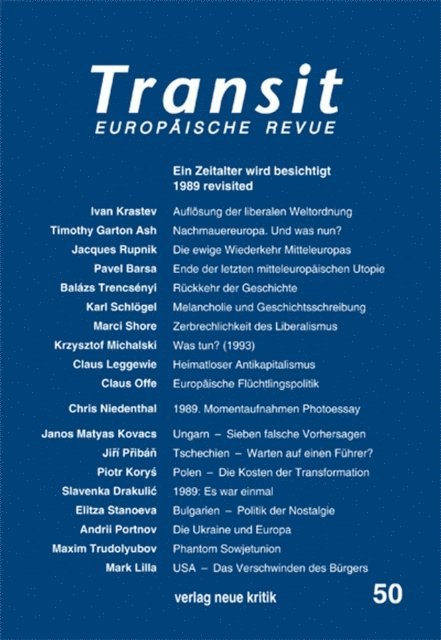
Transit 50. Europäische Revue
Ein Zeitalter wird besichtigt. 1989 revisited
Av Karl Schlogel, Jacques Rupnik m. fl.
E-bok, 2017
125 kr
Lägg i varukorg
Die erste Ausgabe von Transit erschien kurz nach 1989, in einem historischen Moment, der das Ende des Kalten Krieges markierte, Europa wiedervereinigte und für seinen östlichen Teil eine Wende zu Demokratie und Marktwirtschaft versprach. Seitdem hat Transit die Transformationsprozesse, die ganz …