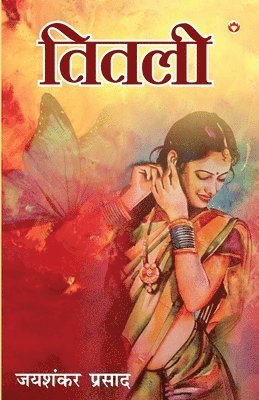
Jai Shankar Prasad – författare
Visar alla böcker från författaren Jai Shankar Prasad. Handla med fri frakt och snabb leverans.
18 produkter
18 produkter
Häftad, Hindi, 2025
162 kr
Skickas inom 5-8 vardagar
Inbunden, Hindi, 2024
188 kr
Skickas inom 5-8 vardagar
E-bok
Engelska, 20173 077 kr
Läs direkt efter köp
The Congress government under Digvijay Singh embarked upon a programme of land reform in the state beginning in 1998, consisting of distribution of a portion of the government-owned charnoi (common grazing) land to dalits and tribals, restoration of tribal lands, removal of encroachments and ensuring actual possession of land to owners and providing them assistance to improve their land. The Congress leadership attempted to employ the politics of development/welfare using state power rather than identity as in UP and Bihar during the same period. Certain features of politics in MP underlay this decision. The dalits and tribal together constitute almost 30% of the population and Digvijay Singh had inherited a legacy of many welfare programmes for these groups from earlier Congress regimes as they have always been significant for the electoral fortunes of the party in the state. This book makes a critical assessment of the Dalit Agenda or Bhopal Declaration, Undertaken by the Government of Madhya Pradesh to empower scheduled castes and scheduled tribes population by way of distributing grazing land to them.
E-bok
Engelska, 20173 077 kr
Läs direkt efter köp
Dalits represent a community of 170 million in India, constituting 17% of the population. One out of every six Indians is Dalit, yet due to their caste identity Dalits regularly face discrimination and violence which prevent them from enjoying the basic human rights and dignity promised to all citizens of India. India’s tragedy is that society continues the practice of the caste system even though the practice of untouchability stands abolished. One way in which Dalits and non-Dalits can work with each other is to recognize the soft boundaries that exist between Dalits and non-Dalits. The Indian caste system presents an extraordinarily complex social phenomenon. There is fourfold division of society into Brahman (priest), Kashatriya (Warrior-ruler), Vaishya (merchant) and Shudra (servant). This is an eye-opening work that gives readers insight into the lives of India’s 170 million Dalits, whose struggle for equality continues even today. In this remarkable book, at last giving voice to India’s voiceless.
E-bok
Engelska, 20173 015 kr
Läs direkt efter köp
Sixty-eight years after India’s independence, the Dalit community continues to be oppressed. Their life conditions are abysmal, they are exploited, denied basic human rights and access to economic and natural resources, and continue in demeaning occupations such as manual scavenging. Dalit community is regarded as a group of people who have been victims of exploitation and traditionally considered as untouchables and socially considered an inferior class. They have had physical labour as a means of livelihood and from religious point of view all the principles and beliefs were laid down to humiliate and exploit them. Several Dalits have got converted to Christianity, Buddhism and other religions as a consequence of caste system and depicts exploitation and injustice. The main concern from a modern perspective is towards social justice that demands social reform and improvement in the condition of the depressed class to be able to lead a respectable life. This book provides a detailed and comprehensive account of the status of Dalits in India. This book provides information about Dalit movements in the India, their mode of organisation, engagement in politics and contribution to processes of democratization and egalitarianism. It explores the social, economic and cultural content of Dalit transformation in modern India.
E-bok
Engelska, 20173 077 kr
Läs direkt efter köp
Over one-sixth of India’s population, some 170 million people, live a precarious existence, shunned by much of Indian society because of their rank as -untouchables- or Dalits literally meaning -broken- people-at the bottom of India’s caste system. Dalits are discriminated against, denied access to land and basic resources, forced to work in degrading conditions, and routinely abused at the hands of police and dominant-caste groups that enjoy the state’s protection. Beginning in the 1920s, various social, religious and political movements rose up in India against the caste system and in support of the human rights of the Dalit community. In 1950, the Constitution of India was adopted, and largely due to the influence of Dr. B.R. Ambedkar, it departed from the norms and traditions of the caste system in favour of Justice, Equality, Liberty, and Fraternity, guaranteeing all citizens basic human rights regardless of caste, creed, gender, or ethnicity. The implementation and enforcement of these principles has, unfortunately, been an abysmal failure. This book will helpful and fulfill all the requistes and provide information needed to the readers. It would be the choice for Dalit activists, students, professionals seeking to arouse public indignation against this most outrageous of indignities against humankind: the notion that the very touch of some might be polluting to others.
E-bok
Engelska, 20173 105 kr
Läs direkt efter köp
Historically it has been very hard to change the structure of caste politics in India. Contemporary India, however, has seen the influence of caste start to decline. This is partly due to the spread of education to all castes which has had a democratising effect on the political system. However, this "equalising" of the playing field has not been without controversy. The Mandal Commission and its quotas system has been a particularly sensitive issue. In the 1990s, many parties Bahujan Samaj Party (BSP), the Samajwadi Party and the Janata Dal started claiming that they were representing the backward castes. Many such parties, relying primarily on Backward Classes’ support, often in alliance with Dalits and Muslims, rose to power in Indian states. At the same time, many Dalit leaders and intellectuals started realising that the main Dalit oppressors were the so-called Other Backward Classes, and formed their own parties, such as the Indian Justice Party. This is the most politically and theoretically engaged book on caste to have come out in a long time.
E-bok
Engelska, 20173 077 kr
Läs direkt efter köp
The Dalit Buddhist movement (dubbed as Navayana by certain Ambedkerites) is a 19th and 20th-century Buddhist revival movement in India. It received its most substantial impetus from B. R. Ambedkar’s call for the conversion of Dalits to Buddhism, in 1956, to escape a caste-based society that considered them to be the lowest in the hierarchy. Ambedkar saw Buddhism as a means to end the caste system in India. The main issues around which most of the Dalit movements have been centred in the colonial and post colonial periods are confined to the problem of untouchability. The Dalits demanded a separate electorate in the 1930s which led to a conflict between Ambedkar and Gandhi. In the early 1930s Ambedkar concluded that the only way of improving the status of the untouchables was to renounce the Hindu religion. Ambedkar and his followers were converted to Buddhism in 1956. This important book traces the history of the Dalit movement from its beginning in the 19th century to the death of its most famous leader, B.R. Ambedkar, in 1956.
E-bok
Engelska, 20173 077 kr
Läs direkt efter köp
The last quarter of the Twentieth Century reflected tremendous changes in the Indian Political System and represented political assertions by new social forces. Dalit literature, or literature about the Dalits, an oppressed Indian caste under the Indian caste system, forms an important and distinct part of Indian literature. Dalit literature emerged in the 1960s, starting with the Marathi language, and soon appeared in Hindi, Kannada, Telugu and Tamil languages, through narratives such as poems, short stories, and, most , autobiographies, which stood out due to their stark portrayal of reality and the Dalit political scene. The Dalit movements in India have occupied significant place in the history of social movements as well as in the discourse of social sciences. These movements have addressed numerous issues that facilitate to understand and analyse Indian polity. The literary expression of political consciousness and movements among or for the Dalits in North India is the new emerging trend. Although both Dalit politics and Dalit literature employ the same appellation ‘Dalit’ to represent their politically assertive, low-caste identity, both look at Dr Ambedkar as their inspirational leader and both claim to be fighting for social equality for Dalit. This book tries to explore how Dalits in north India have used literature as a means of protest against caste oppression.
E-bok
Engelska, 20173 077 kr
Läs direkt efter köp
The plight of the Dalits in India in all areas of life - economic, social, spiritual and economic has been pathetic throughout their history and continues as such even today, albeit a little alleviated. The major empowerment of the Dalits, however, started occurring after the arrival of the colonialists, especially the portugese and the English. For a country which is among the top 10 industrialized nations in the world, it is a poor statement that close to 40% of the population lives below the poverty line, a majority of them being the Dalits. In urban areas, 27.3% of ST and 21.8% of SC populations were poor, versus 26.5% of Muslims. Full Dalit empowerment is a long, long way off and can occur only when governments from the first world get involved in the plight of the Dalits and make efforts to empower them. This book will be of interest to practitioners in the fields of development: sociology, cultural studies and education; caste, gender, post-modern and subaltern academics and students, the general public and policy makers in India; Dalits and Dalit women in particular.
E-bok
Engelska, 20173 077 kr
Läs direkt efter köp
The continuous practice of "untouchability," other caste-based discrimination, violence against Dalit men, women, and children, and other abuses are in violation of numerous domestic and international laws a cruel reality. Though, a body of international human rights conventions, domestic legislation, and constitutional provisions collectively impose on the government of India a duty to guarantee certain basic rights to the Dalit population and to punish those who engage in caste-based violence and discrimination. Articles 38 and 46 of the Indian Constitution make it the duty of the State to strive to promote the welfare of the people. Society as a whole never accepted the PCR Act. No one ever thought that name-calling wouldn’t be okay. Ill-treatment was very common. The act was also vulnerable to abuse. It was easy to make an allegation that someone was called by his or her caste name. The promulgation of the act itself was an acknowledgment by the central government that abuses, in their most dehumanizing form, continue to take place against Dalits throughout the country. This book offers a varied picture of Dalit experience in different states in contemporary India. The book will be key reading for scholars and students of Dalit and subaltern studies, sociology, political science, and economics.
E-bok
Engelska, 20173 077 kr
Läs direkt efter köp
The economic reforms begun in India in 1991 were couched in the language of ‘modernisation’, yet they have done little to challenge the caste and gender discrimination faced by Dalit women - in some ways their situation is worse. The popular perception of globalisation is rooted in its image of dissolving senses of distance and boundaries. It is so preoccupied with the technology that enables globalisation that little attention is paid to questions of ‘how’ and ‘where’ the circuits of globalisation actually get realised. This book attempts a more nuanced view of globalisation by focusing on its less-explored, non-technological dimensions. It examines the transformation of the woman worker — from a rural woman to an urban one, from a dependent daughter, wife and mother to an earning member, and from a homemaker to a factory worker, and the attendant transformation of the home into a base for migrant workers. This book will appeal to those in economics, sociology, gender studies, urban studies, as well as to those interested in issues relating to globalisation.
E-bok
Engelska, 20173 077 kr
Läs direkt efter köp
Gender is now considered not a biological but a social construct. Women have been oppressed, suppressed, marginalized or rather colonized by men since ages. Violence against women should be viewed as a human right violation and a crime, detrimental to the development of women and the society. Human rights are fundamental rights to which a person is entitled because s/he is a human being but in case of women and Dalit women in particular it is not applied as they are treated unequal. Dalit women are one of the most marginalised segments in the society. Dalit women are considered greater Dalit among Dalits. The condition of dalit women is more vulnerable than non-dalit women. They are suffering from multiple disadvantages. Imparting human values and human rights culture in every walk of life is the focal points of this book. This comprehensive book will be useful for human rights activists, political leaders at different levels, lawyers, civil servants, research scholars belonging to various disciplines such as sociology, social work, political science, law, criminology, ethics, and other related social sciences.
E-bok
Engelska, 20173 077 kr
Läs direkt efter köp
Dalit is a designation for a group of people traditionally regarded as untouchable. The highest population of this class of people have been recorded in India. Due to their nature of work, they have been, on many occasions, deprived of their basic necessities and rights. Although, in modern times, their rights and necessities are seriously being considered by the government of India and many rules and regulations have been made to protect people who are called Dalits. But Dalit women are more burdened and discriminated on the basis of caste, class and gender. Dalits were considered to be lower class people and therefore Dalit women are even further deprived not only by upper class but also by Dalit males. They had been discriminated many times on the basis of gender and were used by almost all class of people including Dalits itself. Marginalism and racial exclusion of dalits is a burning issue today. This book on dalits goes back into past and looks at the history of dalit alienation. This book will be invaluable to students of History, Caste Politics, Women and Gender Studies, Education Studies, Urban Studies and Asian studies.
E-bok
Engelska, 20173 077 kr
Läs direkt efter köp
In India, the Dalits constitute over 16.6 per cent with little less than half being women, which means that 97.9 million Dalit women face multiple forms of discrimination in this country alone. Violence against Dalit women reinforces caste norms wherein they are seen as available for all forms of violence, especially sexual violence. According to India’s National Commission for Women, "In the commission of offences against... [Dalit] women the [dominant caste] offenders try to establish their authority and humiliate the community by subjecting their women to indecent and inhuman treatment." Further, when they transgress caste norms such as those prescribing caste endogamy or untouchability practices, or assert their rights over resources or public spaces, violence is unleashed on them. Because of lower social attitude towards Dalit women and their economic dependence, they become victims of the high caste sexual violence, on a scale far greater than that of the non-dalit women. Their socio-economic vulnerability and lack of political voice when combined with being a woman and Dalit increase the incidence of violence on them. The large numbers of crimes against Dalit women go unreported, unregistered and not punished by the law. The situation of Dalit women needs special attention.
E-bok
Engelska, 20173 015 kr
Läs direkt efter köp
Dalit women are mostly deprived, socially excluded, less literate, absentee of property rights, and less empowerment socially and economically. They are ignorance about women entrepreneurship. They are poverty stricken having minimum access of maintaining standard of living. Till some years ago, many dalit women were ill treated and educationally backward inspite of the facilities for free education. The reasons for the high rate of illiteracy among dalit women are many. The present positions seem to be better with reference to the rate of literacy among dalits. The literacy rate is 31.48% for boys and 10.93% for girls. Dalits women belonging to the creamy layer of the society are better with good education and socially and economically they are well off like other high castes. Untouchability is acute in villages. There is a gradual change in rural areas because they have become aware of their rights. Spread of education, improvement in economic conditions, welfare measures. This informative book explores the problems of how caste and gender issues are related to the education and empowerment of Dalit women in India. This book is useful to policy planners, administrators, researchers and students of Decentralized Governance and Gender Justice.
E-bok
Engelska, 20173 077 kr
Läs direkt efter köp
Ethnography is a collection of qualitative methods used in the social sciences that focus on the close observation of social practices and interactions. These qualitative methods enable the researcher to interpret and build theories about how and why a social process occurs. They are particularly useful for elucidating the steps of processes that have not been well understood, and to create rich descriptions of people’s experiences. Qualitative research tends to be inductive and hypothesis-generating; that is, it helps the researcher make educated guesses about how or why a process happens. Quantitative research, on the other hand, tends to be deductive and hypothesis-testing; it helps the researcher determine how true such an educated guess is across a population. Historically the caste system has formed the social and economic framework for the life of the people in India. This innovative work of historical anthropology explores how India’s Dalits, or ex-untouchables, transformed themselves from stigmatized subjects into citizens. This monumental work is useful for scholars and readers of ethnic study of western Indian the dalit communities.
Inbunden, Hindi, 2024
192 kr
Skickas inom 5-8 vardagar