Häftad, Engelska, 1980
442 kr
Skickas inom 5-8 vardagar
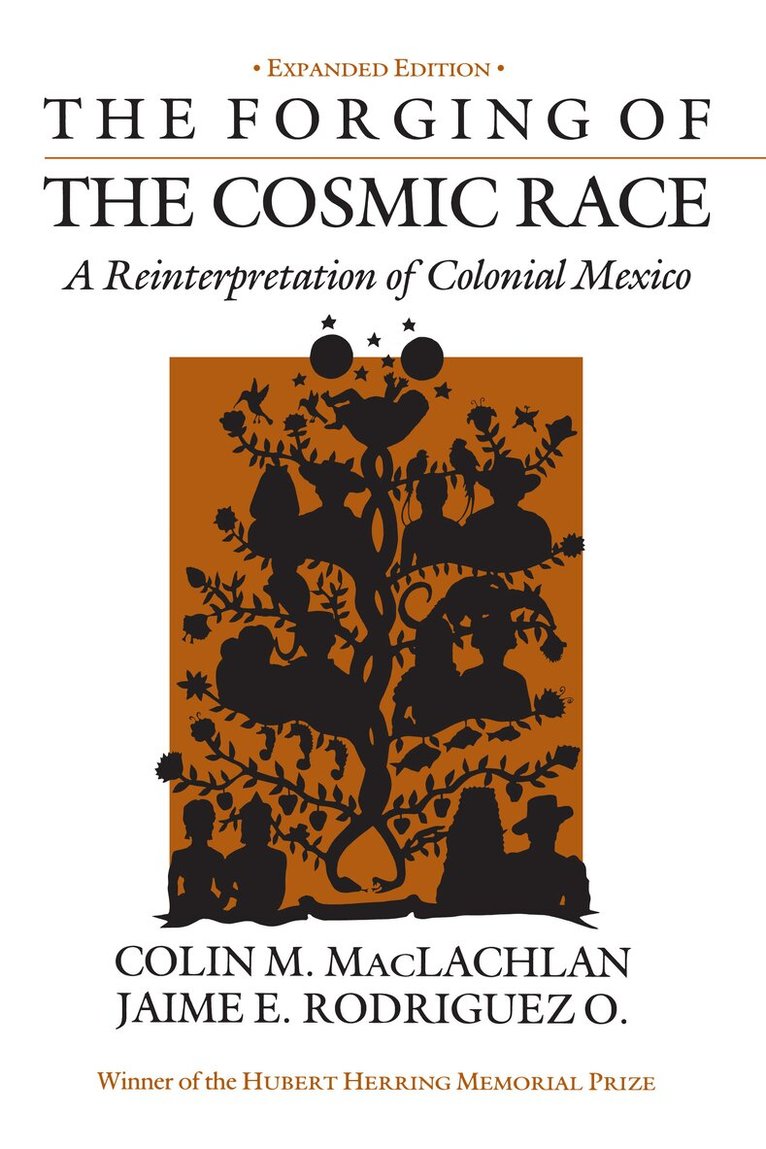
"The Forging of the Cosmic Race" challenges the widely held notion that Mexico's colonial period is the source of many of that country's ills. The authors contend that New Spain was neither feudal nor pre-capitalists as some Neo-Marxist authors have argued. Instead they advance two central themes: that only in New Spain did a true mestizo society emerge, integrating Indians, Europeans, Africans, and Asians into a unique cultural mix; and that colonial Mexico forged a complex, balanced, and integrated economy that transformed the area into the most important and dynamic part of the Spanish empire. The revisionist view is based on a careful examination of all the recent research done on colonial Mexican history. The study begins with a discussion of the area's rich pre-Columbian heritage. It traces the merging of two great cultural traditions - the Meso-american and the European - which occurred as a consequence of the Spanish conquest. The authors analyze the evolution of a new mestizo society through an examination of the colony's institutions, economy, and social organization.The role of women and of the family receive particular attention because they were critical to the development of colonial Mexico. The work concludes with an analysis of the 18th century reforms and the process of independence which ended the history of the most successful colony in the Western hemisphere. The role of silver mining emerges as a major factor of Mexico's great socio-economic achievement. The rich silver mines served as an engine of economic growth that stimulated agricultural expansion, pastoral activities, commerce, and manufacturing. The destruction of the silver mines during the wars of Independence was perhaps the most important factor in Mexico's prolonged 19th century economic decline. Without the great wealth from silver mining, economic recovery proved extremely difficult in the post-independence period. These reverses at the end of the colonial epoch are important in understanding why Mexicans came to view the era as a 'burden' to be overcome rather than as a formative period upon which to build a new nation.