Jaime E. Rodriguez O. – författare
Visar alla böcker från författaren Jaime E. Rodriguez O.. Handla med fri frakt och snabb leverans.
7 produkter
7 produkter
E-bok
Engelska, 2023502 kr
Läs direkt efter köp
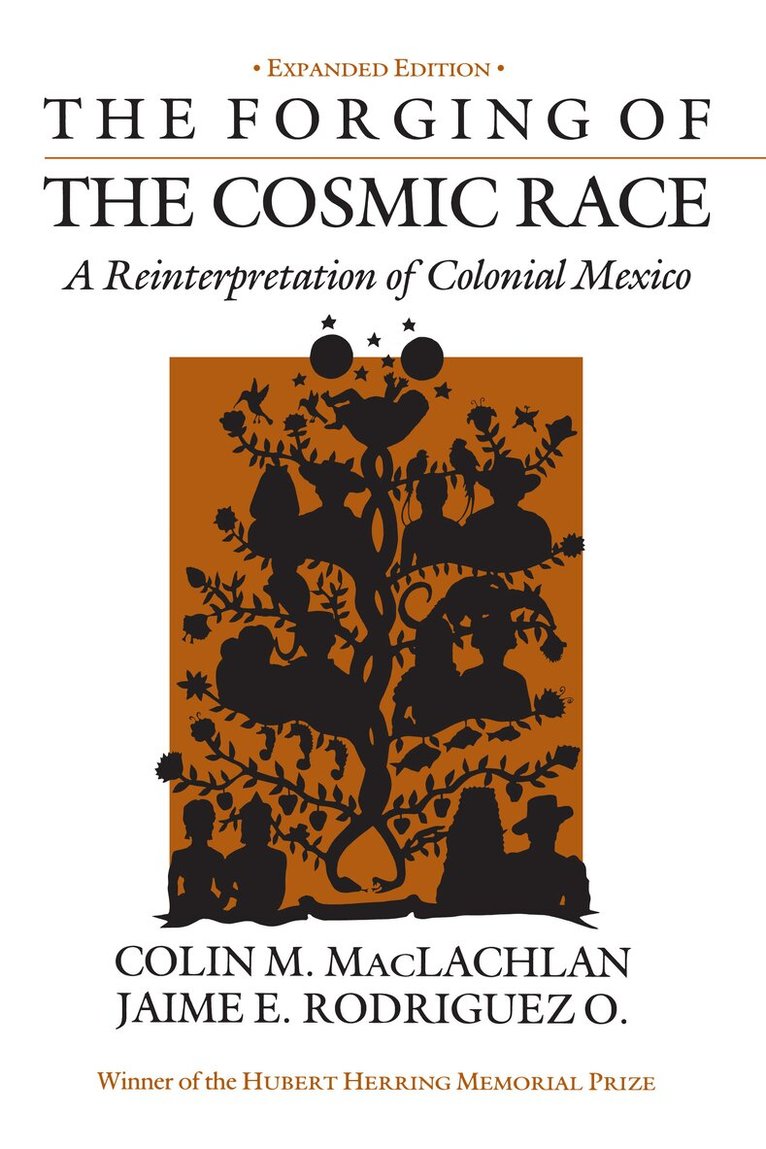
"The Forging of the Cosmic Race" challenges the widely held notion that Mexico''s colonial period is the source of many of that country''s ills. The authors contend that New Spain was neither feudal nor pre-capitalists as some Neo-Marxist authors have argued. Instead they advance two central themes: that only in New Spain did a true mestizo society emerge, integrating Indians, Europeans, Africans, and Asians into a unique cultural mix; and that colonial Mexico forged a complex, balanced, and integrated economy that transformed the area into the most important and dynamic part of the Spanish empire.The revisionist view is based on a careful examination of all the recent research done on colonial Mexican history. The study begins with a discussion of the area''s rich pre-Columbian heritage. It traces the merging of two great cultural traditions—the Meso-american and the European—which occurred as a consequence of the Spanish conquest. The authors analyze the evolution of a new mestizo society through an examination of the colony''s institutions, economy, and social organization. The role of women and of the family receive particular attention because they were critical to the development of colonial Mexico. The work concludes with an analysis of the 18th century reforms and the process of independence which ended the history of the most successful colony in the Western hemisphere.The role of silver mining emerges as a major factor of Mexico''s great socio-economic achievement. The rich silver mines served as an engine of economic growth that stimulated agricultural expansion, pastoral activities, commerce, and manufacturing. The destruction of the silver mines during the wars of Independence was perhaps the most important factor in Mexico''s prolonged 19th century economic decline. Without the great wealth from silver mining, economic recovery proved extremely difficult in the post-independence period. These reverses at the end of the colonial epoch are important in understanding why Mexicans came to view the era as a "burden" to be overcome rather than as a formative period upon which to build a new nation."The Forging of the Cosmic Race" challenges the widely held notion that Mexico''s colonial period is the source of many of that country''s ills. The authors contend that New Spain was neither feudal nor pre-capitalists as some Neo-Marxist authors have argue
Häftad, Engelska, 2007
778 kr
Skickas inom 10-15 vardagar
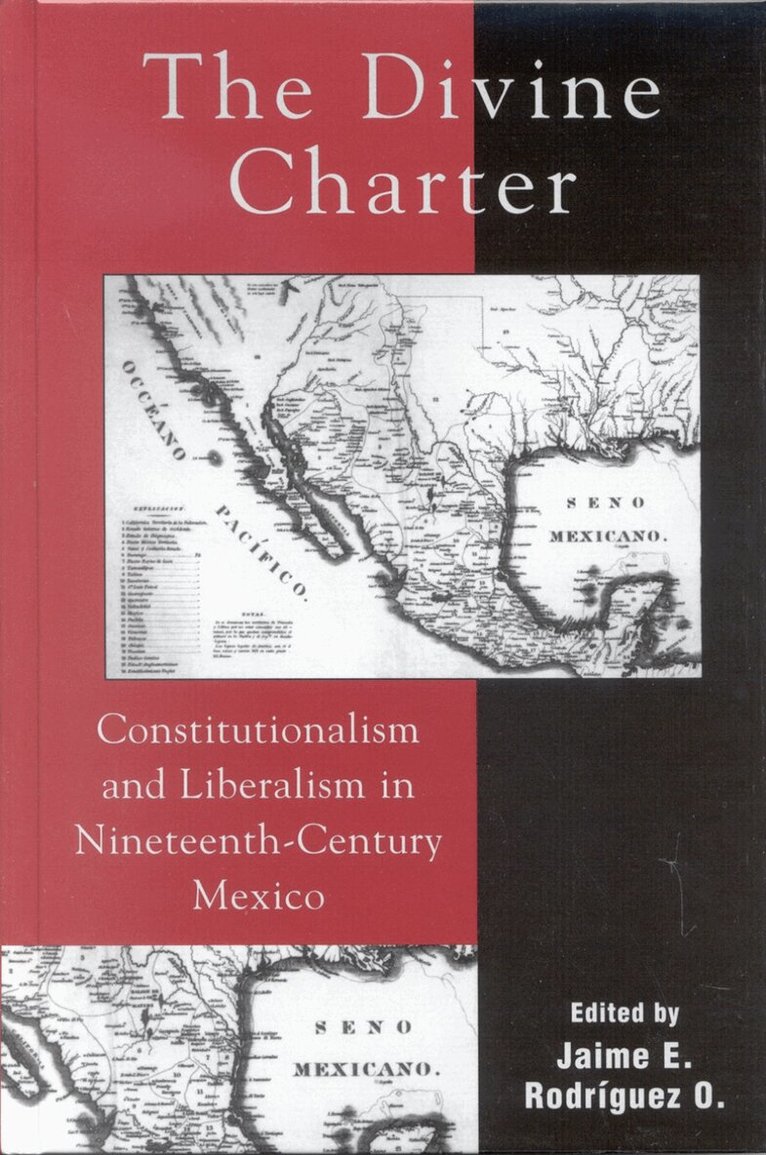
Although Mexico began its national life in the 1821 as one of the most liberal democracies in the world, it ended the century with an authoritarian regime. Examining this defining process, distinguished historians focus on the evolution of Mexican liberalism from the perspectives of politics, the military, the Church, and the economy. Based on extensive archival research, the chapters demonstrate that—despite widely held assumptions—liberalism was not an alien ideology unsuited to Mexico's traditional, conservative, and multiethnic society. On the contrary, liberalism in New Spain arose from Hispanic culture, which drew upon a shared European tradition reaching back to ancient Greece.This volume provides the first systematic exploration of the evolution of Mexican liberal traditions in the nineteenth century. The chapters assess the changes in liberal ideology, the nature of federalism, efforts to create stability with a liberal monarchy in the 1860s, the Church's accommodation to the new liberal order, the role of the army and of the civil militias, the liberal tax system, and attempts to modernize the economy in the latter part of the century. Taken together, these essays provide a nuanced and comprehensive analysis of the transformation of liberalism in Mexico.Contributions by: Christon I. Archer, William H. Beezley, Marcello Carmagnani, Manuel Chust, Brian Connaughton, Robert H. Duncan, Aldo Flores-Quiroga, Alicia Hernández Chávez, Sandra Kuntz Ficker, Andrés Reséndez, Jaime E. Rodríguez O., and José Antonio Serrano Ortega
Inbunden, Engelska, 2012
886 kr
Skickas inom 5-8 vardagar
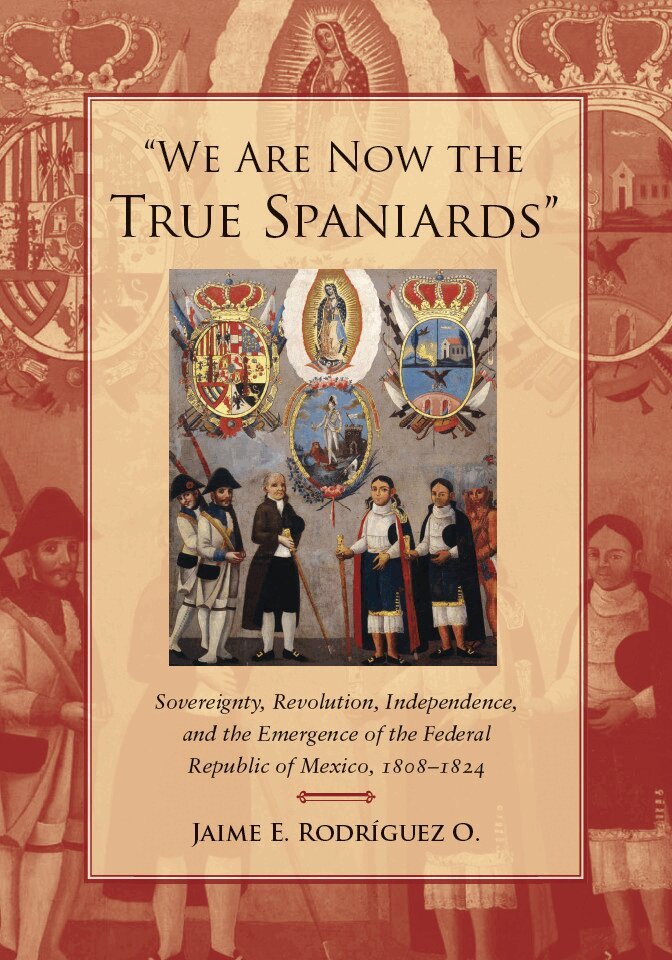
This book is a radical reinterpretation of the process that led to Mexican independence in 1821—one that emphasizes Mexico's continuity with Spanish political culture. During its final decades under Spanish rule, New Spain was the most populous, richest, and most developed part of the worldwide Spanish Monarchy, and most novohispanos (people of New Spain) believed that their religious, social, economic, and political ties to the Monarchy made union preferable to separation. Neither the American nor the French Revolution convinced the novohispanos to sever ties with the Spanish Monarchy; nor did the Hidalgo Revolt of September 1810 and subsequent insurgencies cause Mexican independence. It was Napoleon's invasion of Spain in 1808 that led to the Hispanic Constitution of 1812. When the government in Spain rejected those new constituted arrangements, Mexico declared independence. The Mexican Constitution of 1824 affirms both the new state's independence and its continuance of Spanish political culture.
E-bok
Engelska, 20121 003 kr
Läs direkt efter köp
This book is a radical reinterpretation of the process that led to Mexican independence in 1821—one that emphasizes Mexico's continuity with Spanish political culture. During its final decades under Spanish rule, New Spain was the most populous, richest, and most developed part of the worldwide Spanish Monarchy, and most novohispanos (people of New Spain) believed that their religious, social, economic, and political ties to the Monarchy made union preferable to separation. Neither the American nor the French Revolution convinced the novohispanos to sever ties with the Spanish Monarchy; nor did the Hidalgo Revolt of September 1810 and subsequent insurgencies cause Mexican independence. It was Napoleon's invasion of Spain in 1808 that led to the Hispanic Constitution of 1812. When the government in Spain rejected those new constituted arrangements, Mexico declared independence. The Mexican Constitution of 1824 affirms both the new state's independence and its continuance of Spanish political culture.
Inbunden, Engelska, 2018
568 kr
Skickas inom 10-15 vardagar
2018 Outstanding Academic Title, selected by Choice Political Culture in Spanish America, 1500–1830 examines the nature of Spanish American political culture by reevaluating the political theory, institutions, and practices of the Hispanic world. Consisting of eight case studies with a focus on New Spain and Quito, Jaime E. RodrÍguez O. demonstrates that the process of independence of Spanish America differs from previous claims.In 1188 King Alfonso IX convened the Cortes, the first congress in Europe that included the three estates: the clergy, the nobility, and the towns. This heritage, along with events in the sixteenth century, including the rebellion of Castilla and the Protestant Reformation, transformed the nature of Hispanic political thought. RodrÍguez O. argues that those developments, rather than the Enlightenment, were the basis of the Hispanic revolution and the Constitution of 1812. Emphasizing continuity rather than the rejection of Hispanic political culture, and including the Atlantic perspective, Political Culture in Spanish America, 1500–1830 demonstrates the nature of the Hispanic revolution and the process of independence. RodrÍguez O.’s work will encourage historians of Spanish America to reexamine the political institutions and processes of those nations from a broad perspective to gain a deeper understanding of the Spanish American countries that emerged from the breakup of the composite monarchy.
E-bok
Spanska, 201275 kr
Läs direkt efter köp
La independencia de la América española no fue un movimiento anticolonial; fue parte tanto de la revolución del mundo hispánico y la desintegración de la monarquía como resultado de la invasión francesa de la Península. La tradición liberal del gobierno constitucional y representativo que había surgido en las Cortes de Cádiz y en los regímenes rivales en América, junto con el logro de la condición de nación, constituye la herencia más importante de los procesos de la independencia de la América española.
Inbunden, Engelska, 1993
493 kr
Tillfälligt slut
"The Evolution of the Mexican Political System" examines the political history of Mexico; there are seven articles in English, and five in Spanish, written by Mexican, Italian, US, and Canadian scholars. The essays are divided into three sections: "The 19th Century", "The 20th Century" and "Comments". All three sections deal with Mexico's changing political structure - from a country largely controlled by militaristic rule to a 20th-century nation with a self-determined "national government" uneasily set in place. The final section, "Comments", offers an overview of the pivotal events and movement in Mexican history. The study is intended to be a useful work both for Mexican historians and political historians.