James A. Malcolm – författare
Visar alla böcker från författaren James A. Malcolm. Handla med fri frakt och snabb leverans.
18 produkter
Security Protocols
10th International Workshop, Cambridge, UK, April 17-19, 2002, Revised Papers
Av Bruce Christianson, Bruno Crispo m. fl.
Häftad, 2004
567 kr
Lägg i varukorg
This book constitutes the thoroughly refereed post-proceedings of the 10th International Workshop on Security Protocols, held in Cambridge, UK, in April 2002.The 16 revised full papers presented together with transcriptions of the discussions following the presentations have passed through two …
Security Protocols
11th International Workshop, Cambridge, UK, April 2-4, 2003, Revised Selected Papers
Av Bruce Christianson, Bruno Crispo m. fl.
Häftad, 2005
567 kr
Lägg i varukorg
Greetings. These are the proceedings of the 11th in our series of International Workshops on Security Protocols. Our theme this time was “Where have all the Protocols gone?” Once upon a time security protocols lived mainly in the network and transport layers. Now they increasingly hide in …
Security Protocols
11th International Workshop, Cambridge, UK, April 2-4, 2003, Revised Selected Papers
Av Michael Roe, James A. Malcolm m. fl.
E-bok, 2005
755 kr
Lägg i varukorg
Greetings. These are the proceedings of the 11th in our series of International Workshops on Security Protocols. Our theme this time was “Where have all the Protocols gone?” Once upon a time security protocols lived mainly in the network and transport layers. Now they increasingly hide in …
Security Protocols
10th International Workshop, Cambridge, UK, April 17-19, 2002, Revised Papers
Av Michael Roe, James A. Malcolm m. fl.
E-bok, 2003
755 kr
Lägg i varukorg
Once again we bring you the proceedings of the International Workshop on Security Protocols. It seems hard to believe that we have reached the tenth event in this annual series. This year our theme was “Discerning the Protocol Participants.” Security protocols are usually described in terms of the …
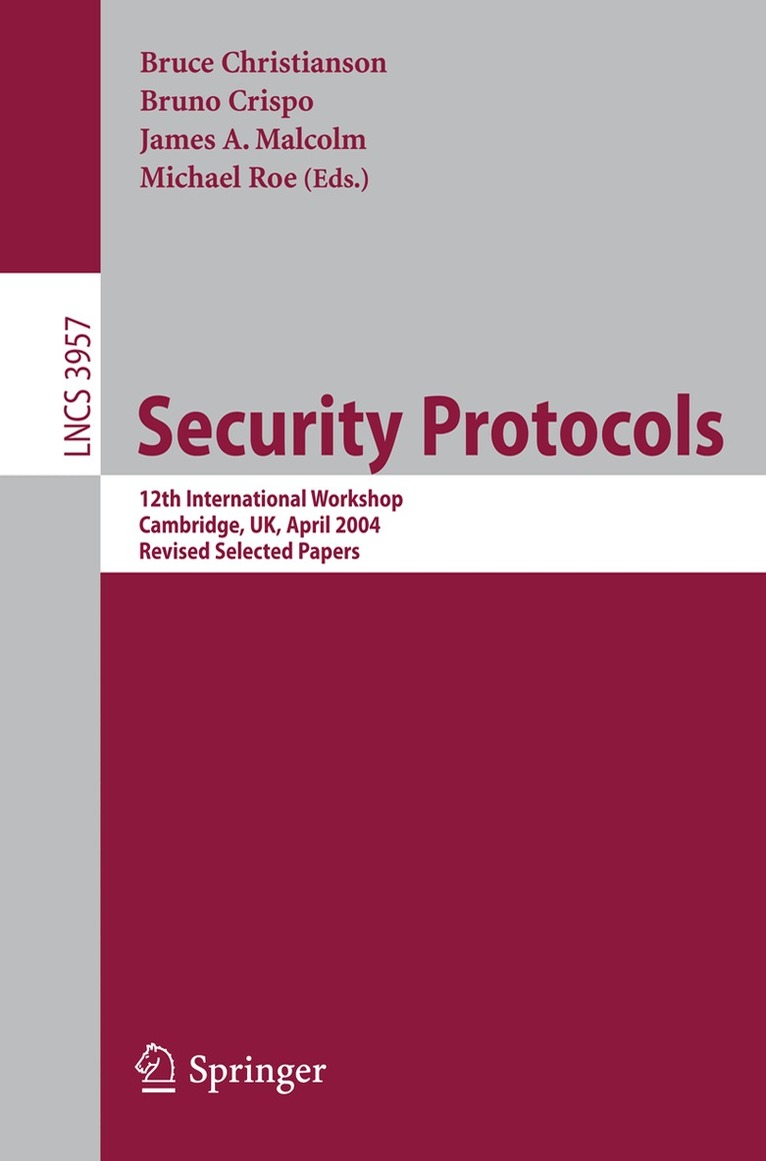
Security Protocols
12th International Workshop, Cambridge, UK, April 26-28, 2004. Revised Selected Papers
Av Bruce Christianson, Bruno Crispo m. fl.
Häftad, 2006
567 kr
Lägg i varukorg
Here are the proceedings of the 12th International Workshop on Security P- tocols. We hope that you will enjoy them, and that they will cause you to think at least one heretical thought. Please write or e-mail and share it with us. Our theme this workshop was “Authentic Privacy.” Traditionally we …
Security Protocols
12th International Workshop, Cambridge, UK, April 26-28, 2004. Revised Selected Papers
Av Michael Roe, James A. Malcolm m. fl.
E-bok, 2006
739 kr
Lägg i varukorg
Here are the proceedings of the 12th International Workshop on Security P- tocols. We hope that you will enjoy them, and that they will cause you to think at least one heretical thought. Please write or e-mail and share it with us. Our theme this workshop was “Authentic Privacy.” Traditionally we …
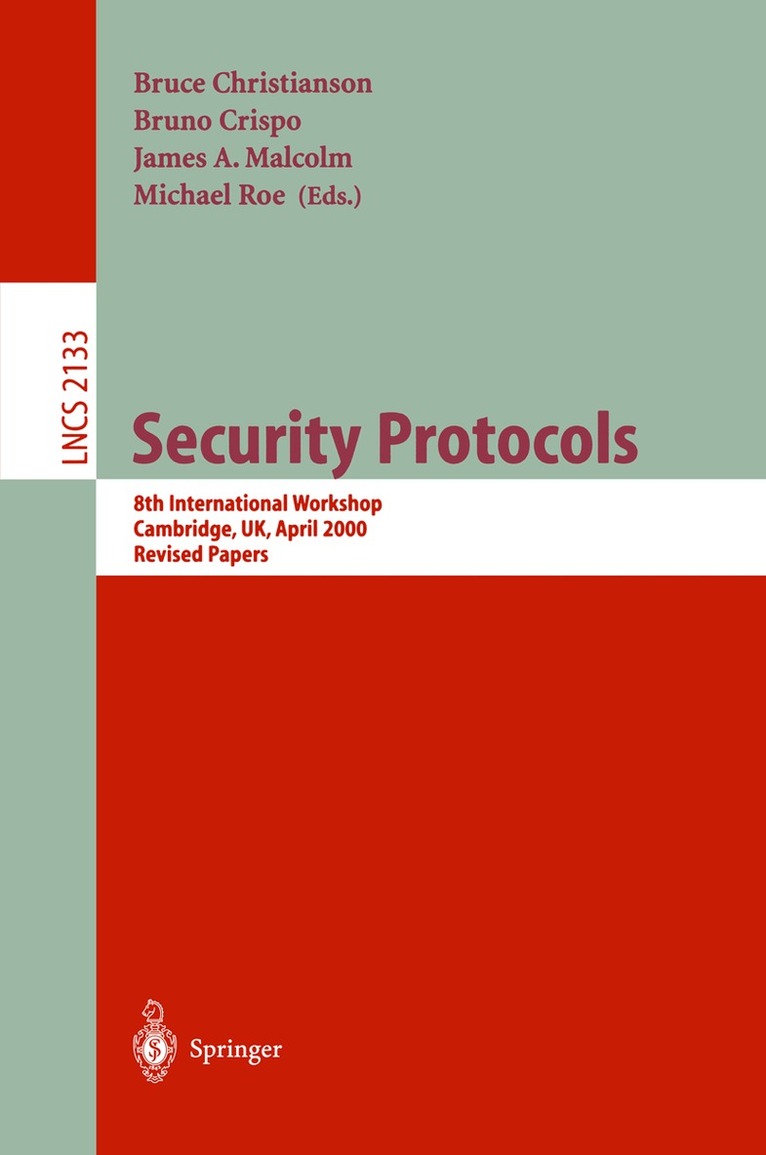
Security Protocols
8th International Workshops Cambridge, UK, April 3-5, 2000 Revised Papers
Av Bruce Christianson, Bruno Crispo m. fl.
Häftad, 2001
567 kr
Lägg i varukorg
The Cambridge International Workshop on Security Protocols has now run for eight years. Each year we set a theme, focusing upon a speci?c aspect of security protocols, and invite position papers. Anybody is welcome to send us a position paper (yes, you are invited) and we don’t insist they relate …
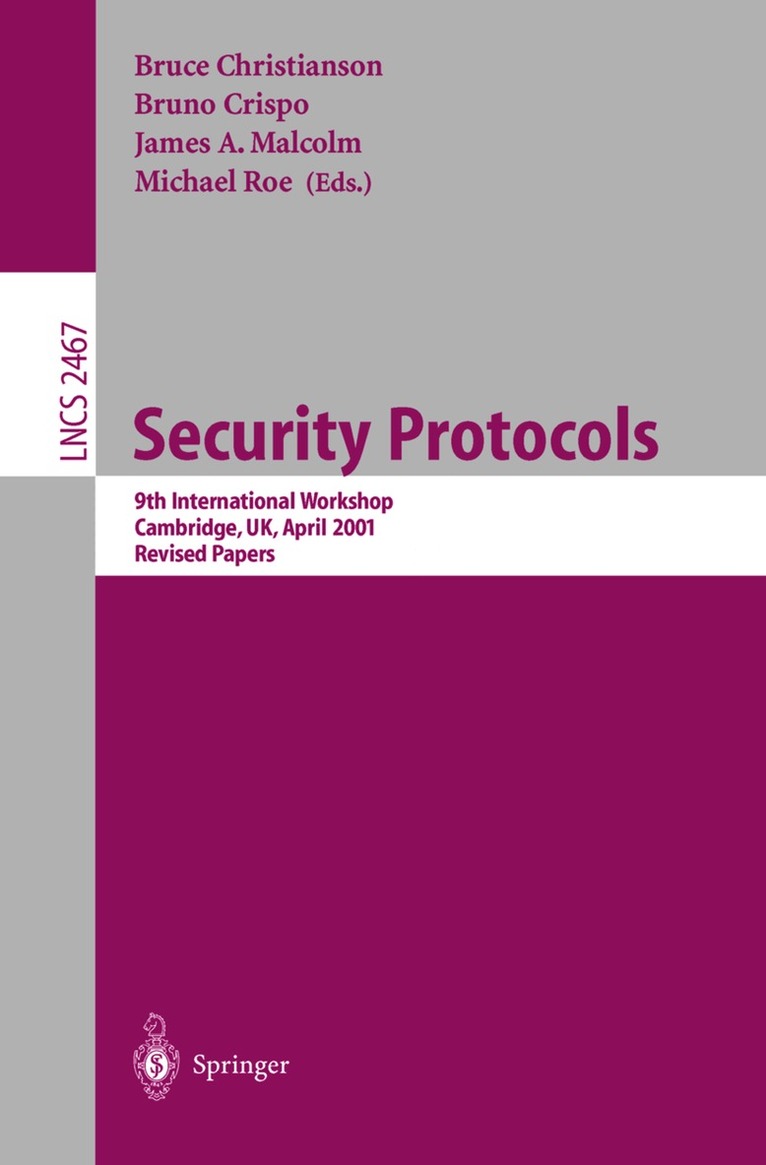
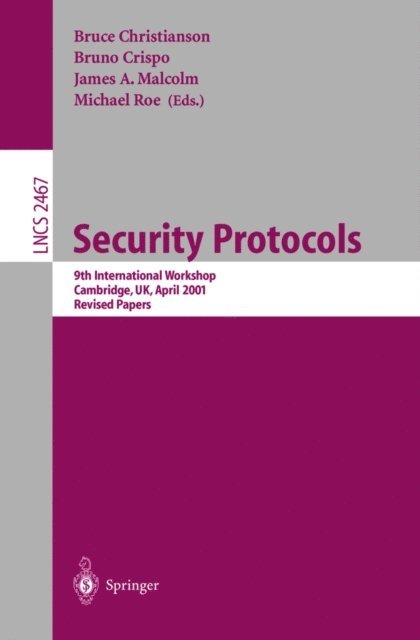
Security Protocols
9th International Workshop, Cambridge, UK, April 25-27, 2001 Revised Papers
Av Bruce Christianson, Bruno Crispo m. fl.
Häftad, 2002
567 kr
Lägg i varukorg
Hello and welcome. These are the proceedings of the 9th International Workshop on Security Protocols, the ?rst to be held in the new millennium. This year our theme was “mobile computing versus immobile security”. As usual, the insights and challenges which emerged during the workshop are re?ected …
Security Protocols
8th International Workshops Cambridge, UK, April 3-5, 2000 Revised Papers
Av Michael Roe, James A. Malcolm m. fl.
E-bok, 2003
755 kr
Lägg i varukorg
The Cambridge International Workshop on Security Protocols has now run for eight years. Each year we set a theme, focusing upon a speci?c aspect of security protocols, and invite position papers. Anybody is welcome to send us a position paper (yes, you are invited) and we don’t insist they relate …
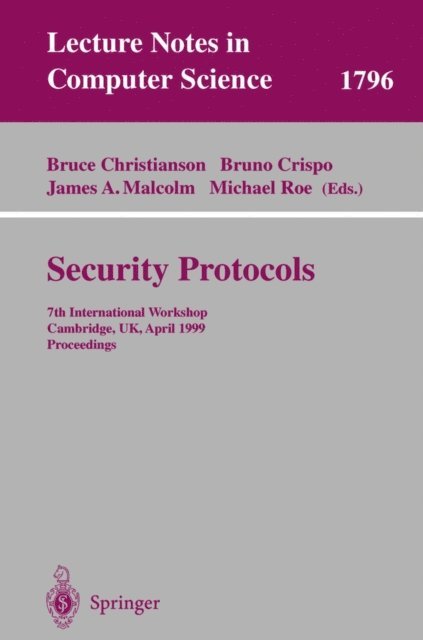
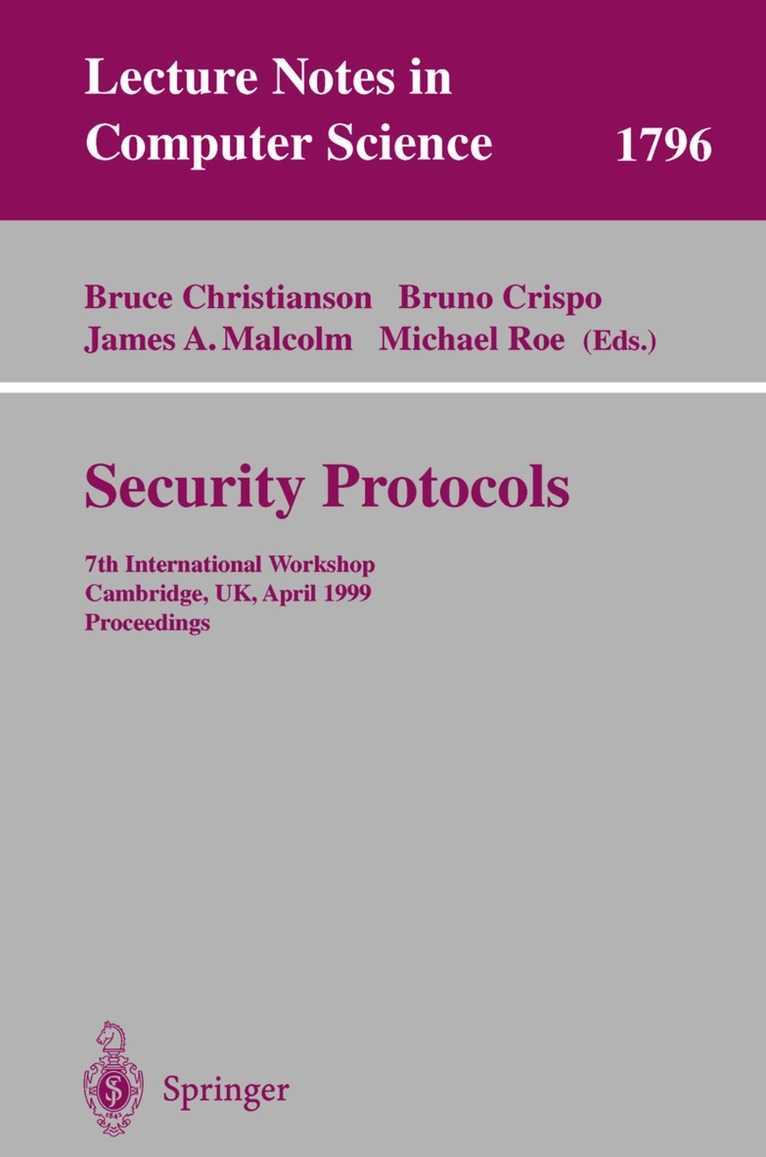
Security Protocols
7th International Workshop Cambridge, UK, April 19-21, 1999 Proceedings
Av Michael Roe, James A. Malcolm m. fl.
E-bok, 2006
739 kr
Lägg i varukorg
Another year, another workshop. Here are the proceedings of the seventh Cambridge International Workshop on Security Protocols. All very well, you may think, but can there really still be anything genuinely new to say? Is it not just the same old things a tiny bit better? Well, perhaps …
Security Protocols
9th International Workshop, Cambridge, UK, April 25-27, 2001 Revised Papers
Av Michael Roe, James A. Malcolm m. fl.
E-bok, 2003
755 kr
Lägg i varukorg
Hello and welcome. These are the proceedings of the 9th International Workshop on Security Protocols, the ?rst to be held in the new millennium. This year our theme was “mobile computing versus immobile security”. As usual, the insights and challenges which emerged during the workshop are re?ected …
Security Protocols
7th International Workshop Cambridge, UK, April 19-21, 1999 Proceedings
Av Bruce Christianson, Bruno Crispo m. fl.
Häftad, 2000
567 kr
Lägg i varukorg
Another year, another workshop. Here are the proceedings of the seventh Cambridge International Workshop on Security Protocols. All very well, you may think, but can there really still be anything genuinely new to say? Is it not just the same old things a tiny bit better? Well, perhaps …
Security Protocols
14th International Workshop, Cambridge, UK, March 27-29, 2006, Revised Selected Papers
Av Bruce Christianson, Bruno Crispo m. fl.
Häftad, 2009
567 kr
Lägg i varukorg
Welcome back to the International Security Protocols Workshop. Our theme for this, the 14th workshop in the series, is “Putting the Human Back in the Protocol”. We’ve got into the habit of saying “Of course, Alice and Bob aren’t really people. Alice and Bob are actually programs running in some …
Security Protocols
14th International Workshop, Cambridge, UK, March 27-29, 2006, Revised Selected Papers
Av Michael Roe, James A. Malcolm m. fl.
E-bok, 2009
755 kr
Lägg i varukorg
Welcome back to the International Security Protocols Workshop. Our theme for this, the 14th workshop in the series, is “Putting the Human Back in the Protocol”. We’ve got into the habit of saying “Of course, Alice and Bob aren’t really people. Alice and Bob are actually programs running in some …
Security Protocols
15th International Workshop, Brno, Czech Republic, April 18-20, 2007. Revised Selected Papers
Av Bruce Christianson, Bruno Crispo m. fl.
Häftad, 2011
567 kr
Lägg i varukorg
This book constitutes the thoroughly refereed post-proceedings of the 15th International Workshop on Security Protocols, held in Brno, Czech Republic, in April 2007.The 15 revised full papers presented together with edited transcriptions of some of the discussions following the presentations have …
Security Protocols
15th International Workshop, Brno, Czech Republic, April 18-20, 2007. Revised Selected Papers
Av Michael Roe, James A. Malcolm m. fl.
E-bok, 2010
734 kr
Lägg i varukorg
This book constitutes the thoroughly refereed post-proceedings of the 15th International Workshop on Security Protocols, held in Brno, Czech Republic, in April 2007.The 15 revised full papers presented together with edited transcriptions of some of the discussions following the presentations have …
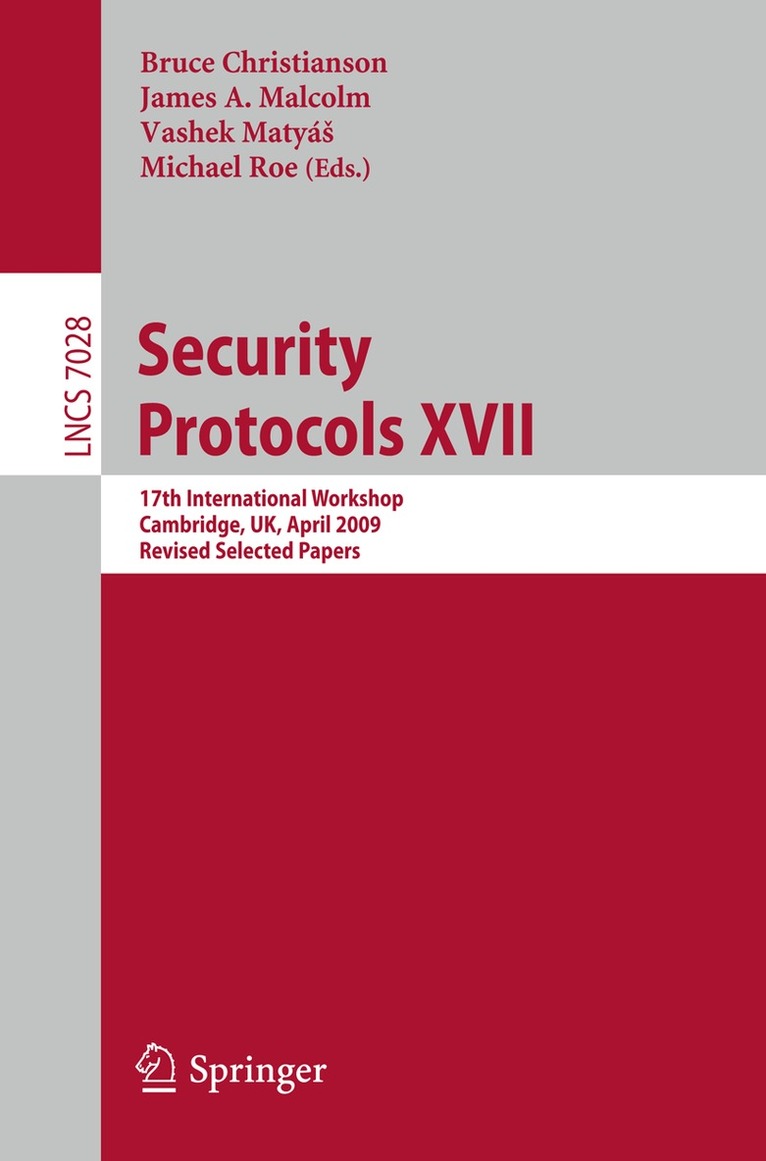
Security Protocols XVII
17th International Workshop, Cambridge, UK, April 1-3, 2009. Revised Selected Papers
Av Bruce Christianson, James A. Malcolm m. fl.
Häftad, 2013
567 kr
Lägg i varukorg
This book constitutes the thoroughly refereed post-proceedings of the 17th International Workshop on Security Protocols, SP 2009, held in Cambridge, UK, in April 2009. The 17 revised full papers presented together with edited transcriptions of some of the discussions following the presentations …
Security Protocols XVII
17th International Workshop, Cambridge, UK, April 1-3, 2009. Revised Selected Papers
Av Michael Roe, Vashek Matyas m. fl.
E-bok, 2013
739 kr
Lägg i varukorg
This book constitutes the thoroughly refereed post-proceedings of the 17th International Workshop on Security Protocols, SP 2009, held in Cambridge, UK, in April 2009. The 17 revised full papers presented together with edited transcriptions of some of the discussions following the presentations …