
Häftad, Engelska, 2005
179 kr
Skickas inom 5-8 vardagar
179 kr
Skickas inom 5-8 vardagar
111 kr
Läs direkt efter köp
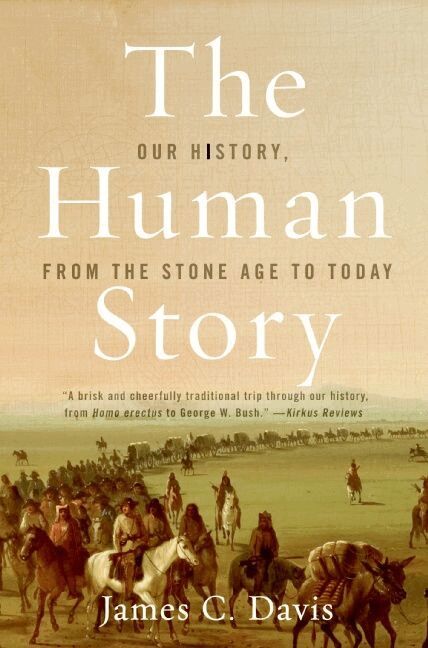
Has there ever been a history of the world as readable as this?
In The Human Story, James C. Davis takes us on a journey to ancient times, telling how peoples of the world settled down and founded cities, conquered neighbors, and established religions, and continues over the course of history, when they fought two nearly global wars and journeyed into space.
Davis''s account is swift and clear, never dull or dry. He lightens it with pungent anecdotes and witty quotes. Although this compact volume may not be hard to pick up, it''s definitely hard to put down.
For example, on the death of Alexander the Great, who in a decade had never lost a single battle, and who had staked out an empire that spanned the entire Near East and Egypt, Davis writes: "When they heard how ill he was, the king''s devoted troops insisted on seeing him. He couldn''t speak, but as his soldiers -- every one -- filed by in silence, Alexander''s eyes uttered his farewells. He died in June 323 B.C., at the ripe old age of thirty-two."
In similar fashion Davis recounts Russia''s triumph in the space race as it happened on an autumn night in 1957: "A bugle sounded, flames erupted, and with a roar like rolling thunder, Russia''s rocket lifted off. It bore aloft the earth''s first artificial satellite, a shiny sphere the size of a basketball. Its name was Sputnik, meaning ''companion'' or ''fellow traveler'' (through space). The watchers shouted, ''Off. She''s off. Our baby''s off!'' Some danced; others kissed and waved their arms."
Though we live in an age of many doubts, James C. Davis thinks we humans are advancing. As The Human Story ends, he concludes, "The world''s still cruel; that''s understood, / But once was worse. So far so good."

660 kr
Läs direkt efter köp
Commerce in Color exploresthe juncture of consumer culture and race by examining advertising, literary texts, mass culture, and public events in the United States from 1893 to 1933. James C. Davis takes up a remarkable range of subjects—including the crucial role publishers Boni and Liveright played in the marketing of Harlem Renaissance literature, Henry James’s critique of materialism in The American Scene, and the commodification of racialized popular culture in James Weldon Johnson’s The Autobiography of anEx-Colored Man—as he argues that racial thinking was central to the emergence of U.S. consumerism and, conversely, that an emerging consumer culture was a key element in the development of racial thinking and the consolidation of racial identity in America. By urging a reassessment of the familiar rubrics of the “culture of consumption” and the “culture of segregation,” Dawson poses new and provocative questions about American culture and social history. Both an influential literary study and an absorbing historical read, Commerce in Color proves that—in America—advertising, publicity, and the development of the modern economy cannot be understood apart from the question of race.
“A welcome addition to existing scholarship, Davis’s study of the intersection of racial thinking and the emergence of consumer culture makes connections very few scholars have considered.”
—James Smethurst, University of Massachusetts
James C. Davis is Assistant Professor of English at Brooklyn College.
437 kr
Skickas inom 5-8 vardagar
1 093 kr
Skickas inom 10-15 vardagar

1 047 kr
Skickas inom 10-15 vardagar

203 kr
Skickas inom 3-6 vardagar

322 kr
Skickas inom 5-8 vardagar
1 308 kr
Läs direkt efter köp
Rise From Want explores the ways in which a family of poor peasants from the Karst plateau above Trieste, Italy, lived through the great changes brought about by industrialization and modernization. The book is a careful and imaginative reconstruction of the lives of some humble and illiterate people who left behind them few traces of their existence.Through a gripping narrative of the Žužek family, Davis explores the social changes that accompanied the peasants'' "rise from want." During the Middle Ages, the first Žužeks were serfs of the lords in the nearby castle of Duino. Two centuries ago the Žužeks were freed from serfdom, but for another hundred years they continued to be poor and illiterate. In recent decades they have left the land.In each chapter Davis focuses on the ways in which the Žužeks responded to broad social changes. He looks, for example, at how the Žužeks viewed the end of serfdom, and how it affected their ability to make a living; how changes in diet, housing, and medicine reduced the number of infant deaths; how their move from farming to other kinds of work affected relations between husbands, wives and children; how they survived through World War II; and how the prosperity of the industrialized world that began in the 1950s affected their lives. And while Davis focuses on the Žužeks'' reactions to these events, he puts them into a context relevant to the historical experience of millions of people.As source material, Davis used not only written sources such as castle charters, church registers, tax collectors'' reports, travel diaries, and police records but also interviews with the surviving Žužeks and many elderly villagers who remembered the Karst as it was on the eve of the great changes of the twentieth century.Rise From Want will be of interest to students and scholars of history, especially those concerned with serfdom, industrialization and modernization, population change, Italy, and the Austro-Hungarian Empire. It will also be of interest to those who have "somewhere among their ancestors, a poor peasant or two."
179 kr
Skickas inom 5-8 vardagar
111 kr
Läs direkt efter köp
Has there ever been a history of the world as readable as this?
In The Human Story, James C. Davis takes us on a journey to ancient times, telling how peoples of the world settled down and founded cities, conquered neighbors, and established religions, and continues over the course of history, when they fought two nearly global wars and journeyed into space.
Davis''s account is swift and clear, never dull or dry. He lightens it with pungent anecdotes and witty quotes. Although this compact volume may not be hard to pick up, it''s definitely hard to put down.
For example, on the death of Alexander the Great, who in a decade had never lost a single battle, and who had staked out an empire that spanned the entire Near East and Egypt, Davis writes: "When they heard how ill he was, the king''s devoted troops insisted on seeing him. He couldn''t speak, but as his soldiers -- every one -- filed by in silence, Alexander''s eyes uttered his farewells. He died in June 323 B.C., at the ripe old age of thirty-two."
In similar fashion Davis recounts Russia''s triumph in the space race as it happened on an autumn night in 1957: "A bugle sounded, flames erupted, and with a roar like rolling thunder, Russia''s rocket lifted off. It bore aloft the earth''s first artificial satellite, a shiny sphere the size of a basketball. Its name was Sputnik, meaning ''companion'' or ''fellow traveler'' (through space). The watchers shouted, ''Off. She''s off. Our baby''s off!'' Some danced; others kissed and waved their arms."
Though we live in an age of many doubts, James C. Davis thinks we humans are advancing. As The Human Story ends, he concludes, "The world''s still cruel; that''s understood, / But once was worse. So far so good."
660 kr
Läs direkt efter köp
Commerce in Color exploresthe juncture of consumer culture and race by examining advertising, literary texts, mass culture, and public events in the United States from 1893 to 1933. James C. Davis takes up a remarkable range of subjects—including the crucial role publishers Boni and Liveright played in the marketing of Harlem Renaissance literature, Henry James’s critique of materialism in The American Scene, and the commodification of racialized popular culture in James Weldon Johnson’s The Autobiography of anEx-Colored Man—as he argues that racial thinking was central to the emergence of U.S. consumerism and, conversely, that an emerging consumer culture was a key element in the development of racial thinking and the consolidation of racial identity in America. By urging a reassessment of the familiar rubrics of the “culture of consumption” and the “culture of segregation,” Dawson poses new and provocative questions about American culture and social history. Both an influential literary study and an absorbing historical read, Commerce in Color proves that—in America—advertising, publicity, and the development of the modern economy cannot be understood apart from the question of race.
“A welcome addition to existing scholarship, Davis’s study of the intersection of racial thinking and the emergence of consumer culture makes connections very few scholars have considered.”
—James Smethurst, University of Massachusetts
James C. Davis is Assistant Professor of English at Brooklyn College.437 kr
Skickas inom 5-8 vardagar
1 093 kr
Skickas inom 10-15 vardagar
1 047 kr
Skickas inom 10-15 vardagar
203 kr
Skickas inom 3-6 vardagar
322 kr
Skickas inom 5-8 vardagar
1 308 kr
Läs direkt efter köp
Rise From Want explores the ways in which a family of poor peasants from the Karst plateau above Trieste, Italy, lived through the great changes brought about by industrialization and modernization. The book is a careful and imaginative reconstruction of the lives of some humble and illiterate people who left behind them few traces of their existence.Through a gripping narrative of the Žužek family, Davis explores the social changes that accompanied the peasants'' "rise from want." During the Middle Ages, the first Žužeks were serfs of the lords in the nearby castle of Duino. Two centuries ago the Žužeks were freed from serfdom, but for another hundred years they continued to be poor and illiterate. In recent decades they have left the land.In each chapter Davis focuses on the ways in which the Žužeks responded to broad social changes. He looks, for example, at how the Žužeks viewed the end of serfdom, and how it affected their ability to make a living; how changes in diet, housing, and medicine reduced the number of infant deaths; how their move from farming to other kinds of work affected relations between husbands, wives and children; how they survived through World War II; and how the prosperity of the industrialized world that began in the 1950s affected their lives. And while Davis focuses on the Žužeks'' reactions to these events, he puts them into a context relevant to the historical experience of millions of people.As source material, Davis used not only written sources such as castle charters, church registers, tax collectors'' reports, travel diaries, and police records but also interviews with the surviving Žužeks and many elderly villagers who remembered the Karst as it was on the eve of the great changes of the twentieth century.Rise From Want will be of interest to students and scholars of history, especially those concerned with serfdom, industrialization and modernization, population change, Italy, and the Austro-Hungarian Empire. It will also be of interest to those who have "somewhere among their ancestors, a poor peasant or two."