James C Goodloe IV – författare
Visar alla böcker från författaren James C Goodloe IV. Handla med fri frakt och snabb leverans.
7 produkter
7 produkter
Inbunden, Engelska, 2010
330 kr
Skickas inom 5-8 vardagar
Inbunden, Engelska, 2014
624 kr
Skickas inom 5-8 vardagar
E-bok
Engelska, 2010260 kr
Läs direkt efter köp
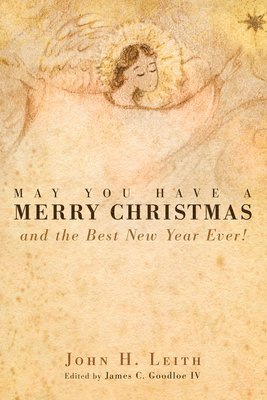
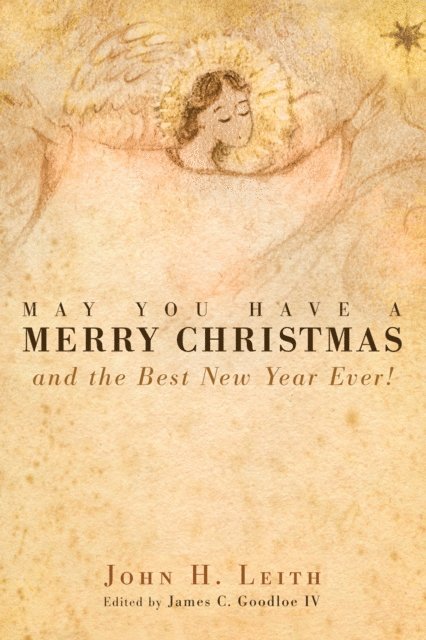
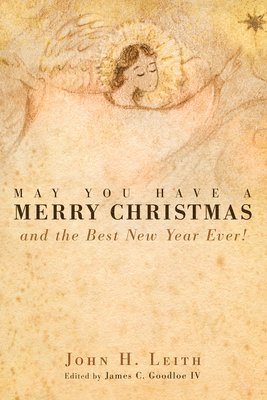
Dr. John H. Leith (1919-2002) enjoyed Christmas. He appreciated it especially as a celebration of the goodness of this world that God not only created but also, in the incarnation of Jesus Christ, entered, blessed with his presence, and redeemed. And at Christmas he especially wanted to be in contact with, and to minister to, those whom he loved, those whom he had taught, and those whom he cherished as colleagues in the Christian and Reformed ministry of preaching, teaching, and pastoral care.This little book comprises a collection of Leith''s Christmas letters to his former ministerial students at Union Theological Seminary in Virginia. The letters grew lengthier and richer through the years. We have gathered them here so that others may enjoy reading them also.
E-bok
Engelska, 201098 kr
Läs direkt efter köp
The responsibility to bear witness to the gracious presence of God in Jesus Christ in Jerusalem and in all Judea and Samaria and to the end of the earth has been the perennial task of the Christian community from the beginning. But the style and form of evangelism has varied according to time and place. There is no one way of evangelism, as the history of Christians witnessing and confessing their faith makes very clear. The life of the Christian community has been and is enriched by a variety of evangelistic styles and by multiple theological confessions.There is, however, a limit to possible Christian theologies, and the preeminent theological task of the church is to test its proclamation by the word of God in Jesus Christ, as attested in scripture, to see that it is within the boundary. There is also a limit to the legitimate styles of evangelism. Some styles of evangelism corrupt and others strengthen the witness, but more significantly, style always betrays the real content. There is an intimate but seldom seen connection between a person''s thought and his style, which Alfred North Whitehead defined precisely as the ''ultimate morality of mind.''The purpose of this paper is to relate Reformed theology to the form and style of evangelism. The paper presupposes that evangelism as shaped by Reformed theology is a valid and effective form of evangelism, but it does not presuppose that such form of evangelism is the only form that has validity or effectiveness. It is hoped that the proposal will be the occasion for self-criticism in the work of evangelism and for renewal of theological and ecclesiastical life in the Reformed tradition.
Häftad, Engelska, 2010
178 kr
Skickas inom 5-8 vardagar
Häftad, Engelska, 2014
388 kr
Skickas inom 5-8 vardagar
E-bok
Engelska, 2014633 kr
Läs direkt efter köp
Luke wrote this Gospel so that you [Theophilus] may have certainty concerning the things you have been taught [i.e., catechesis] (1:4). It proceeds with a barrage of questions.The first comes from Zechariah: How shall I know? (1:18). This is a question of knowledge. The angel Gabriel answers that we shall know by the word of God (1:19).The second comes from Mary: How will this be? (1:34). This is a question of agency, of how the Son of God can become human. Gabriel answers that it will be by the power of God (1:35).The third comes from Elizabeth: Why me? (1:43). Why should the gospel of Jesus Christ come to her? Mary answers that it has to do with God''s choice, election, mercy, and salvation (1:47-55).The fourth has to do with John: What then will this child be? (1:66). Zechariah answers that he will be a prophet (1:76-79). John is not the Christ, but he will go before the Christ.Thus begins the catechism according to Luke, a series of questions in order that we may have certainty concerning the things we have been taught.