James Deese – författare
Visar alla böcker från författaren James Deese. Handla med fri frakt och snabb leverans.
5 produkter
How to Study 5/e
Av Ellin K. Deese, James Deese m. fl.
E-bok, 2003
209 kr
Lägg i varukorg
The classic guide to effective studying, revised for today''s high-tech students With computers at the forefront of today''s university learning experience, the new fifth edition of How to Study fills a long-awaited need for an up-to-the-minute guide to making the grade on campus. A perennial …
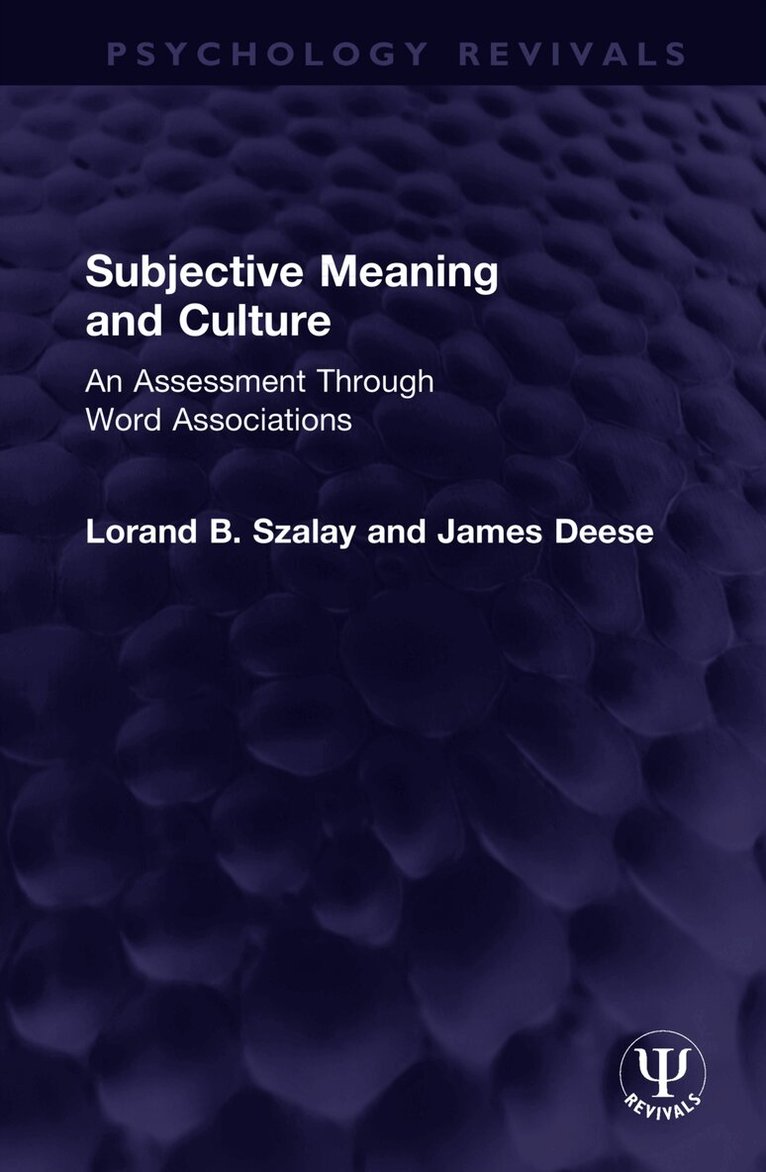
Subjective Meaning and Culture
An Assessment Through Word Associations
Av Lorand B. Szalay, James Deese
Inbunden, 2024
1478 kr
Lägg i varukorg
Originally published in 1978, Subjective Meaning and Culture presents a framework and a method for the comparative study of the perceptions, attitudes, and cultural frames of reference shared by groups of people. The framework is the notion of subjective meaning, and the method is that of word …
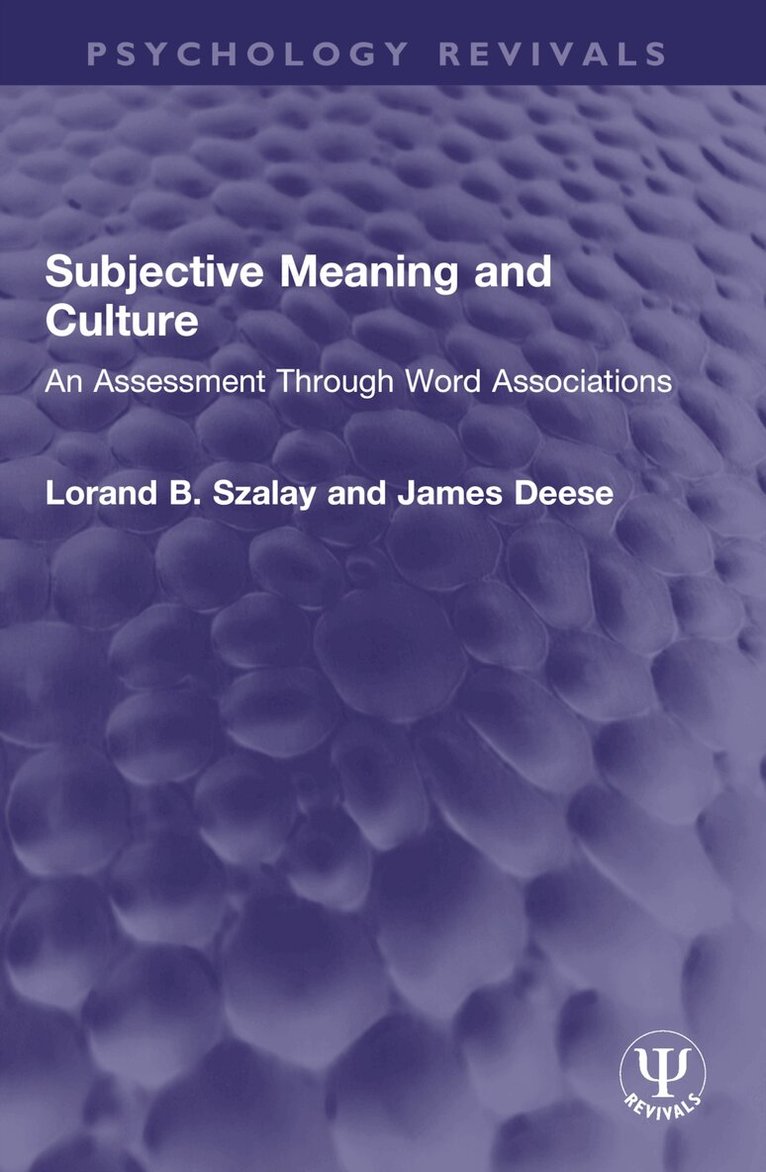
Subjective Meaning and Culture
An Assessment Through Word Associations
Av Lorand B. Szalay, James Deese
Häftad, 2025
459 kr
Lägg i varukorg
Originally published in 1978, Subjective Meaning and Culture presents a framework and a method for the comparative study of the perceptions, attitudes, and cultural frames of reference shared by groups of people. The framework is the notion of subjective meaning, and the method is that of word …
Subjective Meaning and Culture
An Assessment Through Word Associations
Av James Deese, Lorand B. Szalay
E-bok, 2024
539 kr
Lägg i varukorg
Originally published in 1978, Subjective Meaning and Culture presents a framework and a method for the comparative study of the perceptions, attitudes, and cultural frames of reference shared by groups of people. The framework is the notion of subjective meaning, and the method is that of word …
Subjective Meaning and Culture
An Assessment Through Word Associations
Av James Deese, Lorand B. Szalay
E-bok, 2024
539 kr
Lägg i varukorg
Originally published in 1978, Subjective Meaning and Culture presents a framework and a method for the comparative study of the perceptions, attitudes, and cultural frames of reference shared by groups of people. The framework is the notion of subjective meaning, and the method is that of word …