James Gordon McConville – författare
Visar alla böcker från författaren James Gordon McConville. Handla med fri frakt och snabb leverans.
6 produkter
6 produkter
E-bok
PDF, Engelska, 1995526 kr
Läs direkt efter köp
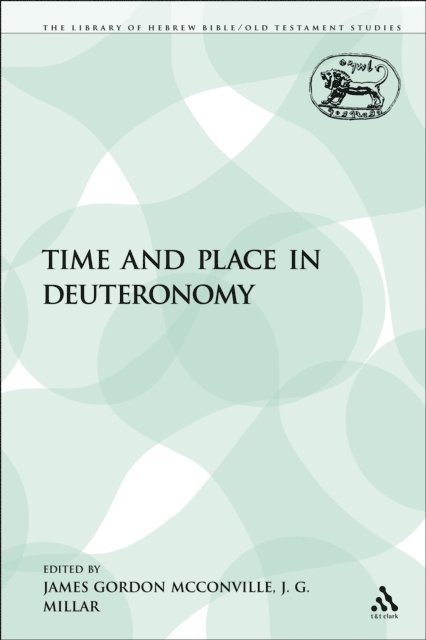
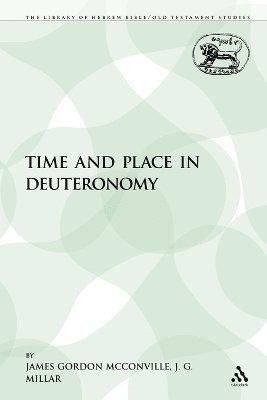
The book is a literary and theological study of the themes of time and place, which aims to set the so-called ''centralization-law'' of Deut 12-26 in the broad context of the book. The authors show that time and place are pervasive themes of Deuteronomy, a crucial part of its articulation of its understanding of history, religion and ethics. The heart of the thesis is that the foundational encounter between God and Israel at Horeb is paradigmatic for all subsequent encounters. For this reason, no one time or place can have final or absolute significance. The thesis thus calls into question the received view that the altar-law of Deut 12-26 is a ''centralization-law'' associated with Josiah''s reform. The refusal to identify the ''place'' is no mere device against anachronism, but a consistent element in Deuteronomy''s theology of history. The Connection between Deuteronomy and Josiah''s reform has long been an important tenet of Old Testament criticism. The debate about the interpretation of Deuteronomy, however, has never been finally settled. The present study looks in a new way at the so-called ''centralization-law'' of Deuteronomy which has been the most important factor in the traditional critical view of the book. It sets the law in the context of a broadly based study of the theology of the book, and comes to conclusions which call the connection with Josiah''s reform into question. A broadly based study of the themes of time and place in Deuteronomy, calling into question accepted ideas about the purpose and setting of the book.
E-bok
PDF, Engelska, 1987135 kr
Läs direkt efter köp
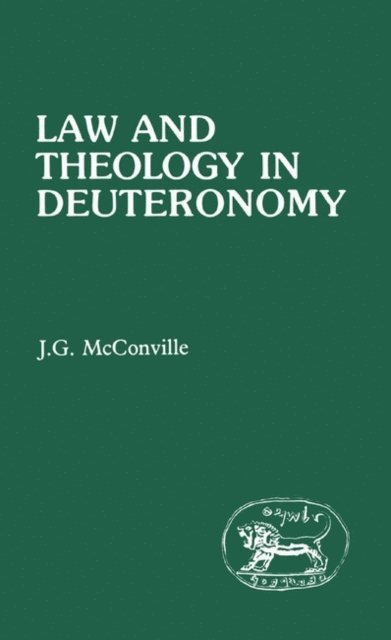
Asserting that the laws are a result of theology, and not the other way around, McConville focuses on the relation between the law of the Old Testament and the nature of God and of grace. He acknowledges Deuteronomy as a book of history and documentation of law, but also believes it gives great insight into the character of God. He begins his study with an introduction to the general theology of Deuteronomy. McConville then concentrates on several specific areas: The Alter–LawThe SacrificesThe TitheThe Law of FirstlingsThe FeastsThe Priests and Levites McConville examines the text from historical, linguistic, literary, and theological standpoints. He includes notes, a bibliography, and indexes.
Häftad, Engelska, 2017
296 kr
Skickas inom 10-15 vardagar
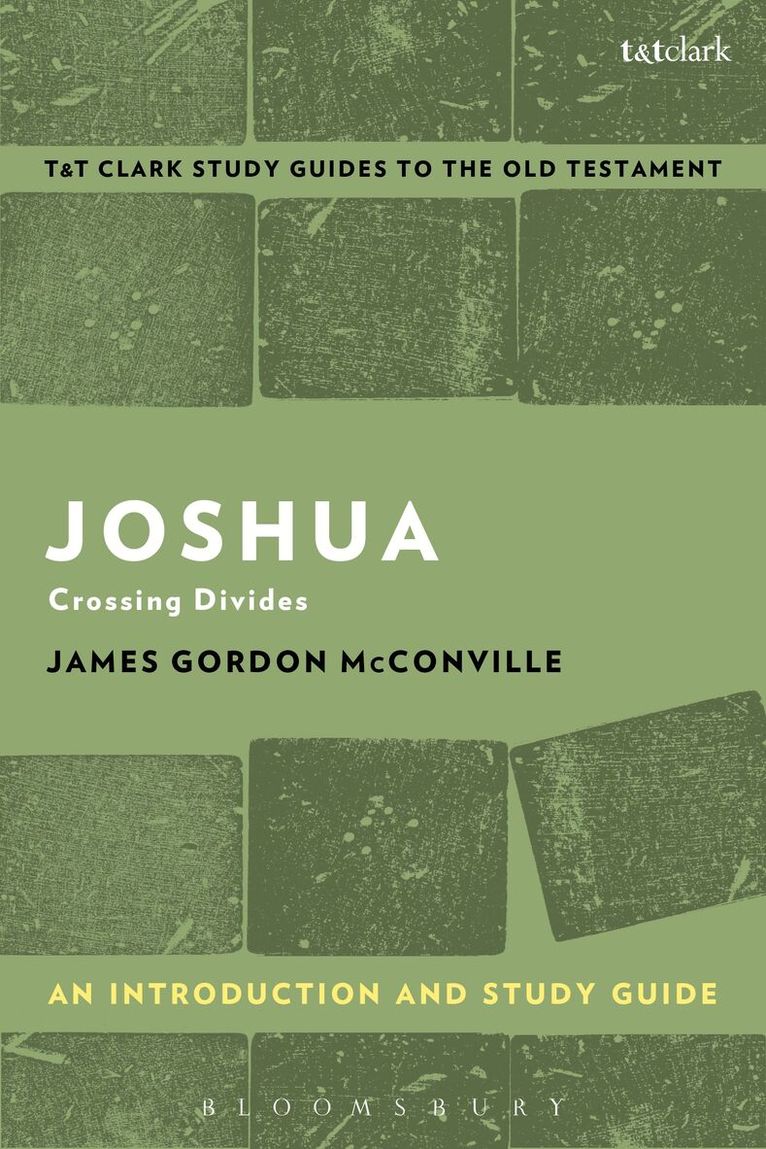
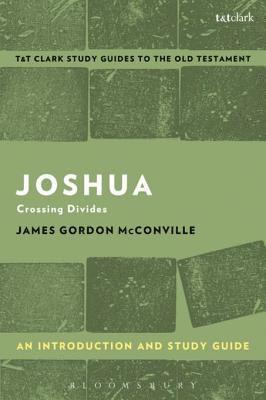
The book of Joshua, with its memorable images of the crossing of the River Jordan and the miraculous conquest of the city of Jericho, plays an important part in the Old Testament’s narrative and theology of God’s promise and gift of the land of Canaan to Israel.In this guide, Gordon McConville considers the various aspects of interpreting Joshua, including questions of its origins and occasion, its literary formation and its theology. He also looks squarely at the difficulties it poses to the modern reader, and the dangers of simplistic interpretations, especially when allied with power systems. Yet, among the possible approaches to Joshua, certain readings suggest unexpected messages, and with the book’s memorable central image of crossing a river in an escape from tyranny into new life, it can prompt fruitful reflection on other ‘crossings’, perhaps helping us to overcome the deepest human hostilities.
E-bok
PDF, Engelska, 2017307 kr
Läs direkt efter köp
The book of Joshua, with its memorable images of the crossing of the River Jordan and the miraculous conquest of the city of Jericho, plays an important part in the Old Testament''s narrative and theology of God''s promise and gift of the land of Canaan to Israel.In this guide, Gordon McConville considers the various aspects of interpreting Joshua, including questions of its origins and occasion, its literary formation and its theology. He also looks squarely at the difficulties it poses to the modern reader, and the dangers of simplistic interpretations, especially when allied with power systems. Yet, among the possible approaches to Joshua, certain readings suggest unexpected messages, and with the book''s memorable central image of crossing a river in an escape from tyranny into new life, it can prompt fruitful reflection on other ''crossings'', perhaps helping us to overcome the deepest human hostilities.
E-bok
Engelska, 2017307 kr
Läs direkt efter köp
The book of Joshua, with its memorable images of the crossing of the River Jordan and the miraculous conquest of the city of Jericho, plays an important part in the Old Testament''s narrative and theology of God''s promise and gift of the land of Canaan to Israel.In this guide, Gordon McConville considers the various aspects of interpreting Joshua, including questions of its origins and occasion, its literary formation and its theology. He also looks squarely at the difficulties it poses to the modern reader, and the dangers of simplistic interpretations, especially when allied with power systems. Yet, among the possible approaches to Joshua, certain readings suggest unexpected messages, and with the book''s memorable central image of crossing a river in an escape from tyranny into new life, it can prompt fruitful reflection on other ''crossings'', perhaps helping us to overcome the deepest human hostilities.
Häftad, Engelska, 2009
503 kr
Skickas inom 10-15 vardagar
The book is a literary and theological study of the themes of time and place, which aims to set the so-called 'centralization-law' of Deut 12-26 in the broad context of the book. The authors show that time and place are pervasive themes of Deuteronomy, a crucial part of its articulation of its understanding of history, religion and ethics. The heart of the thesis is that the foundational encounter between God and Israel at Horeb is paradigmatic for all subsequent encounters. For this reason, no one time or place can have final or absolute significance. The thesis thus calls into question the received view that the altar-law of Deut 12-26 is a 'centralization-law' associated with Josiah's reform. The refusal to identify the 'place' is no mere device against anachronism, but a consistent element in Deuteronomy's theology of history. The Connection between Deuteronomy and Josiah's reform has long been an important tenet of Old Testament criticism. The debate about the interpretation of Deuteronomy, however, has never been finally settled. The present study looks in a new way at the so-called 'centralization-law' of Deuteronomy which has been the most important factor in the traditional critical view of the book. It sets the law in the context of a broadly based study of the theology of the book, and comes to conclusions which call the connection with Josiah's reform into question. A broadly based study of the themes of time and place in Deuteronomy, calling into question accepted ideas about the purpose and setting of the book.