James J. Tomkovicz – författare
Visar alla böcker från författaren James J. Tomkovicz. Handla med fri frakt och snabb leverans.
4 produkter
4 produkter
Inbunden, Engelska, 2011
1 262 kr
Skickas inom 5-8 vardagar
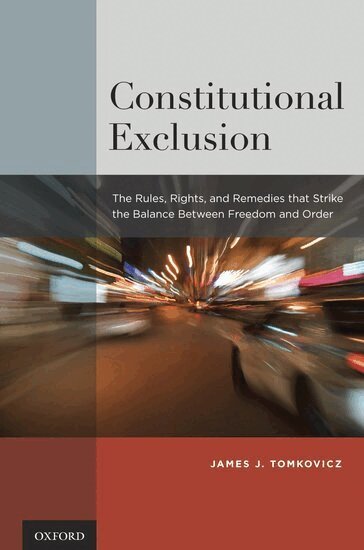
Supreme Court interpretations of the Bill of Rights have produced seven constitutional "exclusionary rules." These rules prevent prosecutors from introducing evidence of guilt in criminal trials, making it harder to convict offenders and enabling some criminals to avoid conviction and punishment. The importance of these evidentiary bars cannot be understated. They reflect inevitable tensions between liberty and security.Constitutional Exclusion, by James J. Tomkovicz contains in-depth analyses of each constitutional doctrine that dictates the suppression of evidence. The text begins with an extensive treatment of the Fourth Amendment exclusionary rule which bars evidence acquired by means of unreasonable searches or seizures. It then addresses three distinct doctrines that suppress confessions---the due process and privilege against compelled self-incrimination bar to coerced confessions, Miranda v. Arizona's Fifth Amendment prophylactic presumption that certain confessions are inadmissible, and the Massiah doctrine's Sixth Amendment right to counsel bar to incriminating admissions. Next, the book explains two prohibitions on eyewitness identification evidence, one rooted in the Sixth Amendment right to counsel and another grounded in the due process guarantee. Finally, the text explores the exclusion of hearsay commanded by the Sixth Amendment Confrontation Clause.Constitutional Exclusion analyzes the histories of, justifications for, and the legitimacy of these exclusion doctrines. By juxtaposing the rules and highlighting their distinctive characters, the book sheds new light on topics of vital importance to the administration of criminal justice.
E-bok
PDF, Engelska, 2010788 kr
Läs direkt efter köp
Supreme Court interpretations of the Bill of Rights have produced seven constitutional "exclusionary rules." These rules prevent prosecutors from introducing evidence of guilt in criminal trials, making it harder to convict offenders and enabling some criminals to avoid conviction and punishment. The importance of these evidentiary bars cannot be understated. They reflect inevitable tensions between liberty and security.Constitutional Exclusion, by James J. Tomkovicz contains in-depth analyses of each constitutional doctrine that dictates the suppression of evidence. The text begins with an extensive treatment of the Fourth Amendment exclusionary rule which bars evidence acquired by means of unreasonable searches or seizures. It then addresses three distinct doctrines that suppress confessions---the due process and privilege against compelled self-incrimination bar to coerced confessions, Miranda v. Arizona''s Fifth Amendment prophylactic presumption that certain confessions are inadmissible, and the Massiah doctrine''s Sixth Amendment right to counsel bar to incriminating admissions. Next, the book explains two prohibitions on eyewitness identification evidence, one rooted in the Sixth Amendment right to counsel and another grounded in the due process guarantee. Finally, the text explores the exclusion of hearsay commanded by the Sixth Amendment Confrontation Clause.Constitutional Exclusion analyzes the histories of, justifications for, and the legitimacy of these exclusion doctrines. By juxtaposing the rules and highlighting their distinctive characters, the book sheds new light on topics of vital importance to the administration of criminal justice.
E-bok
PDF, Engelska, 20021 008 kr
Läs direkt efter köp
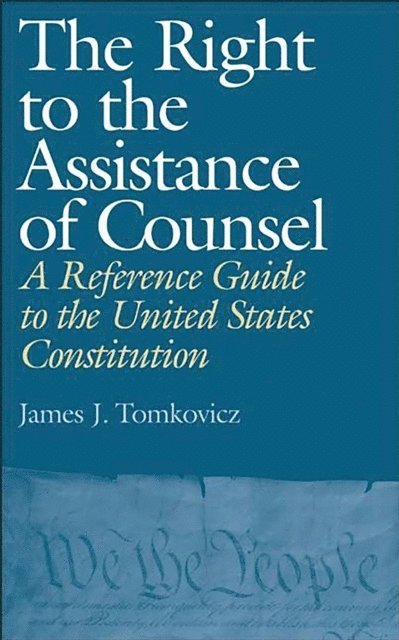
Inaugurating Greenw4ood's Reference Guides to the United States Constitution series, this superlative guide to the Sixth Amendment is the first to survey the legal guarantee of counsel's assistance since 1963's Gideon ruling. The vast majority of important, even landmark cases regarding the right to counsel were decided after that pivotal ruling, making this the definitive work on the topic. Tomkovicz offers a concise yet substantial account of the historical development of the right to counsel in England and America.Included are:•A brief history of the topic•Lengthy and sophisticated analysis of the current state of the law•A bibliographical essay organizing and evaluating scholarly material for further research•A table of cases•IndexA thorough analysis of the relevant U.S. Supreme Court's doctrine gives concrete content to the right to assistance of defense counsel. Scholars and students of the U.S. Constitution, along with attorneys and lay readers, will gain a rich understanding of the meaning and importance of the Sixth Amendment, and a comprehensive overview of a cornerstone of America's constitutional and legal order.
Inbunden, Engelska, 2002
964 kr
Skickas inom 10-15 vardagar
Inaugurating Greenw4ood's Reference Guides to the United States Constitution series, this superlative guide to the Sixth Amendment is the first to survey the legal guarantee of counsel's assistance since 1963's Gideon ruling. The vast majority of important, even landmark cases regarding the right to counsel were decided after that pivotal ruling, making this the definitive work on the topic. Tomkovicz offers a concise yet substantial account of the historical development of the right to counsel in England and America.Included are:•A brief history of the topic•Lengthy and sophisticated analysis of the current state of the law•A bibliographical essay organizing and evaluating scholarly material for further research•A table of cases•IndexA thorough analysis of the relevant U.S. Supreme Court's doctrine gives concrete content to the right to assistance of defense counsel. Scholars and students of the U.S. Constitution, along with attorneys and lay readers, will gain a rich understanding of the meaning and importance of the Sixth Amendment, and a comprehensive overview of a cornerstone of America's constitutional and legal order.