James Stanfield – författare
Visar alla böcker från författaren James Stanfield. Handla med fri frakt och snabb leverans.
2 produkter
2 produkter
Häftad, Engelska, 2012
221 kr
Skickas inom 5-8 vardagar
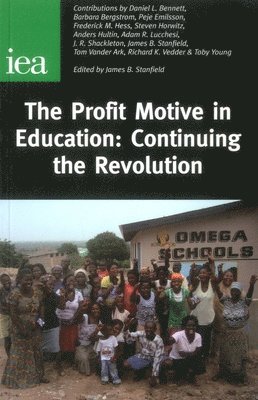
The UK government in common with the governments of many Western countries is in the midst of implementing policies to reform education. However, the government has, as a matter of principle, decided that profit-making schools cannot provide state-funded education even if they would lead to substantial improvements in quality. This monograph makes the case for widespread acceptance of the profit motive in education. It does so not by presenting statistics that demonstrate that profit-making organisations could drive up quality there is already a substantial literatureon this. Instead, the authors show how profit-making organisations could create an entirely new dynamic of entrepreneurship and innovation. As well as improving quality and reducing costs within existing models, such an approach could lead to the development of completely new ways ofproviding education. The authors of this monograph have a range of international experience. Many of them have run profit-making schools in countries more accepting of the profit motive than the UK, suchas Sweden. Others have struggled against the odds to participate in education reform programmes in the UK.Overall, this collection makes an important contribution to the international debate about education reform
Inbunden, Engelska, 2003
221 kr
Tillfälligt slut
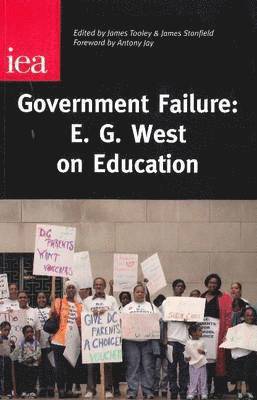
This selection of E G West's papers contains a wealth of economic and philosophical analysis which can guide policymakers in the field of Education. They also show how state monopoly provision of education has led to a particular model of schooling which does not work for many of those who use the education system -- parents and children. Perhaps the most valuable contribution of these papers, though, is their historical analysis. The extent to which education systems developed in the UK and the USA before either compulsory schooling or dominant state finance emerged is remarkable. E.G. West also analyses the debate between those who believe that the state should control education in order to shape the thinking of the younger generation, and those who believe in a purist system. He demonstrates how universal state provision of education is the model that is least likely to benefit the poor, although they could benefit substantially from programmes to help them fund their education.In an era when there is increasing dissatisfaction with state education provision, but in which the state has ever greater control of the curriculum -- including the teaching of 'citizenship' -- and management of schools, the papers in Occasional Paper 130 have never been more relevant.