Jan W. de Keijser – författare
Visar alla böcker från författaren Jan W. de Keijser. Handla med fri frakt och snabb leverans.
6 produkter
6 produkter
E-bok
PDF, Engelska, 20171 012 kr
Läs direkt efter köp
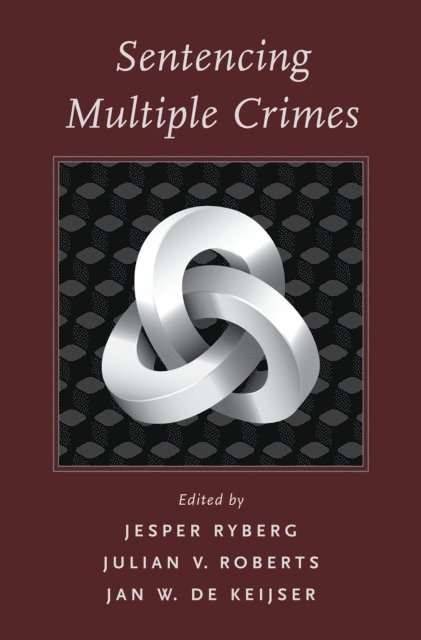
Most people assume that criminal offenders have only been convicted of a single crime. However, in reality almost half of offenders stand to be sentenced for more than one crime. The high proportion of multiple crime offenders poses a number of practical and theoretical challenges for the criminal justice system. For instance, how should courts punish multiple offenders relative to individuals who have been sentenced for a single crime? How should they be punished relative to each other? Sentencing Multiple Crimes discusses these questions from the perspective of several legal theories. This volume considers questions such as the proportionality of the crimes committed, the temporal span between the crimes, and the relationship between theories about the punitive treatment of recidivists and multiple offenders. Contributors from around the world and in the fields of legal theory, philosophy, and psychology offer their perspectives to the volume. A comprehensive examination of the dynamics involved with sentencing multiple offenders has the potential to be a powerful tool for legal scholars and professionals, particularly given the practical importance of the topic and the relative dearth of research about punishment of multiple offense cases.
E-bok
Engelska, 20171 012 kr
Läs direkt efter köp
Most people assume that criminal offenders have only been convicted of a single crime. However, in reality almost half of offenders stand to be sentenced for more than one crime. The high proportion of multiple crime offenders poses a number of practical and theoretical challenges for the criminal justice system. For instance, how should courts punish multiple offenders relative to individuals who have been sentenced for a single crime? How should they be punished relative to each other? Sentencing Multiple Crimes discusses these questions from the perspective of several legal theories. This volume considers questions such as the proportionality of the crimes committed, the temporal span between the crimes, and the relationship between theories about the punitive treatment of recidivists and multiple offenders. Contributors from around the world and in the fields of legal theory, philosophy, and psychology offer their perspectives to the volume. A comprehensive examination of the dynamics involved with sentencing multiple offenders has the potential to be a powerful tool for legal scholars and professionals, particularly given the practical importance of the topic and the relative dearth of research about punishment of multiple offense cases.
Inbunden, Engelska, 2019
1 213 kr
Skickas inom 10-15 vardagar
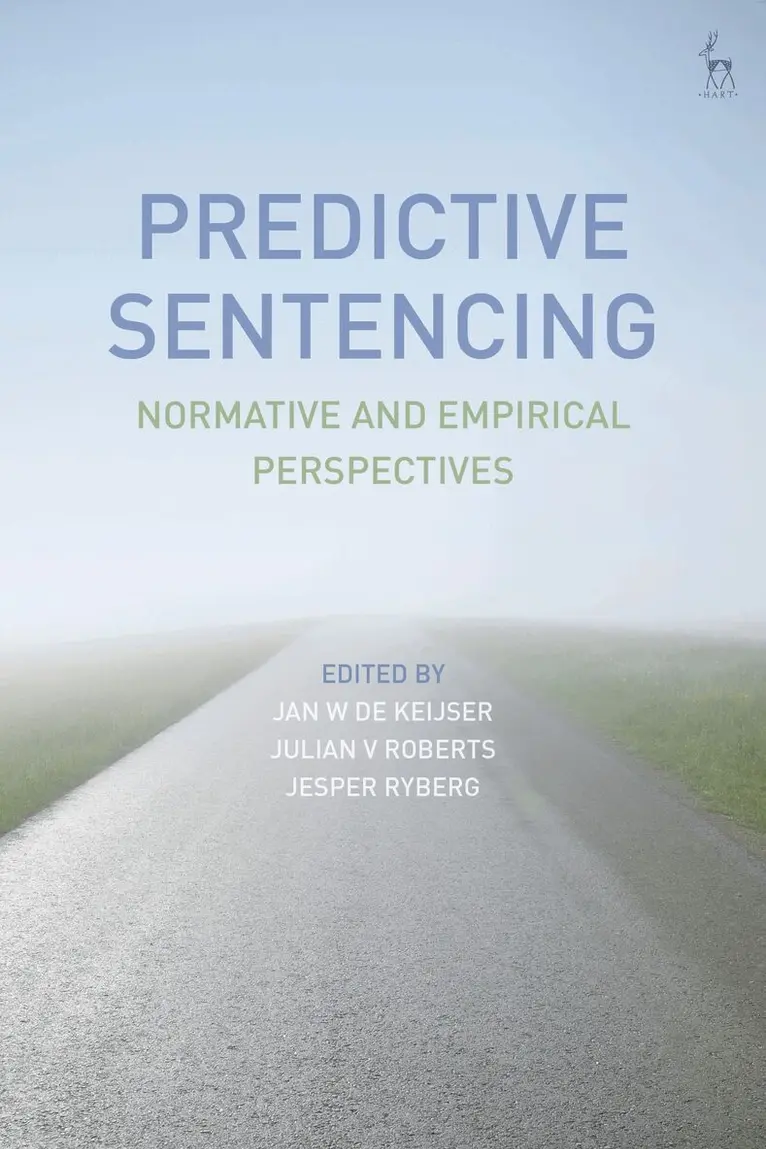
Predictive Sentencing addresses the role of risk assessment in contemporary sentencing practices. Predictive sentencing has become so deeply ingrained in Western criminal justice decision-making that despite early ethical discussions about selective incapacitation, it currently attracts little critique. Nor has it been subjected to a thorough normative and empirical scrutiny. This is problematic since much current policy and practice concerning risk predictions is inconsistent with mainstream theories of punishment. Moreover, predictive sentencing exacerbates discrimination and disparity in sentencing. Although structured risk assessments may have replaced ‘gut feelings’, and have now been systematically implemented in Western justice systems, the fundamental issues and questions that surround the use of risk assessment instruments at sentencing remain unresolved. This volume critically evaluates these issues and will be of great interest to scholars of criminal justice and criminology.
E-bok
Engelska, 2019538 kr
Läs direkt efter köp
Predictive Sentencing addresses the role of risk assessment in contemporary sentencing practices. Predictive sentencing has become so deeply ingrained in Western criminal justice decision-making that despite early ethical discussions about selective incapacitation, it currently attracts little critique. Nor has it been subjected to a thorough normative and empirical scrutiny. This is problematic since much current policy and practice concerning risk predictions is inconsistent with mainstream theories of punishment. Moreover, predictive sentencing exacerbates discrimination and disparity in sentencing. Although structured risk assessments may have replaced ''gut feelings'', and have now been systematically implemented in Western justice systems, the fundamental issues and questions that surround the use of risk assessment instruments at sentencing remain unresolved. This volume critically evaluates these issues and will be of great interest to scholars of criminal justice and criminology.
E-bok
PDF, Engelska, 2019538 kr
Läs direkt efter köp
Predictive Sentencing addresses the role of risk assessment in contemporary sentencing practices. Predictive sentencing has become so deeply ingrained in Western criminal justice decision-making that despite early ethical discussions about selective incapacitation, it currently attracts little critique. Nor has it been subjected to a thorough normative and empirical scrutiny. This is problematic since much current policy and practice concerning risk predictions is inconsistent with mainstream theories of punishment. Moreover, predictive sentencing exacerbates discrimination and disparity in sentencing. Although structured risk assessments may have replaced ''gut feelings'', and have now been systematically implemented in Western justice systems, the fundamental issues and questions that surround the use of risk assessment instruments at sentencing remain unresolved. This volume critically evaluates these issues and will be of great interest to scholars of criminal justice and criminology.
Häftad, Engelska, 2020
515 kr
Skickas inom 10-15 vardagar
Predictive Sentencing addresses the role of risk assessment in contemporary sentencing practices. Predictive sentencing has become so deeply ingrained in Western criminal justice decision-making that despite early ethical discussions about selective incapacitation, it currently attracts little critique. Nor has it been subjected to a thorough normative and empirical scrutiny. This is problematic since much current policy and practice concerning risk predictions is inconsistent with mainstream theories of punishment. Moreover, predictive sentencing exacerbates discrimination and disparity in sentencing. Although structured risk assessments may have replaced ‘gut feelings’, and have now been systematically implemented in Western justice systems, the fundamental issues and questions that surround the use of risk assessment instruments at sentencing remain unresolved. This volume critically evaluates these issues and will be of great interest to scholars of criminal justice and criminology.