Janet Starkey – författare
Visar alla böcker från författaren Janet Starkey. Handla med fri frakt och snabb leverans.
9 produkter
9 produkter
1 094 kr
Skickas inom 5-8 vardagar
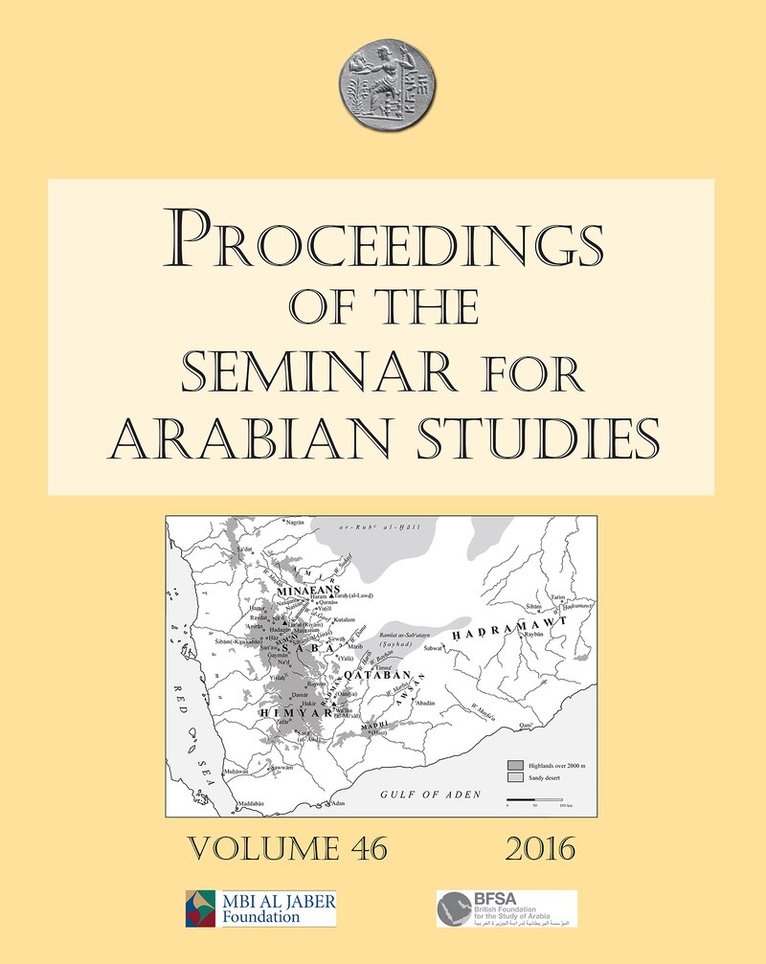
Del 46 - Proceedings of the Seminar for Arabian Studies
Proceedings of the Seminar for Arabian Studies Volume 46, 2016
Papers from the forty-seventh meeting of the Seminar for Arabian Studies held at the British Museum, London, 24 to 26 July 2015
Häftad, Engelska, 2016
1 033 kr
Skickas
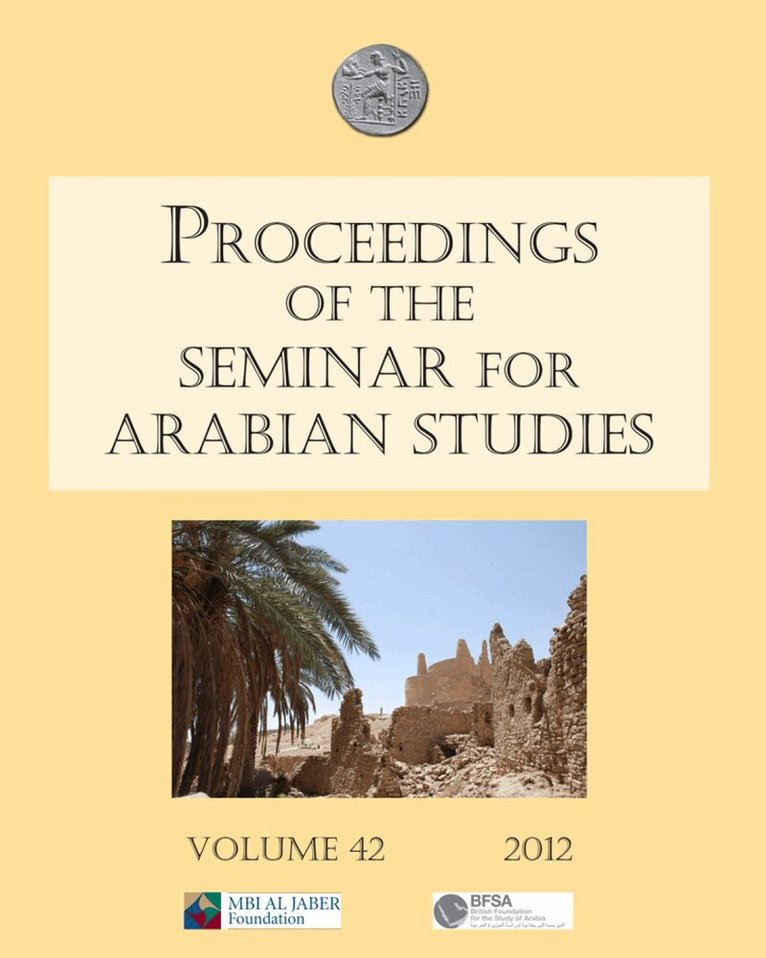
The Seminar for Arabian Studies is the only international academic forum that meets annually for the presentation of research in the humanities on the Arabian Peninsula. It focuses on the fields of archaeology, architecture, art, epigraphy, ethnography, history, language, linguistics, literature, and numismatics from the earliest times to the present day. A wide range of original and stimulating papers presented at the Seminar is published in the Proceedings of the Seminar for Arabian Studies and reflects the dynamism and scope of the interdisciplinary event. The Proceedings present the cutting edge of new research on Arabia and include reports of new discoveries in the Peninsula. They are published each spring in time for the subsequent Seminar, which is held in July. The main foci of the Seminar in 2015, in descending order of the number of papers presented in each session were North Arabia, South Arabia and Aksum, Archaeological Survey and Field Methods, Bronze and Iron Ages in Eastern Arabia, Islamic Archaeology, and Neolithic Archaeology. In addition, there were sessions on Recent Cultural History in Arabia, and Heritage Management in Arabia, as well as a special session on the Nabataean world titled ‘Beyond the “rose-red” city: the hinterland of Petra and Nabatean rural sites’, which featured a total of six papers. This volume also includes notes in memoriam on Professor Andrzej Zaborski (1942–2014), Professor Ordinarius at the Jagellonian University of Cracow, who specialized in Afro-Asiatic linguistics, Semitic and Cushitic in particular.
Del 47 - Proceedings of the Seminar for Arabian Studies
Proceedings of the Seminar for Arabian Studies Volume 47 2017
Papers from the fiftieth meeting of the Seminar for Arabian Studies held at the British Museum, London, 29 to 31 July 2016
Häftad, Engelska, 2017
1 033 kr
Skickas
The Seminar for Arabian Studies is the principal international academic forum for research on the Arabian Peninsula. First convened in 1968, it is the only annual academic event for the study of the Arabian Peninsula that brings together researchers from all over the world to present and discuss current fieldwork and the latest research. The Seminar covers an extensive range of diverse subjects that include anthropology, archaeology, architecture, art, epigraphy, ethnography, history, language, linguistics, literature, numismatics, theology, and more besides, from the earliest times to the present day or, in the fields of political and social history, to around the end of the Ottoman Empire (1922). The Seminar meets for three days each year, with an ever-increasing number of participants coming from around the globe to attend. In 2016 the fiftieth meeting took place, in which sixty papers and posters were presented in London at the British Museum, where this prestigious event has been hosted since 2002. The Seminar also regularly hosts a special session focusing on a specific aspect of the Humanities on the Arabian Peninsula, enabling a range of experts to present their research to a wider audience. In 2016 this special session was entitled ‘Textiles and Personal Adornment in the Arabian Peninsula’, which provided a fascinating overview of research on dress, textiles, and adornment in the Middle East.
Del 48 - Proceedings of the Seminar for Arabian Studies
Proceedings of the Seminar for Arabian Studies Volume 48 2018
Papers from the fifty-first meeting of the Seminar for Arabian Studies held at the British Museum, London, 4th to 6th August 2017
Häftad, Engelska, 2018
1 033 kr
Skickas
The Seminar for Arabian Studies has come a long way since 1968 when it was first convened, yet it remains the principal international academic forum for research on the Arabian Peninsula. This is clearly reflected in the ever-increasing number of researchers from all over the world who come each year to the three-day Seminar to present and discuss their latest research and fieldwork. The Seminar has covered, and continues to cover, an extensive range of diverse subjects that include anthropology, archaeology, architecture, art, epigraphy, ethnography, history, language, linguistics, literature, numismatics, theology, and more, from the earliest times to the present day or, in the fields of political and social history, to around the end of the Ottoman Empire (1922/1923). Papers presented at the Seminar have all been subjected to an intensive review process before they are accepted for publication in the Proceedings. The rigorous nature of the reviews undertaken by a range of specialists ensures that the highest academic standards are maintained. A supplementary volume, ‘Languages, scripts and their uses in ancient North Arabia’ edited by M.C.A. Macdonald (ISBN 9781784918996, Archaeopress, 2018), is also available containing the proceedings from the special session held during the seminar on 5 August 2017.
900 kr
Skickas
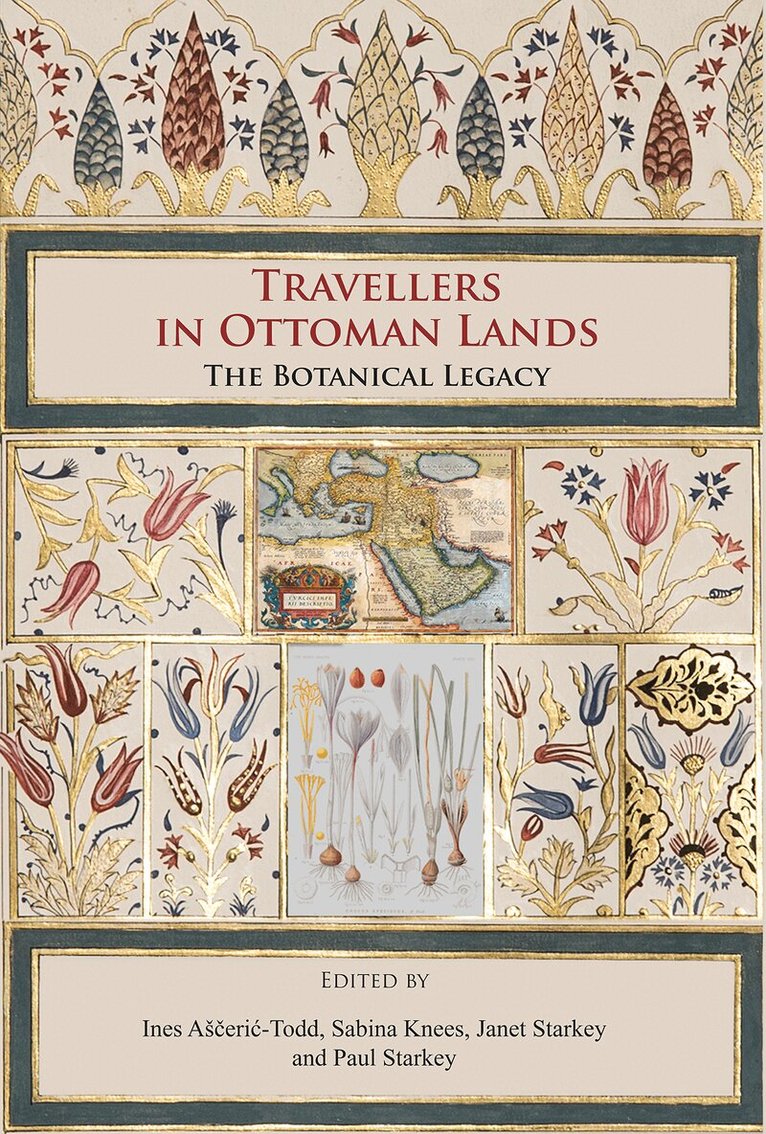
This collection of around twenty papers has its origins in a two-day seminar organised by the Association for the Study of Travel in Egypt and the Near East (ASTENE) in conjunction with the Centre for Middle Eastern Plants at the Royal Botanic Garden, Edinburgh (RBGE), with additional support from Cornucopia magazine and the Turkish Consulate General, Edinburgh. This multi-disciplinary event formed part of the Ottoman Horizons festival held in Edinburgh in 2017 and attracted a wide range of participants from around the world, including several from Turkey and other parts of the Middle East. This splendidly illustrated book focuses on the botanical legacy of many parts of the former Ottoman Empire — including present-day Turkey, the Levant, Egypt, the Balkans, and the Arabian Peninsula — as seen and described by travellers both from within and from outside the region. The papers cover a wide variety of subjects, including Ottoman garden design and architecture; the flora of the region, especially bulbs and their cultural significance; literary, pictorial and photographic depictions of the botany and horticulture of the Ottoman lands; floral and related motifs in Ottoman art; culinary and medicinal aspects of the botanical heritage; and efforts related to conservation.
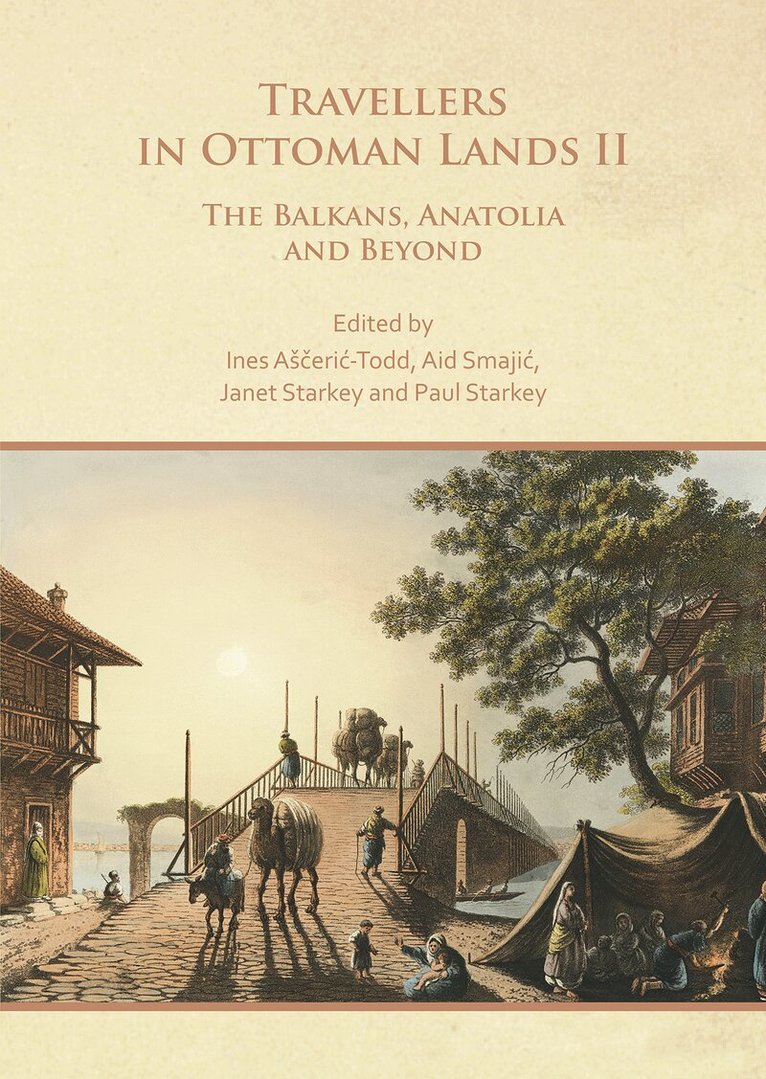
Del 2 - Travellers in Ottoman Lands
Travellers in Ottoman Lands II
The Balkans, Anatolia and Beyond
Häftad, Engelska, 2024
1 097 kr
Skickas
The twenty-six chapters of this volume have their origins in a three-day seminar organised by the Association for the Study of Travel in Egypt and the Near East (ASTENE) in conjunction with the Faculty of Islamic Studies, University of Sarajevo, with additional support from Cornucopia magazine. This multi-disciplinary event attracted a wide range of participants from around the world, including Europe, the United States of America, the Balkans, Türkiye and other parts of the Middle East.This volume has a special focus on the Balkans and Anatolia, as seen and described by travellers from both within and outside the region. Much still remains to be learned about travellers in the Ottoman Balkans, who can shed valuable light on the topics of Christian-Muslim and East-West relations, and the transition from the Ottoman Empire to successor nation-states in the nineteenth and early twentieth centuries. The chapters cover a variety of subjects, with sections on landscapes; religion and travel; European travellers from merchants to kings; fantasies, images and folktales; and imperial discourse, the rise of nations, and reportage. Contributors to the book are specialists from a range of academic disciplines, who draw on a wide selection of theoretical perspectives and research methodologies.
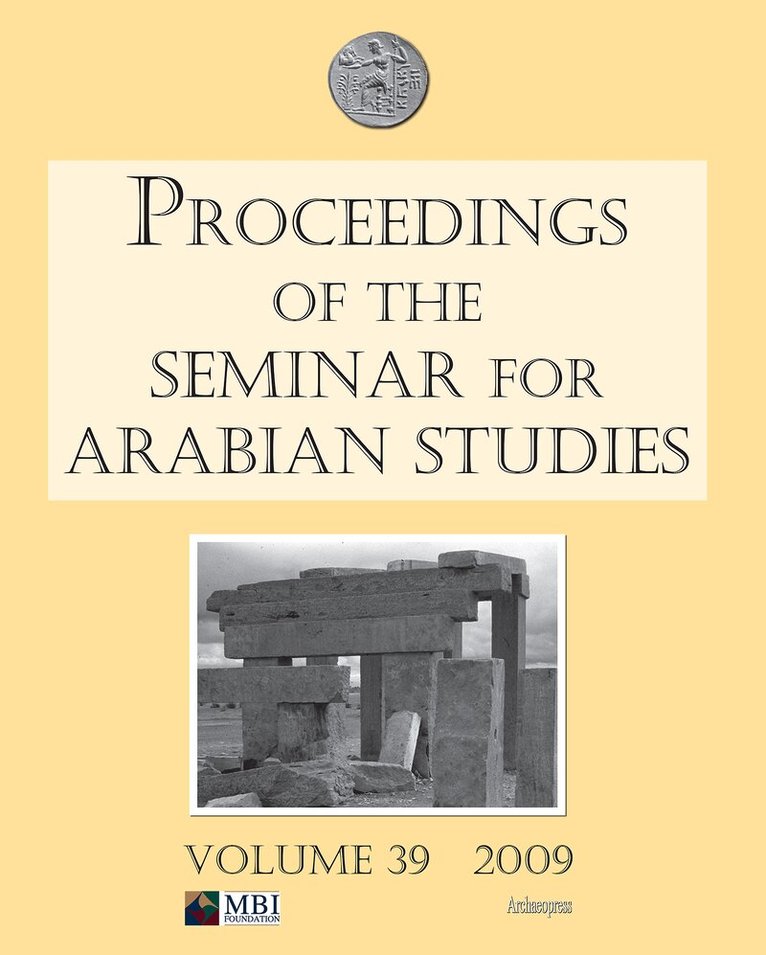
Del 39 - Proceedings of the Seminar for Arabian Studies
Proceedings of the Seminar for Arabian Studies Volume 39 2009
Häftad, Engelska, 2009
751 kr
Skickas
Contents: V.M. Azzarà, Domestic architecture at the Early Bronze Age sites HD–6 and RJ–2 (JaΚalān, Sultanate of Oman); Mark Beech, Marjan Mashkour, Matthias Huels & Antoine Zazzo, Prehistoric camels in south-eastern Arabia: the discovery of a new site in Abu Dhabi’s Western Region, United Arab Emirates; Mohammed Ali Al-Belushi & Ali Tigani ElMahi, Archaeological investigations in Shenah, Sultanate of Oman; Lucia Benediková & Peter Barta, A Bronze Age settlement at al-KhiΡr, Failakah Island, Kuwait; Olivier Brunet, Bronze and Iron Age carnelian bead production in the UAE and Armenia: new perspectives; Ingo Buchmann, Tobias Schröder & Paul Yule, Documentation and visualisation of archaeological sites in Yemen: an antique relief wall in Zafār (poster); Fabio Cavulli, Emanuela Cristiani & Simona Scaruffi, Techno-functional analysis at the fishing settlement of KHB–1 (RaΜs al-Khabbah, JaΚalān, Sultanate of Oman); Julien Charbonnier, Dams in the western mountains of Yemen: a Дimyarite model of water management; Christian Darles, Les monolithes dans l’architecture monumentale de l’Arabie du Sud antique; Daniel Eddisford & Carl Phillips, Kalbā in the third millennium (Emirate of Sharjah, UAE); Bat-Zion Eraqi-Klorman, Yemen: religion, magic, and Jews; Francesco G. Fedele, Sabaean animal economy and household consumption at Yalā, eastern Khawlān al-Кiyāl, Yemen; Serge A. Frantsouzoff, The status of sacred pastures according to Sabaic inscriptions; Jessica Giraud & Serge Cleuziou, Funerary landscape as part of the social landscape and its perceptions: 3000 Early Bronze Age burials in the eastern JaΜlān (Sultanate of Oman); Alexandrine Guérin & Faysal al-NaΜimi, Territory and settlement patterns during the Abbasid period (ninth century AD): the village of Murwab (Qatar); Mária Hajnalová, Zora Miklíková & Tereza Belanová-Štolcová, Environmental research at al-KhiΡr, Failakah Island, Kuwait; Hani Hayajneh, Ancient North Arabian–Nabataean bilingual inscriptions from southern Jordan; Marco Iamoni, The Iron Age ceramic tradition in the Gulf: a re-evaluation from the Omani perspective; Manfred Kropp, “People of powerful South Arabian kings” or just “people of their kind we annihilated before”? Proper noun or common noun in QurΜān 44:37 and 50:14; Johannes Kutterer & Sabah A. Jasim, First report on the copper-smelting site HLO-1 in Wādī al-Hilo, UAE; Romolo Loreto, House and household: a contextual approach to the study of South Arabian domestic architecture. A case study from seventh- to sixth-century BC Yalā/ad-Durayb; Louise Martin, Joy McCorriston & Rémy Crassard, Early Arabian pastoralism at Manayzah in Wādī Сanā, Hadramawt; Giovanni Mazzini & Alexandra Porter, Stela BM 102600=CIH 611 in the British Museum: water regulation between two bordering estates; Anne Multhoff, “A parallel to the Second Commandment…” revisited; Khudooma al-NaΜimi, The discovery of insect remains associated with a Bronze Age tomb in the United Arab Emirates: a preliminary study (poster); Andrew Petersen, Islamic urbanism in eastern Arabia: the case of the al-ΚAyn–al-Buraymī oasis; Valeria Fiorani Piacentini & Christian Velde, The battle of Julfār (880/1475); Alexandra Porter, Rebecca Stacey & Brendan Derham, The function of ceramic jar Type 4100: a preliminary organic residue analysis; C.N. Reeler, N.Y. Al-Shaikh & D.T. Potts, An historical cartographic study of the Yabrīn oasis, Saudi Arabia; Katrien Rutten, South-east Arabian pottery at ed-Dur (al-Dūr), Umm al-Qaiwayn, UAE: its origin, distribution, and role in the local economy; Abdulrahman al-Salimi, The Wajīhids of Oman.
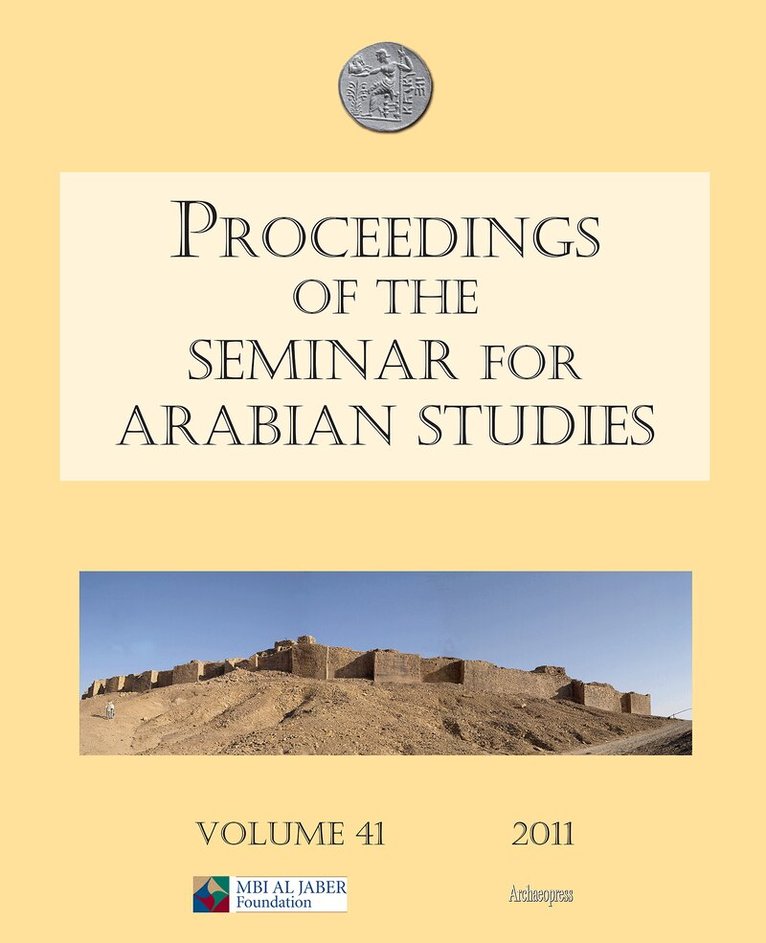
Del 41 - Proceedings of the Seminar for Arabian Studies
Proceedings of the Seminar for Arabian Studies Volume 41 2011
Häftad, Engelska, 2011
974 kr
Skickas
Proceedings of the Seminar for Arabian Studies Volume 41 2011, Papers from the forty-fourth meeting, held at the British Museum, London, 22–24 July 2010. Contents: 1) Some observations on women in Omani sources (Olga Andriyanova); 2) Archaeological landscape characterization in Qatar through satellite and aerial photographic analysis, 2009 to 2010 (Paul Breeze, Richard Cuttler & Paul Collins); 3) Fishing kit implements from KHB-1: net sinkers and lures (poster) (Fabio Cavulli & Simona Scaruffi); 4) The distribution of storage and diversion dams in the western mountains of South Arabia during the Himyarite period (Julien Charbonnier); 5) Assessing the value of palaeoenvironmental data and geomorphological processes for understanding Late Quaternary population dynamics in Qatar (Richard Cuttler, Emma Tetlow & Faisal al-Naimi); 6) Les fortifications de Khor Rorī – ‘Sumhuram’ (poster) (Christian Darles); 7) Places of contact, spheres of interaction. The Ubaid phenomenon in the central Gulf area as seen from a first season of reinvestigations at Dosariyah (Dawsāriyyah), Eastern Province, Saudi Arabia (Philipp Drechsler0; 8) khushub musannadah (Qurān 63. 4) and Epigraphic South Arabian ms3nd (Orhan Elmaz); 9) Walled structures and settlement patterns in the south-western part of Dhofar, Oman (poster) (Roman Garba & Peter Farrington);10) The wall and talus at Barāqish, ancient Yathill (al-Jawf, Yemen): a Minaean stratigraphy (Francesco G. Fedele); 11) Through evangelizing eyes: American missionaries to Oman (Hilal al-Hajri); 12) Quantified analysis of long-term settlement trends in the northern Oman peninsula (Nasser Said al-Jahwari); 13) Yeha and Hawelti: cultural contacts between Saba and DMT – New research by the German Archaeological Institute in Ethiopia (Sarah Japp, Iris Gerlach, Holger Hitgen & Mike Schnelle); 14) The Kadhima Project: investigating an Early Islamic settlement and landscape on Kuwait Bay (poster) (Derek Kennet, Andrew Blair, Brian Ulrich & Sultan M. al-Duwīsh); 15) Typology of incense-burners of the Islamic period (Sterenn Le Maguer); 16) A geomorphological and hydrological underpinning for archaeological research in northern Qatar (Phillip G. Macumber); 17) Recent investigations at the prehistoric site RH-5 (Ras al-Hamrā, Muscat, Sultanate of Oman) (Lapo Gianni Marcucci, Francesco Genchi, Émilie Badel & Maurizio Tosi); 18) Geoarchaeological investigations at the site of Julfār (al-Nudūd and al-Matāf), Ras al-Khaymah, UAE: preliminary results from the auger-hole survey (poster) (Mike Morley, Robert Carter & Christian Velde); 19) Conserving and contextualizing national cultural heritage: the 3-D digitization of the fort at al-Zubārah and petroglyphs at Jabal al-Jusāsiyyah, Qatar (poster) (Helen Moulden, Richard Cuttler & Shane Kelleher); 20) Reassessing Wādī Debayan (Wādī al-Dabayān): an important Early Holocene Neolithic multi-occupational site in western Qatar (poster) (Faisal al-Naimi, Kathryn M. Price, Richard Cuttler & Hatem Arrock); 21) Research on an Islamic period settlement at Ras Ushayriq in northern Qatar and some observations on the occurrence of date presses (Andrew Petersen); 22) Relations between southern Arabia and the northern Horn of Africa during the last millennium BC (David W. Phillipson); 23) Bayt Bin Ātī in the Qattārah oasis: a prehistoric industrial site and the formation of the oasis landscape of al-Ain, UAE (Timothy Power & Peter Sheehan); 24) The Sabaic inscription A–20–216: a new Sabaean-Seleucid synchronism (Alessia Prioletta); 25) Al-Suwaydirah (old al-Taraf) and its Early Islamic inscriptions (Saad bin Abdulaziz al-Rashid); 26) Investigations in al-Zubārah hinterland at Murayr and al-Furayhah, north-west Qatar (poster) (Gareth Rees, Tobias Richter & Alan Walmsley); 27) Pearl fishers, townsfolk, Bedouin, and shaykhs: economic and social relations in Islamic al-Zubārah (Tobias Richter, Paul Wordsworth & Alan Walmsley); 28) Contemporary tribal versions of local history in Hadramawt (Mikhail Rodionov); 29) A view of the defence strategy of Muharraq, a tribal town in the Gulf (poster); 30) Solaiman Abd al-Rahmān al-Theeb, New Nabataean inscriptions from the site of al-Sīj in the region of al-Ulā, Saudi Arabia (Abdulla Al-Sulaiti); 31) Al-Zubārah Archaeological Park as a UNESCO World Cultural Heritage Site – a master plan for its site management, preservation, and presentation (poster) (Ingolf Thuesen & Moritz Kinzel); 32) Oman and Bahrain in Late Antiquity: the Sasanians’ Arabian periphery (Brian Ulrich); 33) From the port of Mocha to the eighteenth-century tomb of Imām al-Mahdī MuΉammad in al-Mawāhib: locating architectural icons and migratory craftsmen (Nancy Um); 34) Drummers of the Najd: musical practices from Wādī al-Dawāsir, Saudi Arabia (Lisa Urkevich); 35) The Jewel of Muscat Project: reconstructing an early ninth-century CE Shipwreck (Tom Vosmer, Luca Belfioretti, Eric Staples & Alessandro Ghidoni); 36) Lateral fricatives and lateral emphatics in southern Saudi Arabia and Mehri (Janet C.E. Watson & Munira Al-Azraqi).
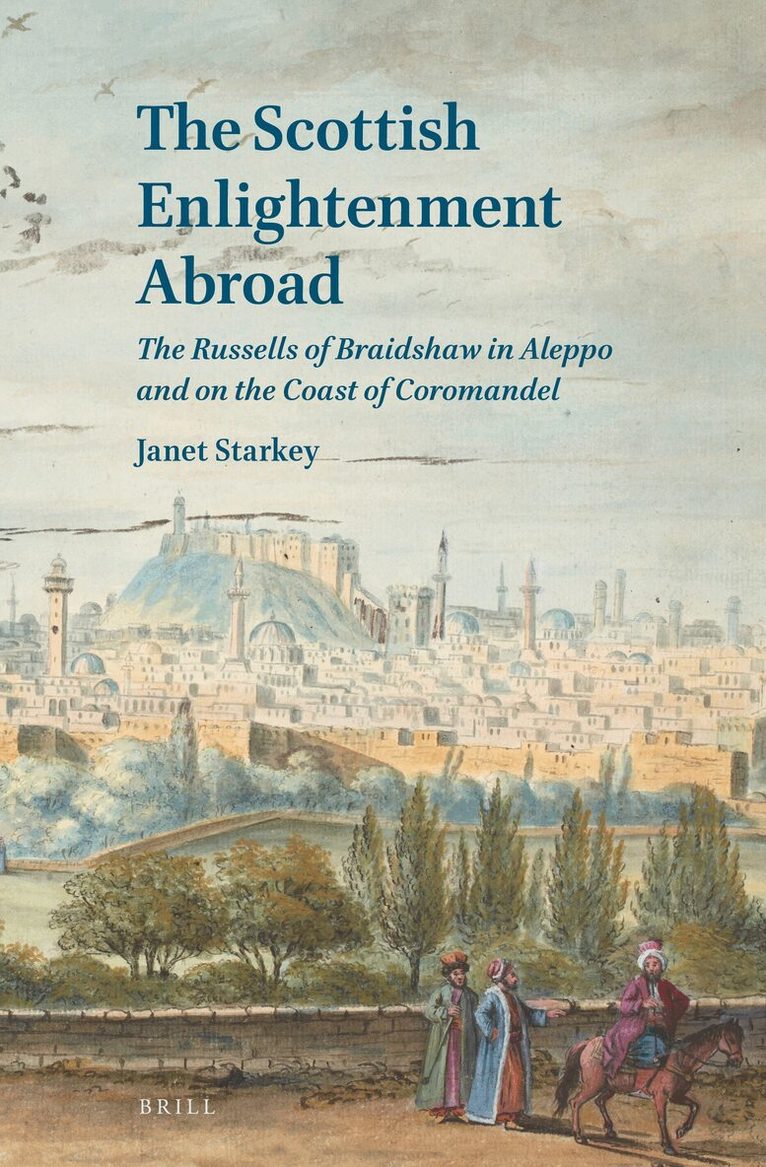
Scottish Enlightenment Abroad
The Russells of Braidshaw in Aleppo and on the Coast of Coromandel
Inbunden, Engelska, 2018
2 220 kr
Skickas inom 5-8 vardagar
In The Scottish Enlightenment Abroad, Janet Starkey examines the lives and works of Scots working in the mid eighteenth century with the Levant Company in Aleppo, then within the Ottoman Empire; and those working with the East India Company in India, especially in the fields of natural history, medicine, ethnography and the collection of Arabic and Persian manuscripts. The focus is on brothers from Edinburgh: Alexander Russell MD FRS, Patrick Russell MD FRS, Claud Russell and William Russell FRS. By examining a wide range of modern interpretations, Starkey argues that the Scottish Enlightenment was not just a philosophical discourse but a multi-faceted cultural revolution that owed its vibrancy to ties of kinship, and to strong commercial and intellectual links with Europe and further abroad.