Janjira Sombatpoonsiri – författare
Visar alla böcker från författaren Janjira Sombatpoonsiri. Handla med fri frakt och snabb leverans.
5 produkter
5 produkter
Inbunden, Engelska, 2027
951 kr
Kommande
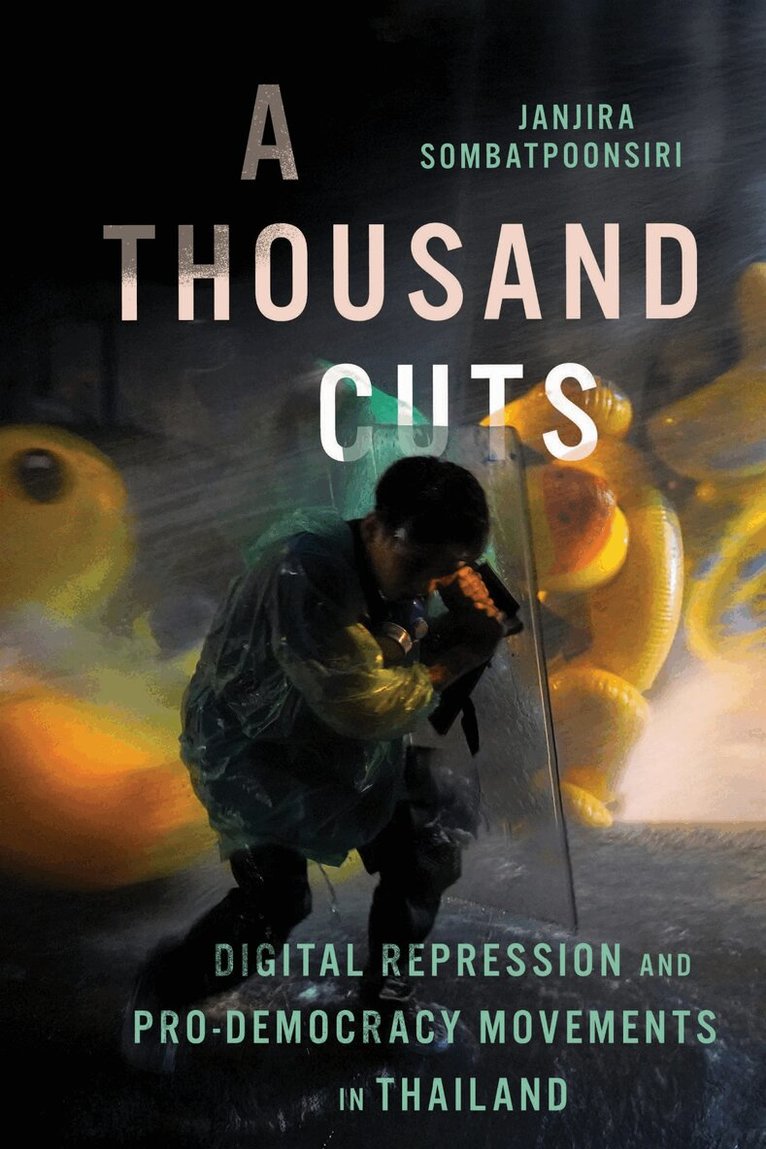
In response to the 2020–21 youth-led protests throughout Thailand, which were largely fueled by discourse on digital platforms, the government launched a sweeping program of technological suppression. Smear campaigns were orchestrated to discredit young activists, laws were weaponized to criminalize their activities, and surveillance technologies were deployed to keep tabs on them.In A Thousand Cuts, Janjira Sombatpoonsiri traces the historical development of repression in Thailand, detailing how "traditional" methods of repression have been merged with digital tools to maintain the status quo since 2005, when mass mobilization started to move online. By examining the adverse effects of digital repression on individual activists—their mental health, private lives, and socioeconomic resources—Sombatpoonsiri also offers one of the first systematic analyses of the "reception" side of repression, shedding light on its detrimental consequences for activists and mass movements as a whole.
Inbunden, Engelska, 2015
496 kr
Skickas inom 5-8 vardagar
If I had no sense of humour, I should long ago have committed suicide," wrote the late Mahatma Gandhi, expressing the potent power of humour to sustain and uplift. Less obvious is humour’s ability to operate as a cunning weapon in nonviolent protest movements. Over the last few decades, activists are increasingly incorporating subversive laughter in their protest repertoires, realizing the ways in which it challenges the ruling elite’s propaganda, defuses antagonism, and inspires both participants and the greater population.In this highly original and engaging work, Sombatpoonsiri explores the nexus between humour and nonviolent protest, aiming to enhance our understanding of the growing popularity of humour in protest movements around the world. Drawing on insights from the pioneering Otpor activists in Serbia, she provides a detailed account of the protesters’ systematic use of humour to topple Slobadan Miloševi? in 2000. Interviews with activists, protest newsletters, and documentaries of the movement combine to illustrate how humour played a pivotal role by reflecting the absurdity of the regime’s propaganda and, in turn, by delegitimizing its authority. Sombatpoonsiri highlights the Otpor activists’ ability to internationalize their nonviolent crusade, influencing youth movements in the Ukraine, Georgia, Iran, and Egypt. Globally, Otpor’s successful use of humour became an inspiration for a later generation of protest movements.
E-bok
Engelska, 2015552 kr
Läs direkt efter köp
In this highly original and engaging work, Sombatpoonsiri explores the nexus between humor and nonviolent protest, aiming to enhance our understanding of the growing popularity of humor in protest movements around the world. Drawing on insights from the pioneering Otpor activists in Serbia, she provides a detailed account of the protesters’ systematic use of humor to topple Slobodan Miloševic in 2000. Protest newsletters, documentaries of the movement, and interviews with activists combine to illustrate how humor played a pivotal role by reflecting the absurdity of the regime’s propaganda and, in turn, by delegitimizing its authority. Sombatpoonsiri highlights the Otpor activists’ ability to internationalize their nonviolent crusade, influencing youth movements in the Ukraine, Georgia, Iran, and Egypt. Globally, Otpor’s successful use of humor has become an inspiration for a later generation of protest movements.
Häftad, Engelska, 2022
89 kr
Skickas inom 5-8 vardagar
Southeast Asian autocracies of Cambodia, Myanmar, Thailand and Vietnam have politicized vague definitions of "fake news" to justify diverse tactics of digital repression.In these countries, what constitutes falseness in "fake news" has hardly been clearly articulated. The governments instead focus on the grave threats the dissemination of "fake news" could pose to national security, public disorder or national prestige
E-bok
PDF, Engelska, 2022104 kr
Läs direkt efter köp
Southeast Asian autocracies of Cambodia, Myanmar, Thailand and Vietnam have politicized vague definitions of “fake news” to justify diverse tactics of digital repression. In these countries, what constitutes falseness in “fake news” has hardly been clearly articulated. The governments instead focus on the grave threats the dissemination of “fake news” could pose to national security, public disorder or national prestige. As the governments are vested with the power to bend the labelling of “fake news” to their will, they can criminalize those accused of circulating such information to safeguard public interests. There are at least four methods by which the governments have tightened the screws on cyberspace under the banner of curbing “fake news”: (i) prosecute Internet users, journalists and dissidents in particular; (ii) pressure Internet Service Providers and social media platforms to block and remove content; (iii) expand and deepen social media monitoring; and (iv) shut down the Internet altogether. All four countries have used “fake news” allegations to penalize critics. Cambodia, Thailand and Vietnam are inclined to use such allegations to strong-arm tech companies into removing content at the behest of the governments. Thailand and Vietnam tend to exploit such allegations to beef up online surveillance. Myanmar is the only country that turns to Internet shutdowns.The interplay between the methods of digital repression that exploit the pretext of cracking down on “fake news” and the manipulation of online discourse through the deployment of cyber troops would merit further research and in-depth examination.