Jason Schnittker - Böcker
Visar alla böcker från författaren Jason Schnittker. Handla med fri frakt och snabb leverans.
7 produkter
7 produkter
355 kr
Skickas inom 5-8 vardagar
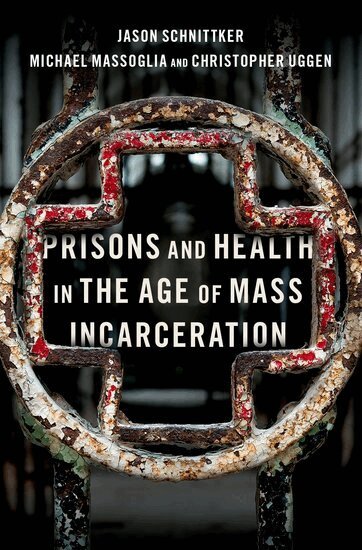
A comprehensive examination of the connection between mass incarceration and healthIn an age when over two million people are incarcerated in the United States alone, the wide-reaching impact of prisons in our society is impossible to deny, and the paradoxical relationship between prisons and health has never been more controversial. Prisons are charged at the same time with being punitive and therapeutic, with denying freedom and administering treatment, with confining and rehabilitating. And they are not living up to the charge. Prisons and Health in the Age of Mass Incarceration examines the connection between prisons and health. Based on a decade of empirical research, this book explores the consequences of incarceration on inmates themselves; on the families they leave behind; on the larger communities to which they return; and, ultimately, on entire health care systems at the state and national level. Jason Schnittker, Michael Massoglia, and Christopher Uggen demonstrate that the relationship between incarceration and health is sustained by a combination of social, cultural, and legal forces, and by a failure to recognize that prisons are now squarely in the business of providing care. With an eye to the history that led us to this point, the book investigates these connections and shows how prisons undermine health and well-being.An evenhanded and comprehensive analysis, this groundbreaking volume demonstrates that the prison system produces unintended and far-reaching consequences for the health of our nation and points the way for a fairer and more effective justice system.
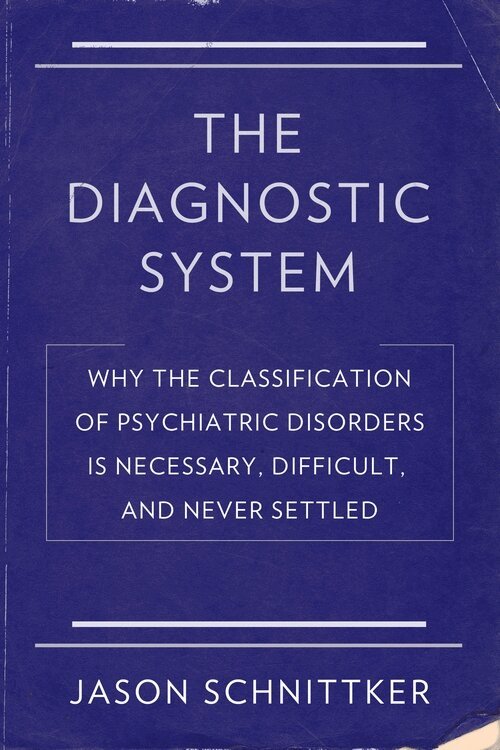
Diagnostic System
Why the Classification of Psychiatric Disorders Is Necessary, Difficult, and Never Settled
Inbunden, Engelska, 2017
2 040 kr
Skickas inom 3-6 vardagar
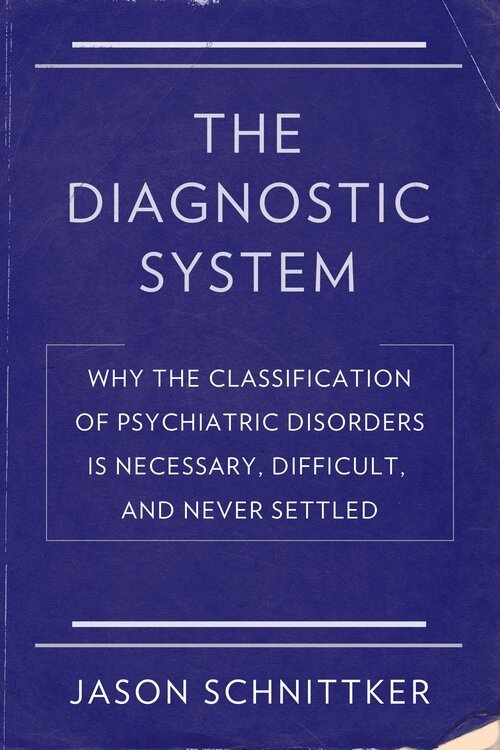
Mental illness is many things at once: It is a natural phenomenon that is also shaped by society and culture. It is biological but also behavioral and social. Mental illness is a problem of both the brain and the mind, and this ambiguity presents a challenge for those who seek to accurately classify psychiatric disorders. The leading resource we have for doing so is the American Psychiatric Association'sDiagnostic and Statistical Manual, but no edition of the manual has provided a decisive solution, and all have created controversy. InThe Diagnostic System, the sociologist Jason Schnittker looks at the multiple actors involved in crafting theDSMand the many interests that the manual hopes to serve. Is the DSM the best tool for defining mental illness? Can we insure against a misleading approach? Schnittker shows that the classification of psychiatric disorders is best understood within the context of a system that involves diverse parties with differing interests. The public wants a better understanding of personal suffering. Mental-health professionals seek reliable and treatable diagnostic categories. Scientists want definitions that correspond as closely as possible to nature.And all parties seek definitive insight into what they regard as the right target. Yet even the best classification system cannot satisfy all of these interests simultaneously. Progress toward an ideal is difficult, and revisions to diagnostic criteria often serve the interests of one group at the expense of another. Schnittker urges us to become comfortable with the socially constructed nature of categorization and accept that a perfect taxonomy of mental-health disorders will remain elusive. Decision making based on evolving though fluid understandings is not a weakness but an adaptive strength of the mental-health profession, even if it is not a solid foundation for scientific discovery or a reassuring framework for patients.
Diagnostic System
Why the Classification of Psychiatric Disorders Is Necessary, Difficult, and Never Settled
Häftad, Engelska, 2020
266 kr
Skickas inom 7-10 vardagar
Mental illness is many things at once: It is a natural phenomenon that is also shaped by society and culture. It is biological but also behavioral and social. Mental illness is a problem of both the brain and the mind, and this ambiguity presents a challenge for those who seek to accurately classify psychiatric disorders. The leading resource we have for doing so is the American Psychiatric Association’s Diagnostic and Statistical Manual, but no edition of the manual has provided a decisive solution, and all have created controversy. In The Diagnostic System, the sociologist Jason Schnittker looks at the multiple actors involved in crafting the DSM and the many interests that the manual hopes to serve. Is the DSM the best tool for defining mental illness? Can we insure against a misleading approach?Schnittker shows that the classification of psychiatric disorders is best understood within the context of a system that involves diverse parties with differing interests. The public wants a better understanding of personal suffering. Mental-health professionals seek reliable and treatable diagnostic categories. Scientists want definitions that correspond as closely as possible to nature. And all parties seek definitive insight into what they regard as the right target. Yet even the best classification system cannot satisfy all of these interests simultaneously. Progress toward an ideal is difficult, and revisions to diagnostic criteria often serve the interests of one group at the expense of another. Schnittker urges us to become comfortable with the socially constructed nature of categorization and accept that a perfect taxonomy of mental-health disorders will remain elusive. Decision making based on evolving though fluid understandings is not a weakness but an adaptive strength of the mental-health profession, even if it is not a solid foundation for scientific discovery or a reassuring framework for patients.
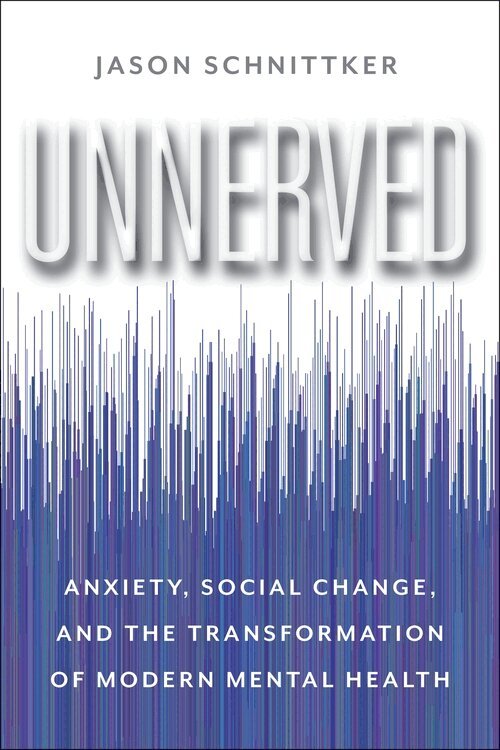
Unnerved
Anxiety, Social Change, and the Transformation of Modern Mental Health
Inbunden, Engelska, 2021
1 146 kr
Skickas inom 7-10 vardagar
Anxiety is not new. Yet now more than ever, anxiety seems to define our times. Anxiety disorders are the most common psychiatric disorders in the United States, exceeding mood, impulse-control, and substance-use disorders, and they are especially common among younger cohorts. More and more Americans are taking antianxiety medications. According to polling data, anxiety is experienced more frequently than other negative emotions. Why have we become so anxious?In Unnerved, Jason Schnittker investigates the social, cultural, medical, and scientific underpinnings of the modern state of mind. He explores how anxiety has been understood from the late nineteenth century to the present day and why it has assumed a more central position in how we think about mental health. Contrary to the claims that anxiety reflects large-scale traumas, abrupt social transitions, or technological revolutions, Schnittker argues that the ascent of anxiety has been driven by slow transformations in people, institutions, and social environments. Changes in family formation, religion, inequality, and social relationships have all primed people to be more anxious. At the same time, the scientific and medical understanding of anxiety has evolved, pushing it further to the fore. The rise in anxiety cannot be explained separately from changes in how patients, physicians, and scientists understand the disorder. Ultimately, Schnittker demonstrates that anxiety has carried the imprint of social change more acutely than have other emotions or disorders, including depression. When societies change, anxiety follows.
Unnerved
Anxiety, Social Change, and the Transformation of Modern Mental Health
Häftad, Engelska, 2021
282 kr
Skickas inom 7-10 vardagar
Anxiety is not new. Yet now more than ever, anxiety seems to define our times. Anxiety disorders are the most common psychiatric disorders in the United States, exceeding mood, impulse-control, and substance-use disorders, and they are especially common among younger cohorts. More and more Americans are taking antianxiety medications. According to polling data, anxiety is experienced more frequently than other negative emotions. Why have we become so anxious?In Unnerved, Jason Schnittker investigates the social, cultural, medical, and scientific underpinnings of the modern state of mind. He explores how anxiety has been understood from the late nineteenth century to the present day and why it has assumed a more central position in how we think about mental health. Contrary to the claims that anxiety reflects large-scale traumas, abrupt social transitions, or technological revolutions, Schnittker argues that the ascent of anxiety has been driven by slow transformations in people, institutions, and social environments. Changes in family formation, religion, inequality, and social relationships have all primed people to be more anxious. At the same time, the scientific and medical understanding of anxiety has evolved, pushing it further to the fore. The rise in anxiety cannot be explained separately from changes in how patients, physicians, and scientists understand the disorder. Ultimately, Schnittker demonstrates that anxiety has carried the imprint of social change more acutely than have other emotions or disorders, including depression. When societies change, anxiety follows.
2 040 kr
Skickas inom 3-6 vardagar
Side effects are common, but their origins and consequences remain unclear. Medications that target a disease can produce reactions far removed from it. Few side effects have been provably linked to a drug’s active ingredients. But side effects matter: Many people are reluctant to take vaccines and other pharmaceuticals because of side effects, even if these reactions are minor compared to the disease a medication prevents or treats. Because side effects do not fit comfortably within the framework of modern medicine, they continue to confound.This book uncovers the social origins of side effects and their consequences for patients, physicians, and the health care system. Jason Schnittker and Duy Do argue that side effects emerge from the interaction of cultural, institutional, and psychological factors. Side effects reflect how manufacturers and regulators evaluate the effectiveness and safety of a drug, as well as how physicians consider the risks and benefits. They are also influenced by the beliefs, expectations, and experiences that patients use to interpret their treatment and symptoms. Drawing on pharmaceutical data, surveys, and public opinion polls, Schnittker and Do develop a framework for understanding the social ecology of side effects. A keen sociological analysis of how we grapple with medicine’s unintended consequences, this book shows how side effects are shaped by their social context.
359 kr
Skickas
Side effects are common, but their origins and consequences remain unclear. Medications that target a disease can produce reactions far removed from it. Few side effects have been provably linked to a drug’s active ingredients. But side effects matter: Many people are reluctant to take vaccines and other pharmaceuticals because of side effects, even if these reactions are minor compared to the disease a medication prevents or treats. Because side effects do not fit comfortably within the framework of modern medicine, they continue to confound.This book uncovers the social origins of side effects and their consequences for patients, physicians, and the health care system. Jason Schnittker and Duy Do argue that side effects emerge from the interaction of cultural, institutional, and psychological factors. Side effects reflect how manufacturers and regulators evaluate the effectiveness and safety of a drug, as well as how physicians consider the risks and benefits. They are also influenced by the beliefs, expectations, and experiences that patients use to interpret their treatment and symptoms. Drawing on pharmaceutical data, surveys, and public opinion polls, Schnittker and Do develop a framework for understanding the social ecology of side effects. A keen sociological analysis of how we grapple with medicine’s unintended consequences, this book shows how side effects are shaped by their social context.