
Jason Vuic – författare
Visar alla böcker från författaren . Handla med fri frakt och snabb leverans.
11 produkter
11 produkter
Häftad, Engelska, 2011
171 kr
E-bok
Engelska, 2025291 kr
Läs direkt efter köp
Two heartbreaking tales of small-town injustice revealing Americas struggles with AIDS and racial bias in the 1980sFlorida Historical Society Harry T. and Harriette V. Moore AwardIn the 1980s, the tiny town of Arcadia, Florida, was fifty miles and fifty years from Sarasota. With its cowboy roots, low-wage agricultural industries, and violent frontier history, Arcadia was a curious mix of the desolate ranchlands of West Texas and the stately homes and bitter race relations of the South. In A Town without Pity, award-winning author Jason Vuic recounts two heartbreaking stories from Arcadia that rose to national prominence at the end of the Reagan era and forced the town to reckon with not only AIDS hysteria but also the legacies of a racist past.This book delves into the case of James Richardson, a Black migrant worker accused in 1967 of poisoning his seven children. Richardson spent twenty years in prison due to suppressed evidence for a crime he didnt commit. Vuic also tells the story of the public mistreatment of the three Ray brothers, white school-age children with hemophilia who contracted the HIV virus from a tainted medicine called factor VIII. The Rays were barred from attending their local church and school, and when their house burned down in a mysterious arson, reporters dubbed Arcadia the town without pity.Through extensive use of newspapers, court records, and interviews, Vuic shows how the actions of authorities and residents left little room for the voices that spoke up against bias, harassment, and coercion. At the same time, this cautionary tale places Arcadia as a microcosm of many small towns in the late twentieth-century United States, reminding readers of the staying power of social divisions and prejudice even after the achievements of the civil rights movement.
Häftad, Engelska, 2025
305 kr
Skickas inom 10-15 vardagar
Inbunden, Engelska, 2021
1 119 kr
Skickas inom 10-15 vardagar
Florida has long beckoned retirees seeking to spend their golden years in the sun, but, for many, the American dream of owning a home there was financially impossible. That changed in the 1950s, when the so-called "installment land sales industry" appeared out of nowhere to hawk billions of dollars of Florida residential property, sight unseen, to retiring northerners. For only $10 down and $10 a month, working-class pensioners could buy a piece of the Florida dream: a graded homesite that would be waiting for them in a planned community when they were ready to build. The result created Cape Coral, Port St. Lucie, Deltona, Port Charlotte, Palm Coast, and Spring Hill, among many others-sprawling exurban communities with no downtowns and little industry but millions of residential lots. As Jason C. Vuic recounts in this raucous history, these communities allowed generations of northerners to move to Florida cheaply, but at a price: high-pressure sales tactics begat fraud; poor urban planning begat sprawl; developers cleared forests, drained wetlands, and built thousands of miles of roads in grid-like subdivisions, which, fifty years later, played an inordinate role in the 2008 subprime mortgage crisis.
E-bok
Engelska, 2021347 kr
Läs direkt efter köp
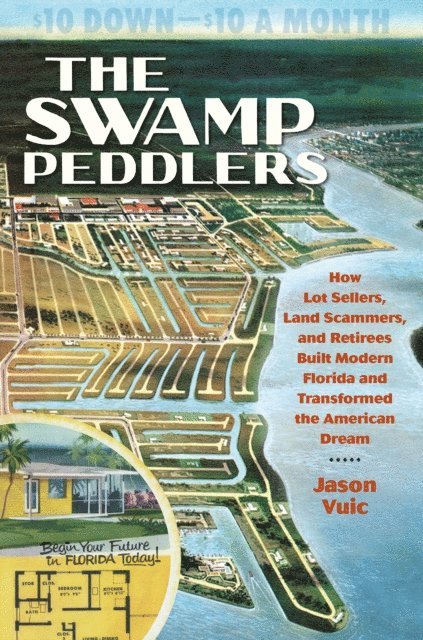
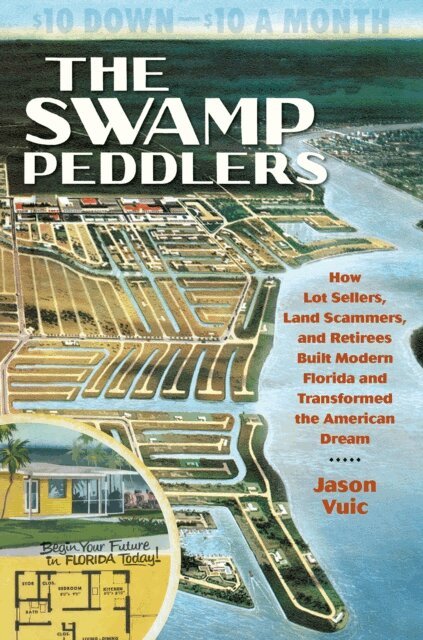
Florida has long been a beacon for retirees, but for many, the American dream of owning a home there was a fantasy. That changed in the 1950s, when the so-called “installment land sales industry” hawked billions of dollars of Florida residential property, sight unseen, to retiring northerners. For only $10 down and $10 a month, working-class pensioners could buy a piece of the Florida dream: a graded home site that would be waiting for them in a planned community when they were ready to build. The result was Cape Coral, Port St. Lucie, Deltona, Port Charlotte, Palm Coast, and Spring Hill, among many others—sprawling communities with no downtowns, little industry, and millions of residential lots.In The Swamp Peddlers, Jason Vuic tells the raucous tale of the sale of residential lots in postwar Florida. Initially selling cheap homes to retirees with disposable income, by the mid-1950s developers realized that they could make more money selling parcels of land on installment to their customers. These “swamp peddlers” completely transformed the landscape and demographics of Florida, devastating the state environmentally by felling forests, draining wetlands, digging canals, and chopping up at least one million acres into grid-like subdivisions crisscrossed by thousands of miles of roads. Generations of northerners moved to Florida cheaply, but at a huge price: high-pressure sales tactics begat fraud; poor urban planning begat sprawl; poorly-regulated development begat environmental destruction, culminating in the perfect storm of the 21st-century subprime mortgage crisis.
E-bok
Engelska, 20212 078 kr
Läs direkt efter köp
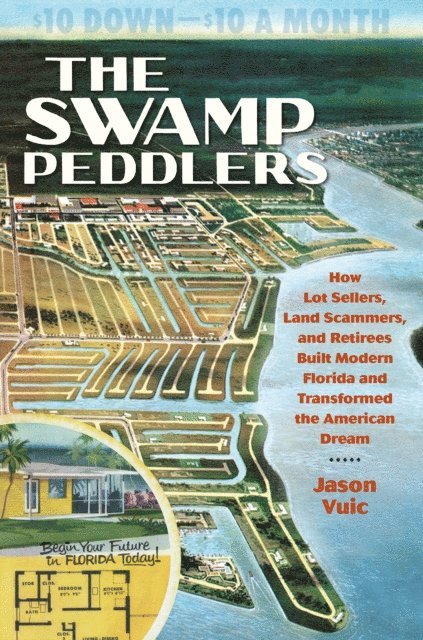
Florida has long been a beacon for retirees, but for many, the American dream of owning a home there was a fantasy. That changed in the 1950s, when the so-called “installment land sales industry” hawked billions of dollars of Florida residential property, sight unseen, to retiring northerners. For only $10 down and $10 a month, working-class pensioners could buy a piece of the Florida dream: a graded home site that would be waiting for them in a planned community when they were ready to build. The result was Cape Coral, Port St. Lucie, Deltona, Port Charlotte, Palm Coast, and Spring Hill, among many others—sprawling communities with no downtowns, little industry, and millions of residential lots.In The Swamp Peddlers, Jason Vuic tells the raucous tale of the sale of residential lots in postwar Florida. Initially selling cheap homes to retirees with disposable income, by the mid-1950s developers realized that they could make more money selling parcels of land on installment to their customers. These “swamp peddlers” completely transformed the landscape and demographics of Florida, devastating the state environmentally by felling forests, draining wetlands, digging canals, and chopping up at least one million acres into grid-like subdivisions crisscrossed by thousands of miles of roads. Generations of northerners moved to Florida cheaply, but at a huge price: high-pressure sales tactics begat fraud; poor urban planning begat sprawl; poorly-regulated development begat environmental destruction, culminating in the perfect storm of the 21st-century subprime mortgage crisis.
Häftad, Engelska, 2021
388 kr
Skickas inom 10-15 vardagar
Florida has long beckoned retirees seeking to spend their golden years in the sun, but, for many, the American dream of owning a home there was financially impossible. That changed in the 1950s, when the so-called "installment land sales industry" appeared out of nowhere to hawk billions of dollars of Florida residential property, sight unseen, to retiring northerners. For only $10 down and $10 a month, working-class pensioners could buy a piece of the Florida dream: a graded homesite that would be waiting for them in a planned community when they were ready to build. The result created Cape Coral, Port St. Lucie, Deltona, Port Charlotte, Palm Coast, and Spring Hill, among many others-sprawling exurban communities with no downtowns and little industry but millions of residential lots. As Jason C. Vuic recounts in this raucous history, these communities allowed generations of northerners to move to Florida cheaply, but at a price: high-pressure sales tactics begat fraud; poor urban planning begat sprawl; developers cleared forests, drained wetlands, and built thousands of miles of roads in grid-like subdivisions, which, fifty years later, played an inordinate role in the 2008 subprime mortgage crisis.
Häftad, Engelska, 2017
289 kr
Skickas inom 3-6 vardagar
E-bok
Engelska, 2016168 kr
Läs direkt efter köp
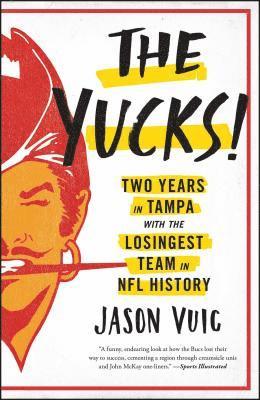
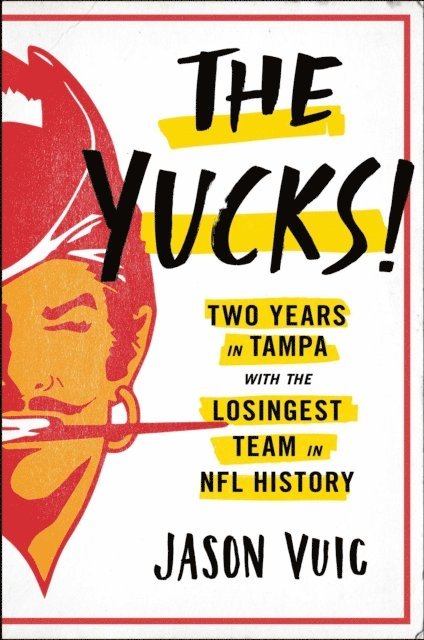
Friday Night Lights meets The Bad News Bears in “a brisk, warmhearted reminder of how professional sports can occasionally reach stunning unprofessional depths” (Publishers Weekly): the first two seasons with the worst team in NFL history, the hapless, hilarious, and hopelessly winless 1976–1977 Tampa Bay Buccaneers.Long before their first Super Bowl victory in 2003, the Tampa Bay Buccaneers did something no NFL team had ever done before and that none will ever likely do again: They lost twenty-six games in a row. This was no ordinary streak. Along with their ridiculous mascot and uniforms, which were known as “the Creamsicles,” the Yucks were a national punch line and personnel purgatory. Owned by the miserly and bulbous-nosed Hugh Culverhouse, the team was the end of the line for Heisman Trophy winner and University of Florida hero Steve Spurrier, and a banishment for former Cowboy defensive end Pat Toomay after he wrote a tell-all book about his time on “America’s Team.” Many players on the Bucs had been out of football for years, and it wasn’t uncommon for them to have to introduce themselves in the huddle. They were coached by the ever-quotable college great John McKay. “We can’t win at home and we can’t win on the road,” he said. “What we need is a neutral site.” But the Bucs were a part of something bigger, too. They were a gambit by promoters, journalists, and civic boosters to create a shared identity for a region that didn’t exist—Tampa Bay. Before the Yucks, “the Bay” was a body of water, and even the worst team in memory transformed Florida’s Gulf communities into a single region with a common cause. The Yucks is “a funny, endearing look at how the Bucs lost their way to success, cementing a region through creamsicle unis and John McKay one-liners” (Sports Illustrated).
E-bok
PDF, Engelska, 2021277 kr
Läs direkt efter köp
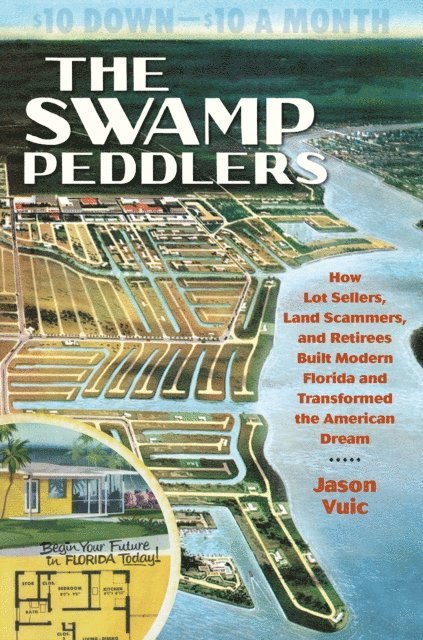
Florida has long been a beacon for retirees, but for many, the American dream of owning a home there was a fantasy. That changed in the 1950s, when the so-called “installment land sales industry” hawked billions of dollars of Florida residential property, sight unseen, to retiring northerners. For only $10 down and $10 a month, working-class pensioners could buy a piece of the Florida dream: a graded home site that would be waiting for them in a planned community when they were ready to build. The result was Cape Coral, Port St. Lucie, Deltona, Port Charlotte, Palm Coast, and Spring Hill, among many others—sprawling communities with no downtowns, little industry, and millions of residential lots.In The Swamp Peddlers, Jason Vuic tells the raucous tale of the sale of residential lots in postwar Florida. Initially selling cheap homes to retirees with disposable income, by the mid-1950s developers realized that they could make more money selling parcels of land on installment to their customers. These “swamp peddlers” completely transformed the landscape and demographics of Florida, devastating the state environmentally by felling forests, draining wetlands, digging canals, and chopping up at least one million acres into grid-like subdivisions crisscrossed by thousands of miles of roads. Generations of northerners moved to Florida cheaply, but at a huge price: high-pressure sales tactics begat fraud; poor urban planning begat sprawl; poorly-regulated development begat environmental destruction, culminating in the perfect storm of the 21st-century subprime mortgage crisis.
E-bok
PDF, Engelska, 20211 703 kr
Läs direkt efter köp
Florida has long been a beacon for retirees, but for many, the American dream of owning a home there was a fantasy. That changed in the 1950s, when the so-called “installment land sales industry” hawked billions of dollars of Florida residential property, sight unseen, to retiring northerners. For only $10 down and $10 a month, working-class pensioners could buy a piece of the Florida dream: a graded home site that would be waiting for them in a planned community when they were ready to build. The result was Cape Coral, Port St. Lucie, Deltona, Port Charlotte, Palm Coast, and Spring Hill, among many others—sprawling communities with no downtowns, little industry, and millions of residential lots.In The Swamp Peddlers, Jason Vuic tells the raucous tale of the sale of residential lots in postwar Florida. Initially selling cheap homes to retirees with disposable income, by the mid-1950s developers realized that they could make more money selling parcels of land on installment to their customers. These “swamp peddlers” completely transformed the landscape and demographics of Florida, devastating the state environmentally by felling forests, draining wetlands, digging canals, and chopping up at least one million acres into grid-like subdivisions crisscrossed by thousands of miles of roads. Generations of northerners moved to Florida cheaply, but at a huge price: high-pressure sales tactics begat fraud; poor urban planning begat sprawl; poorly-regulated development begat environmental destruction, culminating in the perfect storm of the 21st-century subprime mortgage crisis.