Jay McTighe – författare
Visar alla böcker från författaren Jay McTighe. Handla med fri frakt och snabb leverans.
17 produkter
17 produkter
Häftad, Engelska, 2005
999 kr
Skickas inom 3-6 vardagar
Inbunden, Engelska, 2000
1 209 kr
Skickas inom 3-6 vardagar
A practical guide to more effective assessment for improved student learningLearn how to be more consistent in judging student performance, and help your students become more effective at assessing their own learning! This book offers a practical approach to assessing challenging but necessary performance tasks, like creative writing, "real-world" research projects, and cooperative group activities. Judith Arter and Jay McTighe, experts in the field of assessment, wrote Scoring Rubrics in the Classroom to help you achieve three main goals: Clarify the targets of instruction, especially for hard-to-define problem solving Provide valid and reliable assessment of student learning Improve student motivation and achievement by helping students understand the nature of quality for performances and productsEach chapter is framed by an essential question and includes illustrative stories, practical examples, tips and cautions, and a summary of key points and recommended resources for further information. The resources section contains a wealth of rubrics to adopt or adapt.Teachers and administrators will find this an essential resource in increasing teacher effectiveness and student performance.
Häftad, Engelska, 2000
587 kr
Skickas inom 3-6 vardagar
A practical guide to more effective assessment for improved student learningLearn how to be more consistent in judging student performance, and help your students become more effective at assessing their own learning! This book offers a practical approach to assessing challenging but necessary performance tasks, like creative writing, "real-world" research projects, and cooperative group activities. Judith Arter and Jay McTighe, experts in the field of assessment, wrote Scoring Rubrics in the Classroom to help you achieve three main goals: Clarify the targets of instruction, especially for hard-to-define problem solving Provide valid and reliable assessment of student learning Improve student motivation and achievement by helping students understand the nature of quality for performances and productsEach chapter is framed by an essential question and includes illustrative stories, practical examples, tips and cautions, and a summary of key points and recommended resources for further information. The resources section contains a wealth of rubrics to adopt or adapt.Teachers and administrators will find this an essential resource in increasing teacher effectiveness and student performance.
Häftad, Engelska, 2021
306 kr
Skickas inom 5-8 vardagar
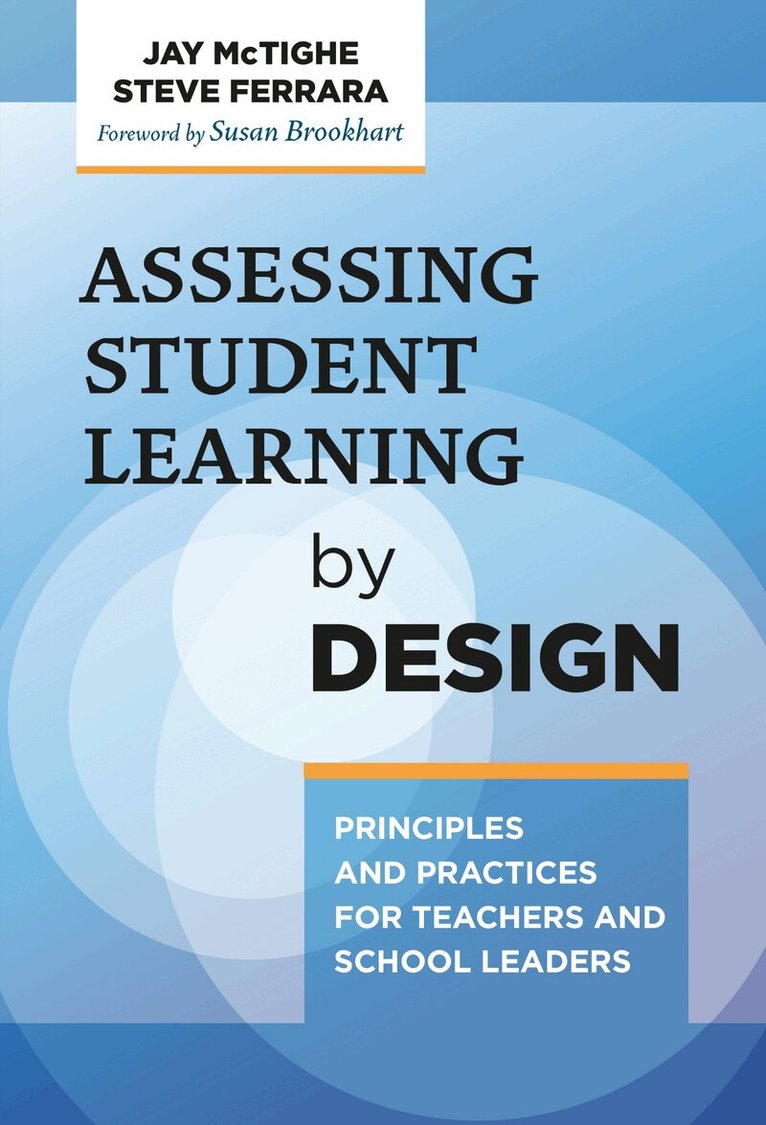
How can we help teachers use classroom assessments to gather appropriate evidence for all valued learning goals, and to use those assessments not just to measure learning but to promote it? This book provides an answer in a practical, proven, and principled Assessment Planning Framework that moves away from solely multiple-choice tests toward a wide range of approaches to classroom assessment activities, including performance-based assessments. The Framework examines four different types of learning goals, considers various purposes and audiences for assessment information, reviews five categories of classroom assessment methods, and presents options for communicating actionable results. To the authors, the primary purpose of classroom assessment is to inform teaching and learning, rather than simply to assign grades. This concise resource will be a reliable go-to reference for teachers, school leaders, mentors, and coaches in guiding classroom assessment practices and understanding their underlying principles. Book Features:Builds on the classic book Understanding by Design, written by Grant Wiggins and Jay McTighe.Offers a practical, nontechnical presentation appropriate for teacher preparation and busy practitioners (K–16).Explores different purposes for, and methods of, classroom assessment and grading.Addresses assessment of academic standards as well as transdisciplinary outcomes, such as 21st-century skills.Describes the principles and practices underlying standards-based grading.
Inbunden, Engelska, 2021
981 kr
Skickas inom 11-20 vardagar
How can we help teachers use classroom assessments to gather appropriate evidence for all valued learning goals, and to use those assessments not just to measure learning but to promote it? This book provides an answer in a practical, proven, and principled Assessment Planning Framework that moves away from solely multiple-choice tests toward a wide range of approaches to classroom assessment activities, including performance-based assessments. The Framework examines four different types of learning goals, considers various purposes and audiences for assessment information, reviews five categories of classroom assessment methods, and presents options for communicating actionable results. To the authors, the primary purpose of classroom assessment is to inform teaching and learning, rather than simply to assign grades. This concise resource will be a reliable go-to reference for teachers, school leaders, mentors, and coaches in guiding classroom assessment practices and understanding their underlying principles. Book Features:Builds on the classic book Understanding by Design, written by Grant Wiggins and Jay McTighe.Offers a practical, nontechnical presentation appropriate for teacher preparation and busy practitioners (K–16).Explores different purposes for, and methods of, classroom assessment and grading.Addresses assessment of academic standards as well as transdisciplinary outcomes, such as 21st-century skills.Describes the principles and practices underlying standards-based grading.
Häftad, Engelska, 2004
414 kr
Skickas inom 3-6 vardagar
Häftad, Engelska, 2005
454 kr
Skickas inom 3-6 vardagar
Häftad, Engelska, 2006
350 kr
Skickas inom 3-6 vardagar
Häftad, Engelska, 2011
334 kr
Skickas inom 3-6 vardagar
Häftad, Engelska, 2013
326 kr
Skickas inom 3-6 vardagar
Häftad, Engelska, 2015
172 kr
Skickas inom 5-8 vardagar
Häftad, Engelska, 2018
438 kr
Skickas inom 3-6 vardagar
Häftad, Engelska, 2019
350 kr
Skickas inom 3-6 vardagar
Häftad, Engelska, 2020
422 kr
Skickas inom 5-8 vardagar
Häftad, Engelska, 2020
355 kr
Skickas inom 5-8 vardagar
Inbunden, Engelska, 2026
851 kr
Kommande
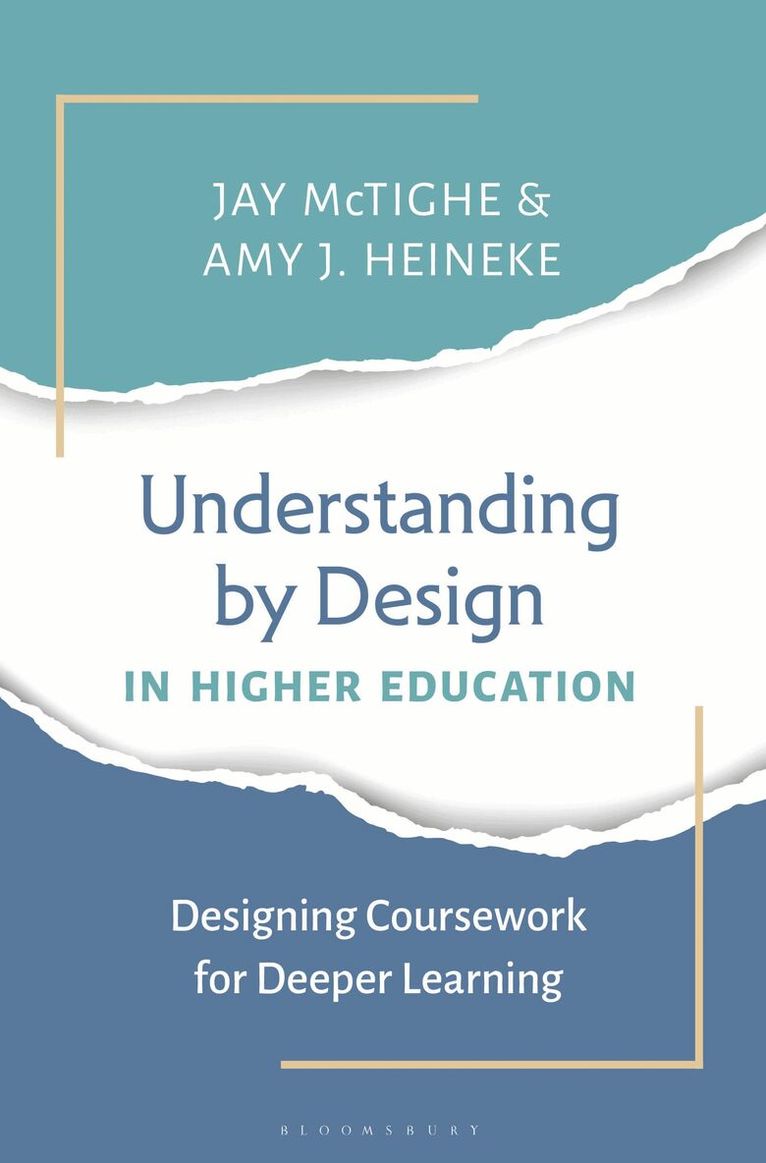
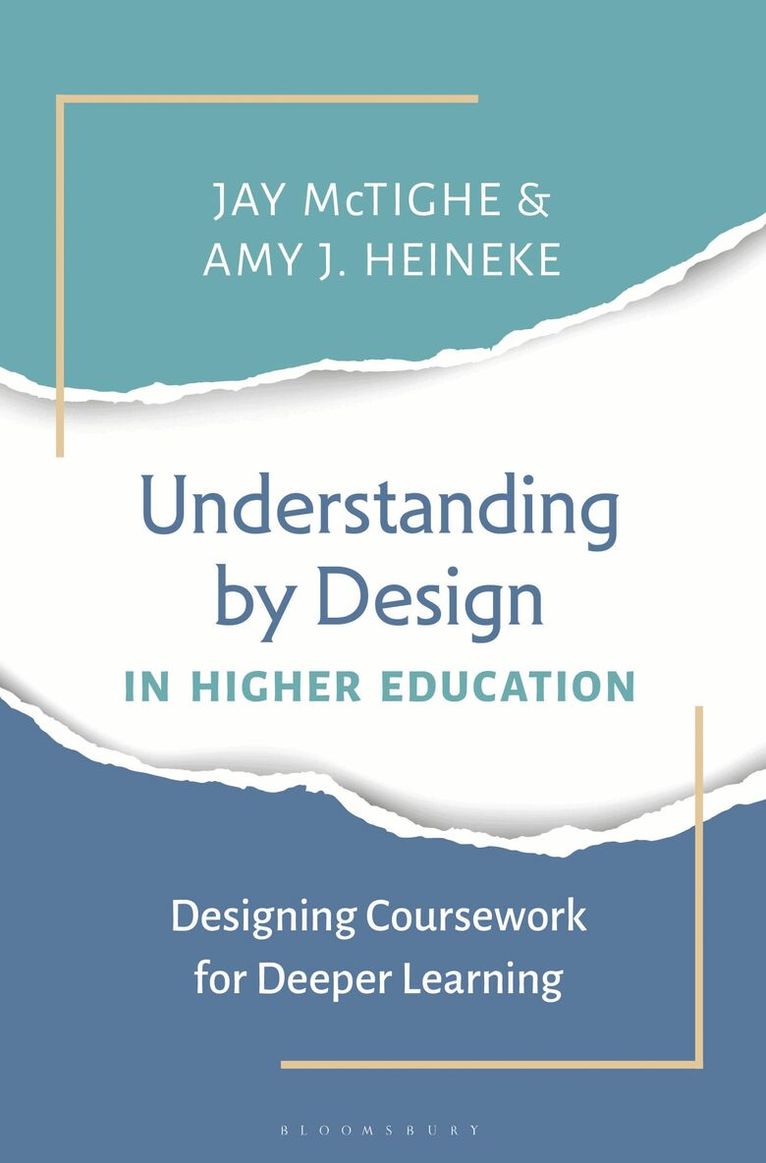
Understanding by Design® (UbD) is an internationally renowned curriculum development framework that has been used by educators across the world for more than three decades. The key ideas of the UbD framework are contained in its title: 1) prioritize the development of in-depth understandings to facilitate transfer for real-world applications; and 2) apply a three-stage design process for creating curricula toward those ends. Though most widely used in K-12 schools, UbD can be applied to guide postsecondary faculty in designing courses to deepen students’ understanding and promote transfer in professional settings. Given the reality that most higher education faculty have little to no preparation in designing curriculum, the practical three-stage backward design framework can support them in applying their disciplinary expertise to develop coursework for deeper learning and transfer. The goal of this book is to support faculty in thoughtfully designing coursework that prioritizes students’ understanding, incorporates authentic and engaging assessments, and encourages active learning for understanding and transfer beyond the college classroom. Rather than recycling old syllabi or simply covering the chapters of a textbook, faculty will learn to harness their rich academic and professional expertise to design meaningful, authentic, and engaging curriculum.
Häftad, Engelska, 2026
232 kr
Kommande
Understanding by Design® (UbD) is an internationally renowned curriculum development framework that has been used by educators across the world for more than three decades. The key ideas of the UbD framework are contained in its title: 1) prioritize the development of in-depth understandings to facilitate transfer for real-world applications; and 2) apply a three-stage design process for creating curricula toward those ends. Though most widely used in K-12 schools, UbD can be applied to guide postsecondary faculty in designing courses to deepen students’ understanding and promote transfer in professional settings. Given the reality that most higher education faculty have little to no preparation in designing curriculum, the practical three-stage backward design framework can support them in applying their disciplinary expertise to develop coursework for deeper learning and transfer. The goal of this book is to support faculty in thoughtfully designing coursework that prioritizes students’ understanding, incorporates authentic and engaging assessments, and encourages active learning for understanding and transfer beyond the college classroom. Rather than recycling old syllabi or simply covering the chapters of a textbook, faculty will learn to harness their rich academic and professional expertise to design meaningful, authentic, and engaging curriculum.