Jay Sexton - Böcker
Visar alla böcker från författaren Jay Sexton. Handla med fri frakt och snabb leverans.
12 produkter
12 produkter
Debtor Diplomacy
Finance and American Foreign Relations in the Civil War Era 1837-1873
Häftad, Engelska, 2014
464 kr
Skickas inom 5-8 vardagar
The United States was a debtor nation in the mid-nineteenth century, with half of its national debt held overseas. Lacking the resources to develop the nation and to fund the wars necessary to expand and then preserve it, the United States looked across the Atlantic for investment capital. The need to obtain foreign capital greatly influenced American foreign policy, principally relations with Britain. The intersection of finance and diplomacy was particularly evident during the Civil War when both the North and South integrated attempts to procure loans from European banks into their larger international strategies. Furthermore, the financial needs of the United States (and the Confederacy) imparted significant political power to an elite group of London-based financiers who became intimately involved in American foreign relations during this period. This study explores and assesses how the United State's need for capital influenced its foreign relations in the tumultuous years wedged between the two great financial crises of the nineteenth century, 1837 to 1873.Drawing on the unused archives of London banks and the papers of statesmen on both sides of the Atlantic, this work illuminates our understanding of mid-nineteenth-century American foreign relations by highlighting how financial considerations influenced the formation of foreign policy and functioned as a peace factor in Anglo-American relations. This study also analyzes a crucial, but ignored, dimension of the Civil War - the efforts of both the North and the South to attract the support of European financiers. Though foreign contributions to each side failed to match the hopes of Union and Confederate leaders, the financial diplomacy of the Civil War shaped the larger foreign policy strategies of both sides and contributed to both the preservation of British neutrality and the ultimate defeat of the Confederacy.
598 kr
Skickas inom 5-8 vardagar
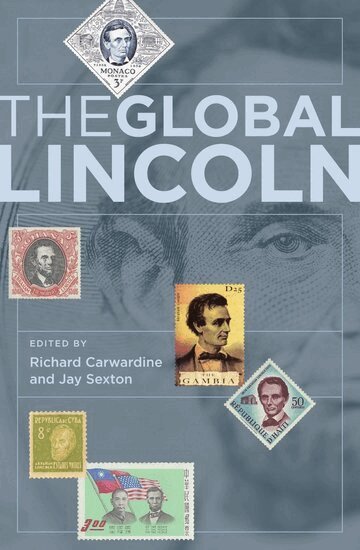
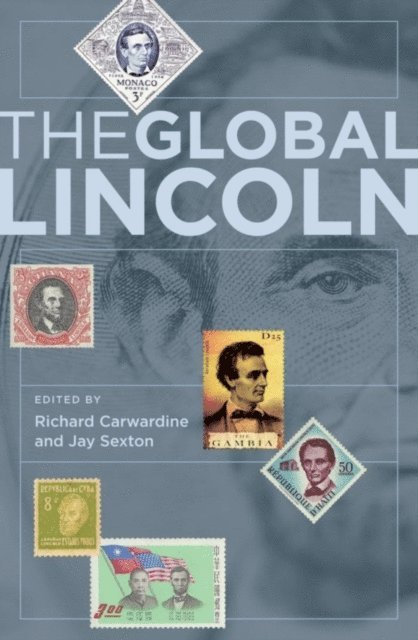
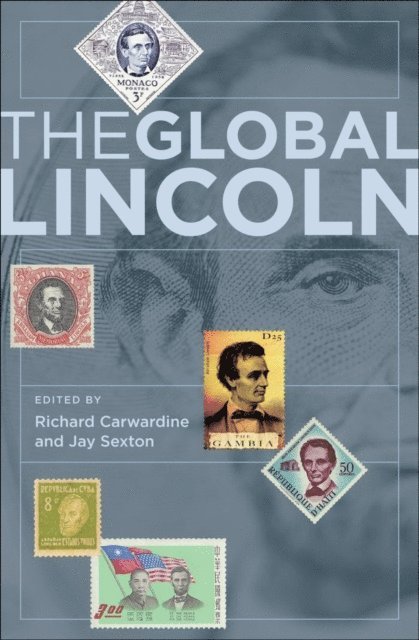
More than any other American historical figure, Abraham Lincoln towers over the global landscape, a leader who spoke--and continues to speak--to people around the world. The Global Lincoln tells the unknown and remarkable story of this great president's worldwide legacy. Edited by acclaimed Lincoln biographer Richard Carwardine and Jay Sexton, this fascinating volume brings together leading historians from around the globe--including such writers as Harold Holzer, Kenneth O. Morgan, and David W. Blight--to explore the image and influence of Lincoln in places ranging from Germany to Japan, India to Ireland, Africa and Argentina to the American South. The contributors show that the heart of Lincoln's global celebrity lies in his status as the archetypal self-made man, his record of successful leadership in wartime, his role as the "Great Emancipator," and his resolute defense of popular government. Yet "Lincoln" has also been a malleable and protean figure, one who is forever being redefined to meet the needs of those who invoke him, from Marx and Tolstoy to soldiers fighting in the "Lincoln Brigades."
Debtor Diplomacy
Finance and American Foreign Relations in the Civil War Era 1837-1873
Inbunden, Engelska, 2005
2 438 kr
Skickas inom 5-8 vardagar
The United States was a debtor nation in the mid-nineteenth century, with half of its national debt held overseas. Lacking the resources to develop the nation and to fund the wars necessary to expand and then preserve it, the United States looked across the Atlantic for investment capital. The need to obtain foreign capital greatly influenced American foreign policy, principally relations with Britain. The intersection of finance and diplomacy was particularly evident during the Civil War when both the North and South integrated attempts to procure loans from European banks into their larger international strategies. Furthermore, the financial needs of the United States (and the Confederacy) imparted significant political power to an elite group of London-based financiers who became intimately involved in American foreign relations during this period. This study explores and assesses how the United State's need for capital influenced its foreign relations in the tumultuous years wedged between the two great financial crises of the nineteenth century, 1837 to 1873.Drawing on the unused archives of London banks and the papers of statesmen on both sides of the Atlantic, this work illuminates our understanding of mid-nineteenth-century American foreign relations by highlighting how financial considerations influenced the formation of foreign policy and functioned as a peace factor in Anglo-American relations. This study also analyses a crucial, but ignored, dimension of the Civil War - the efforts of both the North and the South to attract the support of European financiers. Though foreign contributions to each side failed to match the hopes of Union and Confederate leaders, the financial diplomacy of the Civil War shaped the larger foreign policy strategies of both sides and contributed to both the preservation of British neutrality and the ultimate defeat of the Confederacy.
Empire's Twin
U.S. Anti-imperialism from the Founding Era to the Age of Terrorism
Inbunden, Engelska, 2015
1 574 kr
Skickas inom 10-15 vardagar
Across the course of American history, imperialism and anti-imperialism have been awkwardly paired as influences on the politics, culture, and diplomacy of the United States. The Declaration of Independence, after all, is an anti-imperial document, cataloguing the sins of the metropolitan government against the colonies. With the Revolution, and again in 1812, the nation stood against the most powerful empire in the world and declared itself independent. As noted by Ian Tyrrell and Jay Sexton, however, American "anti-imperialism was clearly selective, geographically, racially, and constitutionally." Empire's Twin broadens our conception of anti-imperialist actors, ideas, and actions; it charts this story across the range of American history, from the Revolution to our own era; and it opens up the transnational and global dimensions of American anti-imperialism.By tracking the diverse manifestations of American anti-imperialism, this book highlights the different ways in which historians can approach it in their research and teaching. The contributors cover a wide range of subjects, including the discourse of anti-imperialism in the Early Republic and Civil War, anti-imperialist actions in the U.S. during the Mexican Revolution, the anti-imperial dimensions of early U.S. encounters in the Middle East, and the transnational nature of anti-imperialist public sentiment during the Cold War and beyond.
Empire's Twin
U.S. Anti-imperialism from the Founding Era to the Age of Terrorism
Häftad, Engelska, 2015
430 kr
Skickas inom 7-10 vardagar
Across the course of American history, imperialism and anti-imperialism have been awkwardly paired as influences on the politics, culture, and diplomacy of the United States. The Declaration of Independence, after all, is an anti-imperial document, cataloguing the sins of the metropolitan government against the colonies. With the Revolution, and again in 1812, the nation stood against the most powerful empire in the world and declared itself independent. As noted by Ian Tyrrell and Jay Sexton, however, American "anti-imperialism was clearly selective, geographically, racially, and constitutionally." Empire's Twin broadens our conception of anti-imperialist actors, ideas, and actions; it charts this story across the range of American history, from the Revolution to our own era; and it opens up the transnational and global dimensions of American anti-imperialism.By tracking the diverse manifestations of American anti-imperialism, this book highlights the different ways in which historians can approach it in their research and teaching. The contributors cover a wide range of subjects, including the discourse of anti-imperialism in the Early Republic and Civil War, anti-imperialist actions in the U.S. during the Mexican Revolution, the anti-imperial dimensions of early U.S. encounters in the Middle East, and the transnational nature of anti-imperialist public sentiment during the Cold War and beyond.
254 kr
Skickas inom 5-8 vardagar
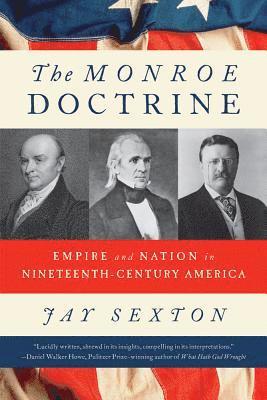
President James Monroe's 1823 message to Congress declaring opposition to European colonization in the Western Hemisphere became the cornerstone of nineteenth-century American statecraft. Monroe's message proclaimed anticolonial principles, yet it rapidly became the myth and means for subsequent generations of politicians to pursue expansionist foreign policies. Time and again, debates on the key issues of nineteenth-and early-twentieth-century foreign relations - expansion in the 1840s, Civil War diplomacy, the imperialism of 1898, entrance into World War I, and the establishment of the League of Nations - were framed in relation to the Monroe Doctrine. In Jay Sexton's adroit hands, the "Monroe Doctrine" provides a new lens through which to view the paradox at the centre of American diplomatic history: the nation's interdependent traditions of anticolonialism and imperialism.
526 kr
Skickas inom 7-10 vardagar
The second volume of The Cambridge History of America and the World examines how the United States rose to great power status in the nineteenth century and how the rest of the world has shaped the United States. Mixing top-down and bottom-up perspectives, insider and outsider views, cultural, social, political, military, environmental, legal, technological, and other veins of analysis, it places the United States, Indigenous nations, and their peoples in the context of a rapidly integrating world. Specific topics addressed in the volume include nation and empire building, inter-Indigenous relations, settler colonialism, slavery and statecraft, the Mexican-American War, global integration, the antislavery international, the global dimensions of the Civil War, overseas empire-building, state formation, international law, global capitalism, border-crossing movement politics, technology, health, the environment, immigration policy, missionary endeavors, mobility, tourism, expatriation, cultural production, colonial intimacies, borderlands, the liberal North Atlantic, US-African relations, Islamic world encounters, the US island empire, the greater Caribbean world, and transimperial entanglements.
7 112 kr
Tillfälligt slut
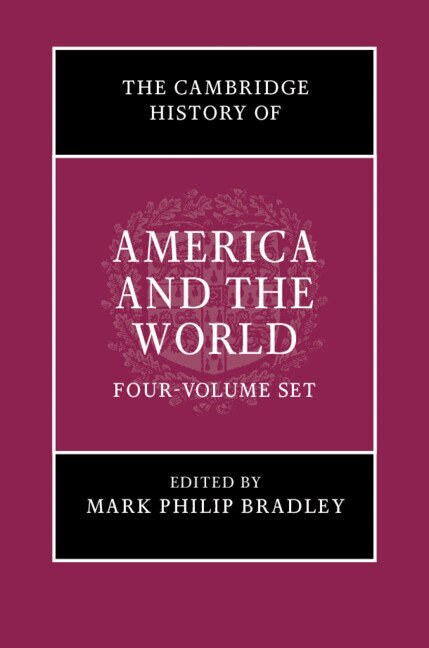
The Cambridge History of America and the World offers a transformative account of American engagement in the world from 1500 to the present. Representing a new scholarship informed by the transnational turn in the writing of US history and American foreign relations, the four-volume reference work gives sustained attention to key moments in US diplomacy, from the Revolutionary War and the Monroe Doctrine to the US rise as a world power in World War I, World War II and the Cold War. The volumes also cast a more inclusive scholarly net to include transnational histories of Native America, the Atlantic world, slavery, political economy, borderlands, empire, the family, gender and sexuality, race, technology, and the environment. Collectively, they offer essential starting points for readers coming to the field for the first time and serve as a critical vehicle for moving this scholarship forward in innovative new directions.
1 836 kr
Skickas inom 7-10 vardagar
The second volume of The Cambridge History of America and the World examines how the United States rose to great power status in the nineteenth century and how the rest of the world has shaped the United States. Mixing top-down and bottom-up perspectives, insider and outsider views, cultural, social, political, military, environmental, legal, technological, and other veins of analysis, it places the United States, Indigenous nations, and their peoples in the context of a rapidly integrating world. Specific topics addressed in the volume include nation and empire building, inter-Indigenous relations, settler colonialism, slavery and statecraft, the Mexican-American War, global integration, the antislavery international, the global dimensions of the Civil War, overseas empire-building, state formation, international law, global capitalism, border-crossing movement politics, technology, health, the environment, immigration policy, missionary endeavors, mobility, tourism, expatriation, cultural production, colonial intimacies, borderlands, the liberal North Atlantic, US-African relations, Islamic world encounters, the US island empire, the greater Caribbean world, and transimperial entanglements.
1 736 kr
Skickas inom 7-10 vardagar
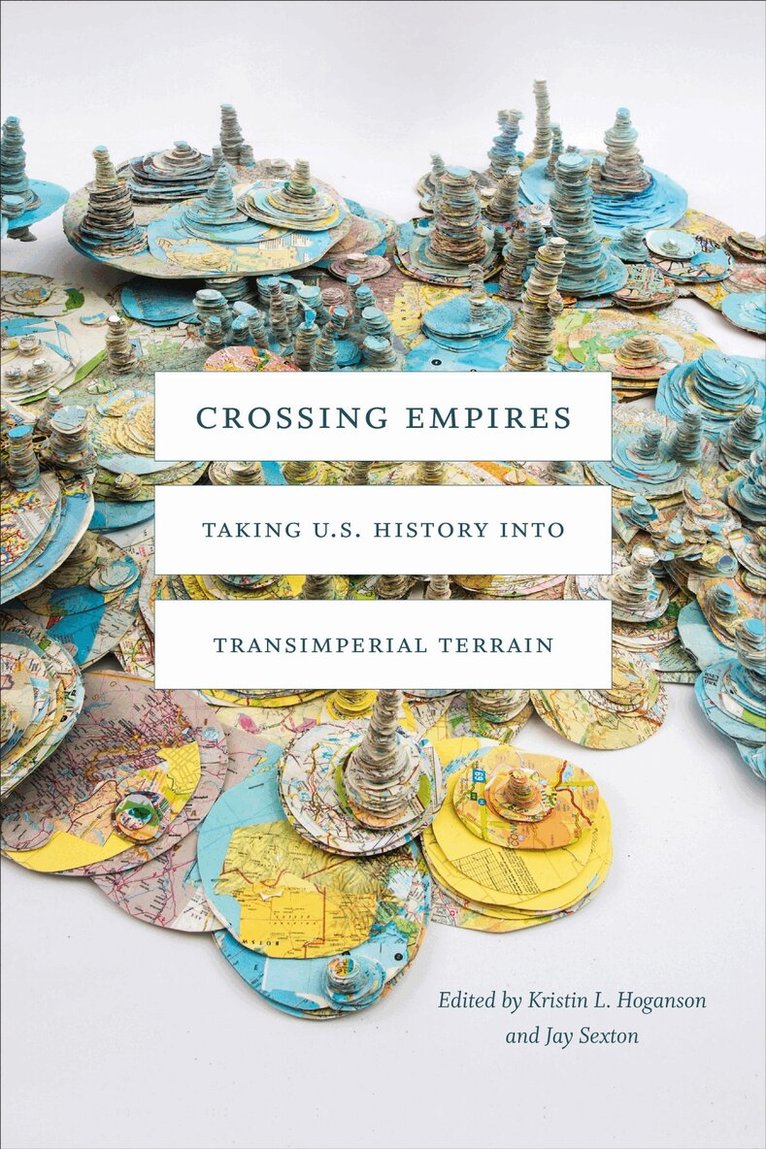
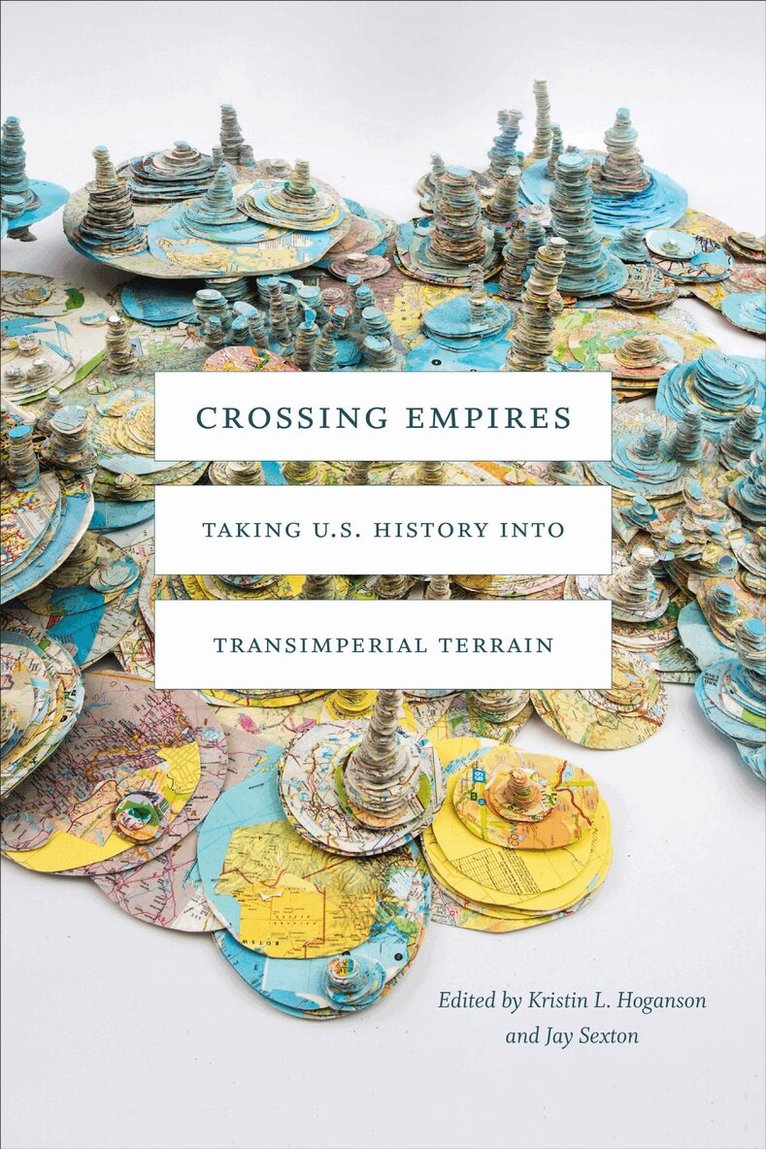
Weaving U.S. history into the larger fabric of world history, the contributors to Crossing Empires de-exceptionalize the American empire, placing it in a global transimperial context. They draw attention to the breadth of U.S. entanglements with other empires to illuminate the scope and nature of American global power as it reached from the Bering Sea to Australia and East Africa to the Caribbean. With case studies ranging from the 1830s to the late twentieth century, the contributors address topics including diplomacy, governance, anticolonialism, labor, immigration, medicine, religion, and race. Their transimperial approach-whether exemplified in examinations of U.S. steel corporations partnering with British imperialists to build the Ugandan railway or the U.S. reliance on other empires in its governance of the Philippines-transcends histories of interimperial rivalries and conflicts. In so doing, the contributors illuminate the power dynamics of seemingly transnational histories and the imperial origins of contemporary globality.Contributors. Ikuko Asaka, Oliver Charbonneau, Genevieve Clutario, Anne L. Foster, Julian Go, Michel Gobat, Julie Greene, Kristin L. Hoganson, Margaret D. Jacobs, Moon-Ho Jung, Marc-William Palen, Nicole M. Phelps, Jay Sexton, John Soluri, Stephen Tuffnell
430 kr
Skickas inom 7-10 vardagar
Weaving U.S. history into the larger fabric of world history, the contributors to Crossing Empires de-exceptionalize the American empire, placing it in a global transimperial context. They draw attention to the breadth of U.S. entanglements with other empires to illuminate the scope and nature of American global power as it reached from the Bering Sea to Australia and East Africa to the Caribbean. With case studies ranging from the 1830s to the late twentieth century, the contributors address topics including diplomacy, governance, anticolonialism, labor, immigration, medicine, religion, and race. Their transimperial approach-whether exemplified in examinations of U.S. steel corporations partnering with British imperialists to build the Ugandan railway or the U.S. reliance on other empires in its governance of the Philippines-transcends histories of interimperial rivalries and conflicts. In so doing, the contributors illuminate the power dynamics of seemingly transnational histories and the imperial origins of contemporary globality.Contributors. Ikuko Asaka, Oliver Charbonneau, Genevieve Clutario, Anne L. Foster, Julian Go, Michel Gobat, Julie Greene, Kristin L. Hoganson, Margaret D. Jacobs, Moon-Ho Jung, Marc-William Palen, Nicole M. Phelps, Jay Sexton, John Soluri, Stephen Tuffnell
237 kr
Skickas inom 7-10 vardagar
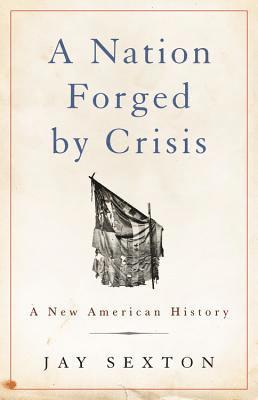
Americans have long understood their history as a story of inevitable progress, of a steadily rising standard of living and of the gradual extension of rights and freedoms to previously disenfranchised groups. Thus recent developments-9/11, the 2008 financial crash, the election of Donald Trump-have arrived as great shocks, each seemingly a wrench in the gears of history. How are we to understand our nation's past from the perspective of our volatile present?With A Nation Forged by Crisis, Jay Sexton has written a concise history of America for our time. He contends that from the start our national narrative has been punctuated by underappreciated moments of disruption, and that the roots of these disruptions can be traced to shifts in the international system. Sexton shows that the Revolution was not the inevitable result of American exceptionalism, but a consequence of Atlantic integration. By the 1760s, immigration to the colonies had spiked, and among the new arrivals were people like Thomas Paine who brought radical ideas to the continent. While Sexton does not dispute that the Civil War was caused by slavery, he argues that a necessary precondition for the conflict was the absence, for the first time in decades, of foreign threats. Both North and South were emboldened-with horrific results. In a similar way, it is impossible to understand the emergence of the New Deal without examining the role of "white ethnics"-first and second generation Germans, Poles, and Irish-in transforming and overseeing the mid-century Democratic Party. Sexton closes by pointing out that if recent developments are any indication, the politics of the future appear set to look less like those of the twentieth century than those of the nineteenth century, which was dominated by questions of labor and race, markets and tariffs, immigration and citizenship, international rivalry and geopolitical instability.A razor-sharp and necessary revision of American history, A Nation Forged by Crisis forces us to reckon with the reality that the United States has been and will always be entwined with the world beyond its borders