
Jean-FranAois Caron – författare
757 kr
Läs direkt efter köp
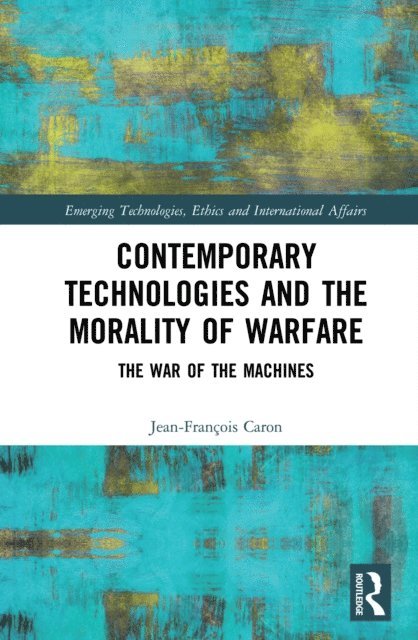
Supported by genuine historical cases, this book argues that certain new technologies in warfare can not only be justified within the current framework of the just war theory, but that their use is mandatory from a moral perspective.
Technological developments raise questions about the manner in which wars ought to be fought. The growing use of drones, capacity-increasing technologies, and cyberattacks are perceived by many as posing great challenges to Just War Theory. Instead of seeing these technologies as inherently unethical, this book adopts a different perspective by arguing that they are morally necessary since they can limit the potential violations of the moral rules of war and ensure that militaries better respect their obligation to protect their members. Caron’s research offers insights into how and under what conditions autonomous or semi-autonomous robots, artificial intelligence, cyberwarfare, and capacityincreasing technologies can be considered as legitimate weapons.
This book will be of interest to students, members of the armed forces, and scholars studying Politics, International Relations, Security Studies, Ethics, and Just War Theory.
730 kr
Läs direkt efter köp
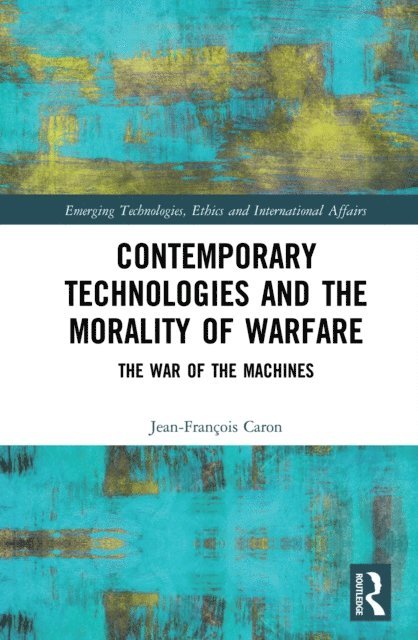
Supported by genuine historical cases, this book argues that certain new technologies in warfare can not only be justified within the current framework of the just war theory, but that their use is mandatory from a moral perspective.
Technological developments raise questions about the manner in which wars ought to be fought. The growing use of drones, capacity-increasing technologies, and cyberattacks are perceived by many as posing great challenges to Just War Theory. Instead of seeing these technologies as inherently unethical, this book adopts a different perspective by arguing that they are morally necessary since they can limit the potential violations of the moral rules of war and ensure that militaries better respect their obligation to protect their members. Caron’s research offers insights into how and under what conditions autonomous or semi-autonomous robots, artificial intelligence, cyberwarfare, and capacityincreasing technologies can be considered as legitimate weapons.
This book will be of interest to students, members of the armed forces, and scholars studying Politics, International Relations, Security Studies, Ethics, and Just War Theory.

353 kr
Läs direkt efter köp
This book explores the forms of fear that are becoming more visible in liberal democracies and how they now tend to condition our existences in a way that is detrimental to our personal freedom. The author explores how the conception of human existence that now dominates in liberal societies and that places the highest value on the preservation of life at all costs plays a significant role in this regard. He explores the origin of this form of biopolitics that has emerged after the end of the Cold War and shows how it has dramatically changed our relationship with the state and also explains how this new dynamic has been favourable to the imposition of disproportional restrictions on our individual freedom. The COVID-19 pandemic has indeed shown that when the fear of dying ends up taking precedence over any other considerations, individuals and societies are led on an illiberal path that can only contribute to the gradual erosion of their liberties and to the development and acceptance of a new type of governance that justifies the imposition of liberticidal measures. This book will appeal to scholars and students of political theory and comparative democracy, civil rights advocates, and media professionals interested in questions related to liberalism and its post-Cold War evolution.

353 kr
Läs direkt efter köp
This book explores the forms of fear that are becoming more visible in liberal democracies and how they now tend to condition our existences in a way that is detrimental to our personal freedom. The author explores how the conception of human existence that now dominates in liberal societies and that places the highest value on the preservation of life at all costs plays a significant role in this regard. He explores the origin of this form of biopolitics that has emerged after the end of the Cold War and shows how it has dramatically changed our relationship with the state and also explains how this new dynamic has been favourable to the imposition of disproportional restrictions on our individual freedom. The COVID-19 pandemic has indeed shown that when the fear of dying ends up taking precedence over any other considerations, individuals and societies are led on an illiberal path that can only contribute to the gradual erosion of their liberties and to the development and acceptance of a new type of governance that justifies the imposition of liberticidal measures. This book will appeal to scholars and students of political theory and comparative democracy, civil rights advocates, and media professionals interested in questions related to liberalism and its post-Cold War evolution.
774 kr
Läs direkt efter köp
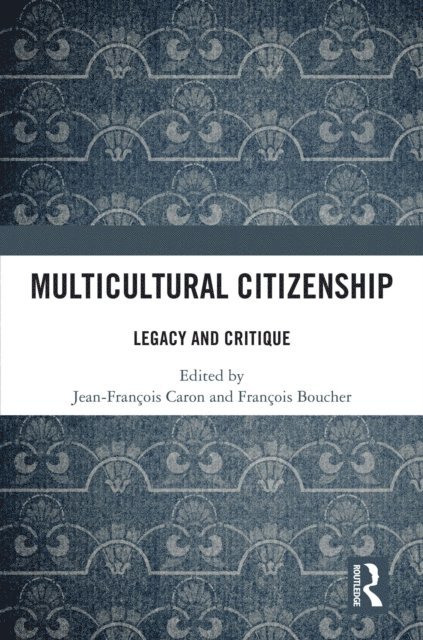
Multicultural Citizenship: Legacy and Critique allows the philosopher an opportunity to consider the evolution and transformation of Will Kymlicka’s theories from Multicultural Citizenship: A Liberal Theory of Minority Rights.
Canonical in the field of multiculturalism, Will Kymlicka’s work developed an original way of recognizing and accommodating ethnic groups and national minorities through liberal democratic principles. This new volume brings together expert scholars to evaluate the impact of Kymlicka’s book on their own views and the field’s general progression over the past three decades and brings Kymlicka to face new questions challenging multiculturalism and re-evaluate the main ideas of his original theory by reflecting on its development. Through engagement with the contributors’ chapters, Kymlicka ends this edited collection with proposals for new ways of understanding multiculturalism at a time of rising anti-immigration populism and natalist movements.
This book offers a modern outlook on multiculturalism with contributions from a diverse group of authors as well as Will Kymlicka himself and will be of great interest to scholars and students of migration, nationalism, minority rights, sociology, law, and politics.
774 kr
Läs direkt efter köp
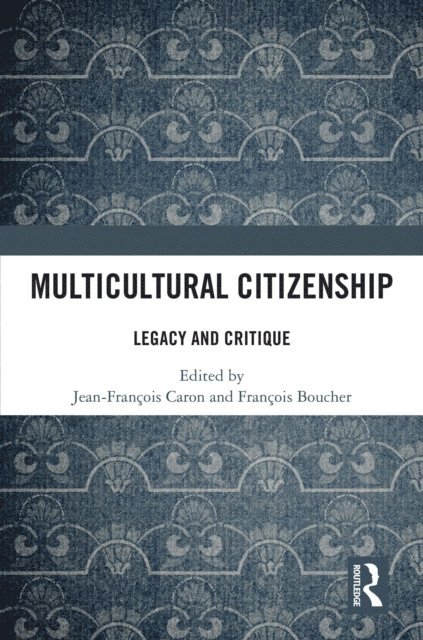
Multicultural Citizenship: Legacy and Critique allows the philosopher an opportunity to consider the evolution and transformation of Will Kymlicka’s theories from Multicultural Citizenship: A Liberal Theory of Minority Rights.
Canonical in the field of multiculturalism, Will Kymlicka’s work developed an original way of recognizing and accommodating ethnic groups and national minorities through liberal democratic principles. This new volume brings together expert scholars to evaluate the impact of Kymlicka’s book on their own views and the field’s general progression over the past three decades and brings Kymlicka to face new questions challenging multiculturalism and re-evaluate the main ideas of his original theory by reflecting on its development. Through engagement with the contributors’ chapters, Kymlicka ends this edited collection with proposals for new ways of understanding multiculturalism at a time of rising anti-immigration populism and natalist movements.
This book offers a modern outlook on multiculturalism with contributions from a diverse group of authors as well as Will Kymlicka himself and will be of great interest to scholars and students of migration, nationalism, minority rights, sociology, law, and politics.