Jean M. Hébrard – författare
Visar alla böcker från författaren Jean M. Hébrard. Handla med fri frakt och snabb leverans.
2 produkter
2 produkter
Häftad, Engelska, 2014
245 kr
Skickas inom 10-15 vardagar
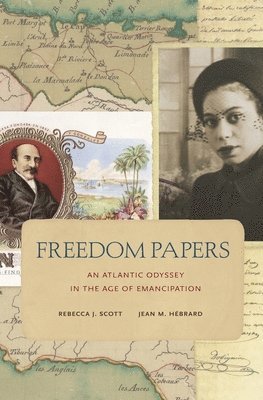
Around 1785, a woman was taken from her home in Senegambia and sent to Saint-Domingue in the Caribbean. Those who enslaved her there named her Rosalie. Her later efforts to escape slavery were the beginning of a family's quest, across five generations and three continents, for lives of dignity and equality. Freedom Papers sets the saga of Rosalie and her descendants against the background of three great antiracist struggles of the nineteenth century: the Haitian Revolution, the French Revolution of 1848, and the Civil War and Reconstruction in the United States. Freed during the Haitian Revolution, Rosalie and her daughter Elisabeth fled to Cuba in 1803. A few years later, Elisabeth departed for New Orleans, where she married a carpenter, Jacques Tinchant. In the 1830s, with tension rising against free persons of color, they left for France. Subsequent generations of Tinchants fought in the Union Army, argued for equal rights at Louisiana's state constitutional convention, and created a transatlantic tobacco network that turned their Creole past into a commercial asset. Yet the fragility of freedom and security became clear when, a century later, Rosalie's great-great-granddaughter Marie-José was arrested by Nazi forces occupying Belgium.Freedom Papers follows the Tinchants as each generation tries to use the power and legitimacy of documents to help secure freedom and respect. The strategies they used to overcome the constraints of slavery, war, and colonialism suggest the contours of the lives of people of color across the Atlantic world during this turbulent epoch.
E-bok
PDF, Spanska, 2015136 kr
Läs direkt efter köp
En 1899, después de varias décadas de lucha, había concluido la guerra por la independencia de Cuba del dominio español. La situación, sin embargo, no era la que habían anticipado los patriotas cubanos al inicio de las acciones armadas. En los últimos meses del conflicto, los Estados Unidos habían intervenido, y cuando las tropas españolas se retiraron de la isla, la autoridad no fue a dar a manos de los líderes de la rebelión, sino a las de los ocupantes militares estadounidenses y el gobierno militar que los acompañaba. Durante el verano y el otoño de ese año, cubanos de toda la isla le escribieron al general Máximo Gómez, el venerado líder que había sobrevivido a la contienda, para contarle las dificultades que enfrentaban en lo que habían imaginado que sería una Cuba libre e independiente. A menudo desprovistos de tierras y carentes de trabajo y recursos, los veteranos de a pie se volvían hacia su antiguo generalísimo en busca de consejo y ayuda. En cientos de cartas expresaban sus aspiraciones de ciudadanía en una nueva nación, esperanzas que parecían ahora frustradas.