
Jean-Paul GaudilliA*re – författare
696 kr
Läs direkt efter köp
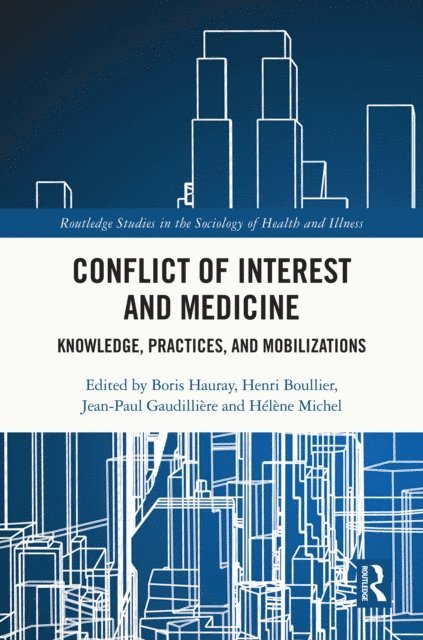
In the context of a growing criticism on the influence of the pharmaceutical industry on physicians, scientists, or politicians, Conflict of Interest and Medicine offers a comprehensive analysis of the conflict of interest in medicine anchored in the social sciences, with perspectives from sociology, history, political science, and law.
Based on in-depth empirical investigations conducted within different territories (France, the European Union, and the United States) the contributions analyze the development of conflict of interest as a social issue and how it impacts the production of medical knowledge and expertise, physicians’ work and their prescriptions, and also the framing of health crises and controversies. In doing so, they bring a new understanding of the transformations in the political economy of pharmaceutical knowledge, the politicization of public health risks, and the promotion of transparency in science and public life.
Complementing the more normative and quantitative understandings of conflict of interest issues that dominate today, this book will be of interest to researchers in a broad range of areas including social studies of sciences and technology, sociology of health and illness, and political sociology and ethics. It will be also a valuable resource for health professionals, medical scientists, or regulators facing the question of corporate influence.
696 kr
Läs direkt efter köp
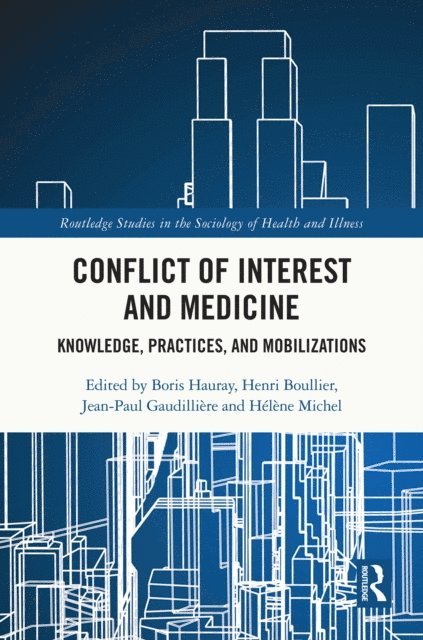
In the context of a growing criticism on the influence of the pharmaceutical industry on physicians, scientists, or politicians, Conflict of Interest and Medicine offers a comprehensive analysis of the conflict of interest in medicine anchored in the social sciences, with perspectives from sociology, history, political science, and law.
Based on in-depth empirical investigations conducted within different territories (France, the European Union, and the United States) the contributions analyze the development of conflict of interest as a social issue and how it impacts the production of medical knowledge and expertise, physicians’ work and their prescriptions, and also the framing of health crises and controversies. In doing so, they bring a new understanding of the transformations in the political economy of pharmaceutical knowledge, the politicization of public health risks, and the promotion of transparency in science and public life.
Complementing the more normative and quantitative understandings of conflict of interest issues that dominate today, this book will be of interest to researchers in a broad range of areas including social studies of sciences and technology, sociology of health and illness, and political sociology and ethics. It will be also a valuable resource for health professionals, medical scientists, or regulators facing the question of corporate influence.
554 kr
Läs direkt efter köp
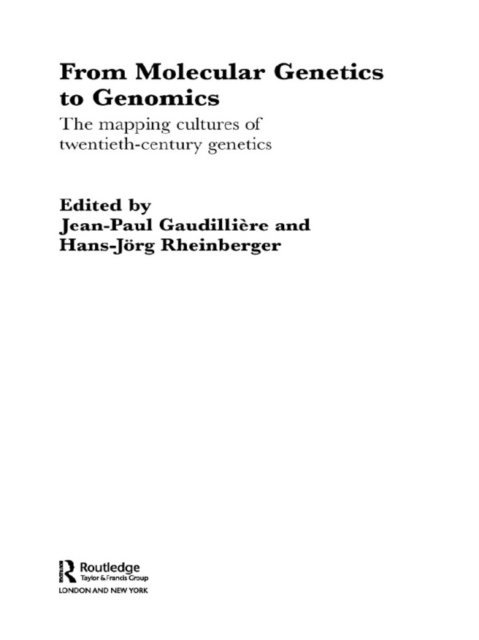
With the rise of genomics, the life sciences have entered a new era. Maps of genomes have become the icons for a comprehensive knowledge of the organism on a previously unattained level of complexity, and the organisation of genetic knowledge in maps has been a major driving force in the establishment of the discipline. This book provides a comprehensive history of molecular genetics and genomics.The first section of the book shows how the genetic cartography of classical genetics was linked to the molecular analysis of gene structure through the introduction of new model organisms such as bacteria and through the invention of new experimental tools such as gene transfer. The second section addresses the moral and political economy of human genome sequencing in all its technical, epistemic, social and economic complexity.With detailed analyses of the scientific practices of mapping and its illustration of the diversity of mapping practices this book is a significant contribution to the history of genetics. A companion volume from the same editors - Classical Genetic Research and Its Legacy: The Mapping Cultures of Twentieth Century Genetics - covers the history of mapping procedures as they were developed in classical genetics.

554 kr
Läs direkt efter köp
With the rise of genomics, the life sciences have entered a new era. Maps of genomes have become the icons for a comprehensive knowledge of the organism on a previously unattained level of complexity, and the organisation of genetic knowledge in maps has been a major driving force in the establishment of the discipline. This book provides a comprehensive history of molecular genetics and genomics.The first section of the book shows how the genetic cartography of classical genetics was linked to the molecular analysis of gene structure through the introduction of new model organisms such as bacteria and through the invention of new experimental tools such as gene transfer. The second section addresses the moral and political economy of human genome sequencing in all its technical, epistemic, social and economic complexity.With detailed analyses of the scientific practices of mapping and its illustration of the diversity of mapping practices this book is a significant contribution to the history of genetics. A companion volume from the same editors - Classical Genetic Research and Its Legacy: The Mapping Cultures of Twentieth Century Genetics - covers the history of mapping procedures as they were developed in classical genetics.
866 kr
Läs direkt efter köp
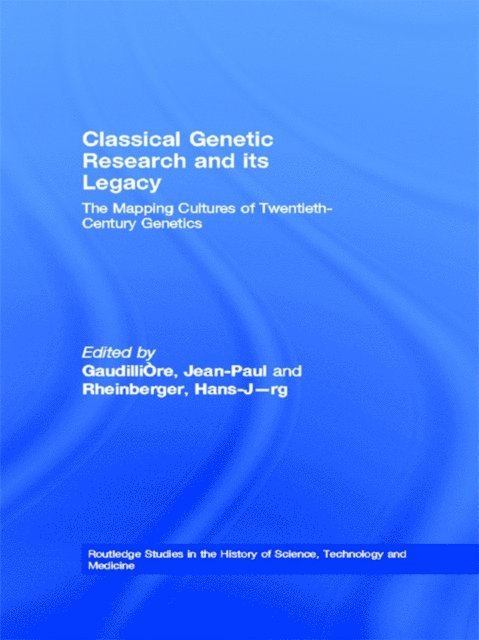
With the rise of genomics, the life sciences have entered a new era. This book provides a comprehensive history of mapping procedures as they were developed in classical genetics. An accompanying volume - From Molecular Genetics to Genomics - covers the history of molecular genetics and genomics.The book shows that the technology of genetic mapping is by no means a recent acquisition of molecular genetics or even genetic engineering. It demonstrates that the development of mapping technologies has accompanied the rise of modern genetics from its very beginnings. In Section One, Mendelian genetics is set in perspective from the viewpoint of the detection and description of linkage phenomena. Section Two addresses the role of mapping for the experimental working practice of classical geneticists, their social interactions and for the laboratory ''life worlds''.With detailed analyses of the scientific practices of mapping and its illustration of the diversity of mapping practices this book is a significant contibution to the history of genetics. A companion volume from the same editors - From Molecular Genetics to Genomics: The Mapping Cultures of Twentieth Century Genetics - covers the history of molecular genetics and genomics.
866 kr
Läs direkt efter köp
With the rise of genomics, the life sciences have entered a new era. This book provides a comprehensive history of mapping procedures as they were developed in classical genetics. An accompanying volume - From Molecular Genetics to Genomics - covers the history of molecular genetics and genomics.The book shows that the technology of genetic mapping is by no means a recent acquisition of molecular genetics or even genetic engineering. It demonstrates that the development of mapping technologies has accompanied the rise of modern genetics from its very beginnings. In Section One, Mendelian genetics is set in perspective from the viewpoint of the detection and description of linkage phenomena. Section Two addresses the role of mapping for the experimental working practice of classical geneticists, their social interactions and for the laboratory ''life worlds''.With detailed analyses of the scientific practices of mapping and its illustration of the diversity of mapping practices this book is a significant contibution to the history of genetics. A companion volume from the same editors - From Molecular Genetics to Genomics: The Mapping Cultures of Twentieth Century Genetics - covers the history of molecular genetics and genomics.