Jean-Pierre Dupuy – författare
Visar alla böcker från författaren Jean-Pierre Dupuy. Handla med fri frakt och snabb leverans.
17 produkter
Mark of the Sacred
Häftad, 2013
273 kr
Lägg i varukorg
Jean-Pierre Dupuy, prophet of what he calls "enlightened doomsaying," has long warned that modern society is on a path to self-destruction. In this book, he pleads for a subversion of this crisis from within, arguing that it is our lopsided view of religion and reason that has set us on this …
Mark of the Sacred
Inbunden, 2013
1128 kr
Lägg i varukorg
Jean-Pierre Dupuy, prophet of what he calls "enlightened doomsaying," has long warned that modern society is on a path to self-destruction. In this book, he pleads for a subversion of this crisis from within, arguing that it is our lopsided view of religion and reason that has set us on this …
Mark of the Sacred
E-bok, 2013
228 kr
Lägg i varukorg
Jean-Pierre Dupuy, prophet of what he calls "enlightened doomsaying," has long warned that modern society is on a path to self-destruction. In this book, he pleads for a subversion of this crisis from within, arguing that it is our lopsided view of religion and reason that has set us on this …
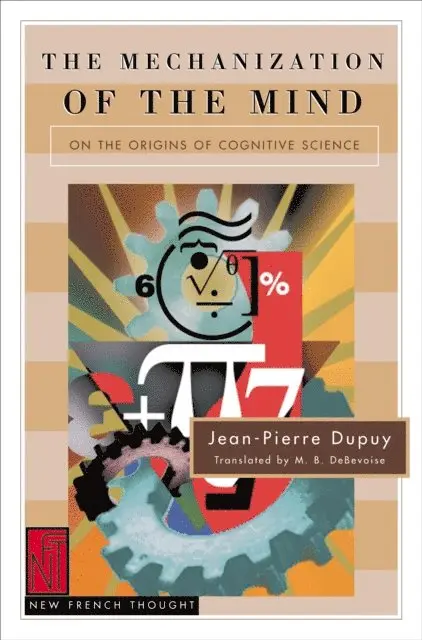
Mechanization of the Mind
On the Origins of Cognitive Science
E-bok, 2021
400 kr
Lägg i varukorg
In March 1946, some of the greatest minds of the twentieth century--among them John von Neumann, Norbert Wiener, Warren McCulloch, and Walter Pitts--gathered at the Beekman Hotel in New York City with the aim of constructing a science of mental behavior that would resolve at last the ancient …
War That Must not Occur
Inbunden, 2023
290 kr
Lägg i varukorg
The possibility of a nuclear war that could destroy civilization has influenced the course of international affairs since 1945, suspended like a sword of Damocles above the heads of the world's leaders. The fact that we have escaped a third world war involving strategic nuclear weapons—indeed, that …
War That Must not Occur
E-bok, 2023
329 kr
Lägg i varukorg
The possibility of a nuclear war that could destroy civilization has influenced the course of international affairs since 1945, suspended like a sword of Damocles above the heads of the world's leaders. The fact that we have escaped a third world war involving strategic nuclear weapons—indeed, that …
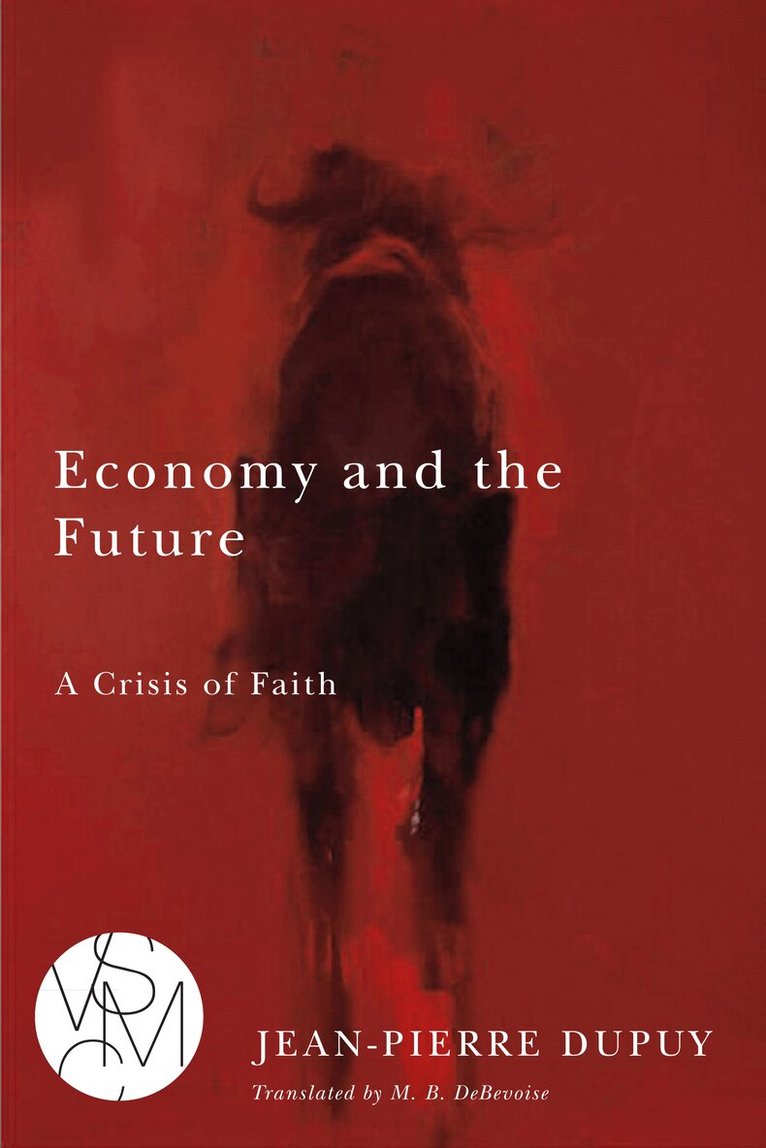
Economy and the Future
A Crisis of Faith
Häftad, 2014
505 kr
Lägg i varukorg
A monster stalks the earth—a sluggish, craven, dumb beast that takes fright at the slightest noise and starts at the sight of its own shadow. This monster is the market. The shadow it fears is cast by a light that comes from the future: the Keynesian crisis of expectations. It is this same light …
Short Treatise on the Metaphysics of Tsunamis
Häftad, 2015
505 kr
Lägg i varukorg
In 1755 the city of Lisbon was destroyed by a terrible earthquake. Almost 250 years later, an earthquake beneath the Indian Ocean unleashed a tsunami whose devastating effects were felt over a vast area. In each case, a natural catastrophe came to be interpreted as a consequence of human evil. …
How to Think About Catastrophe
Toward a Theory of Enlightened Doomsaying
Häftad, 2022
898 kr
Lägg i varukorg
During the last century humanity acquired the ability to destroy itself. The direct approach to destruction can be seen in such facts as the ever-present threat of nuclear war, but we have also developed the capacity to do indirect harm by altering conditions necessary for survival, including the …
Les savants croient-ils en leurs théories ?
Une lecture philosophique de l'histoire des sciences cognitives.
Häftad, 2022
227 kr
Lägg i varukorg
Catastrophe & Spectacle
Variations of a Conceptual Relation from the 17th to the 21st Century
Av Johannes Ungelenk, Gianluca Solla m. fl.
E-bok, 2018
276 kr
Lägg i varukorg
From epidemics in the 17th century and the Lisbon earthquake in 1755 to Guernica in World War II, the essays in this volume trace the development of the catastrophic imagination, relying heavily on pictorial media and different forms of staging. Catastrophe in its modern sense seems to be …
L'auto-organisation
De la physique au politique
E-bok, 2022
416 kr
Lägg i varukorg
Ce colloque, qui se tint en juin 1981 à Cerisy, réunit des physiciens, philosophes, biologistes et anthropologues autour d’une aspiration commune : faire émerger une pensée neuve au carrefour des sciences dures et des « humanités ». Une question novatrice et déterminante fut alors posée : est-il …