Jeanne Pitre Soileau - Böcker
Visar alla böcker från författaren Jeanne Pitre Soileau. Handla med fri frakt och snabb leverans.
6 produkter
6 produkter
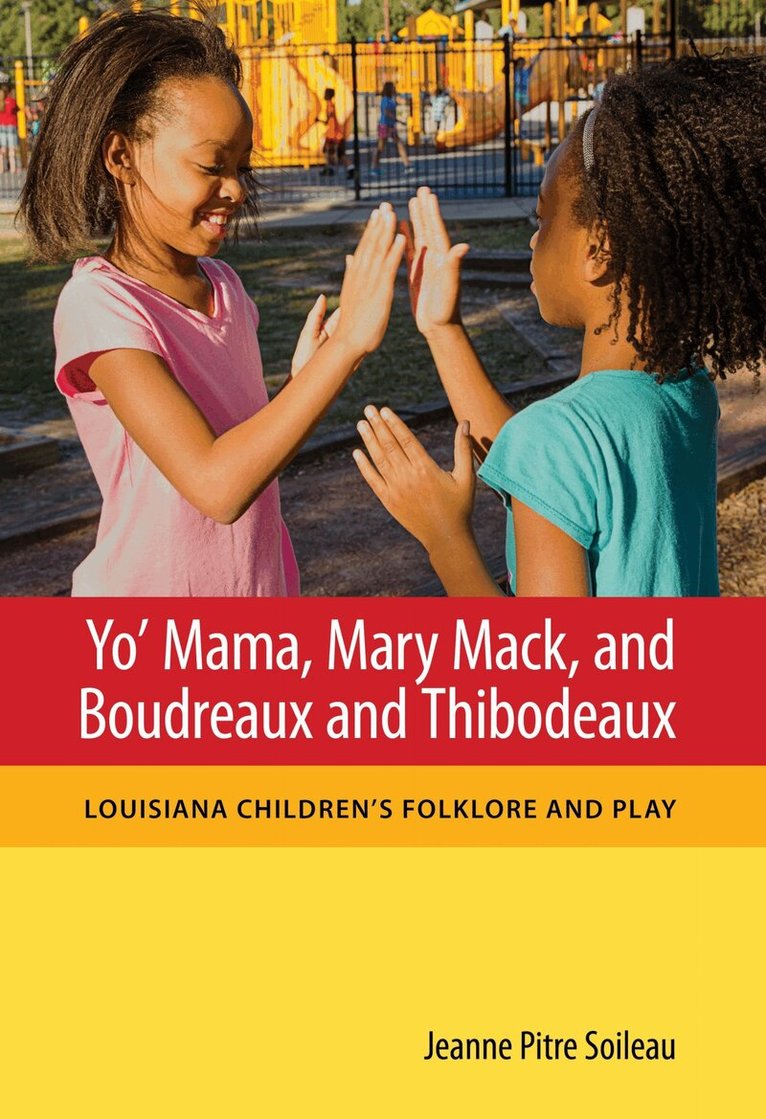
Yo' Mama, Mary Mack, and Boudreaux and Thibodeaux
Louisiana Children's Folklore and Play
Inbunden, Engelska, 2016
701 kr
Skickas inom 10-15 vardagar
Jeanne Soileau, a teacher in New Orleans and south Louisiana for more than forty years, examines how children's folklore, especially among African Americans, has changed. From the tumult of integration to the present, her experience afforded unique opportunities to observe children as they played. With integration in New Orleans during the 1960s, Soileau notes how children began to play with one another almost immediately. Children taught each other play routines, chants, jokes, jump-rope rhymes, cheers, taunts, and teases - all the folk games that happen in normal play on the street and playground. When adults - the judges and attorneys, the parents, and the politicians - haggled and shouted, children began to hold hands in a circle, fall down together to ""Ring around the Rosie,"" and tease each other in new and creative ways. Children's ability to adapt can be seen not only in their response to social change, but in how they adopt and utilize pop culture and technology. Vast technological changes in the last third of the twentieth century influenced the way children sang, danced, played, and interacted. Soileau catalogs these changes and studies how games evolve and transform as much as they are preserved. She includes several topics of study: oral narratives and songs, jokes and tales, and teasing formulae gleaned from mostly African American sources. Because much of the field work took place on public school playgrounds, this body of oral narratives remains of particular interest to teachers, folklorists, linguists, and those who study play.In the end, Soileau shows that despite the restrictions of air-conditioning, shorter recess periods, ever-increasing hours of television watching, the growing popularity of video games, and carefully scripted after-school activities, many children in south Louisiana sustain traditional games. At the same time, they invent varied and clever new ones. As Soileau observes, children strive through their folk play to learn how to fit into a rapidly changing society.
Yo' Mama, Mary Mack, and Boudreaux and Thibodeaux
Louisiana Children's Folklore and Play
Häftad, Engelska, 2019
367 kr
Skickas inom 10-15 vardagar
Winner of the 2018 Chicago Folklore Prize and Winner of the 2018 Opie Prize.Jeanne Soileau, a teacher in New Orleans and south Louisiana for more than forty years, examines how children’s folklore, especially among African Americans, has changed. From the tumult of integration to the present, her experience afforded unique opportunities to observe children as they played. With integration in New Orleans during the 1960s, Soileau notes how children began to play with one another almost immediately. Children taught each other play routines, chants, jokes, jump-rope rhymes, cheers, taunts, and teases—all the folk games that happen in normal play on the street and playground. When adults—the judges and attorneys, the parents, and the politicians—haggled and shouted, children began to hold hands in a circle, fall down together to "Ring around the Rosie," and tease each other in new and creative ways. Children’s ability to adapt can be seen not only in their response to social change, but in how they adopt and utilize pop culture and technology. Vast technological changes in the last third of the twentieth century influenced the way children sang, danced, played, and interacted. Soileau catalogs these changes and studies how games evolve and transform as much as they are preserved. She includes several topics of study: oral narratives and songs, jokes and tales, and teasing formulae gleaned from mostly African American sources. Because much of the field work took place on public school playgrounds, this body of oral narratives remains of particular interest to teachers, folklorists, linguists, and those who study play.In the end, Soileau shows that despite the restrictions of air-conditioning, shorter recess periods, ever-increasing hours of television watching, the growing popularity of video games, and carefully scripted after-school activities, many children in south Louisiana sustain traditional games. At the same time, they invent varied and clever new ones. As Soileau observes, children strive through their folk play to learn how to fit into a rapidly changing society.
1 181 kr
Skickas inom 10-15 vardagar
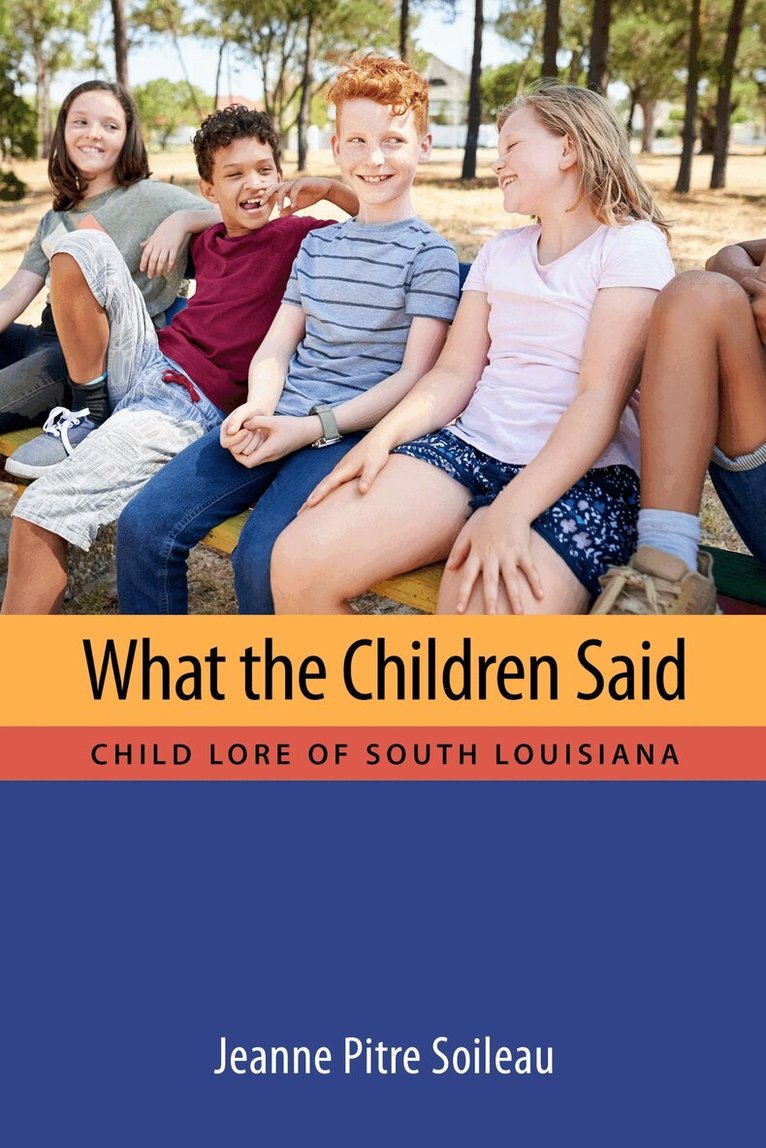
Jeanne Pitre Soileau, winner of the 2018 Chicago Folklore Prize and the 2018 Opie Prize for Yo’ Mama, Mary Mack, and Boudreaux and Thibodeaux: Louisiana Children’s Folklore and Play, vividly presents children’s voices in What the Children Said: Child Lore of South Louisiana. Including over six hundred handclaps, chants, jokes, jump-rope rhymes, cheers, taunts, and teases, this book takes the reader through a fifty-year history of child speech as it has influenced children’s lives.What the Children Said affirms that children's play in south Louisiana is acquired along a network of summer camps, schoolyards, church gatherings, and sleepovers with friends. When children travel, they obtain new games and rhymes, and bring them home. The volume also reveals, in the words of the children themselves, how young people deal with racism and sexism. The children argue and outshout one another, policing their own conversations, stating their own prejudices, and vying with one another for dominion. The first transcript in the book tracks a conversation among three related boys and shows that racism is part of the family interchange. Among second grade boys and girls at a Catholic school another transcript presents numerous examples in which boys use insults to dominate a conversation with girls, and girls use giggles and sly comebacks to counter this aggression.Though collected in the areas of New Orleans, Baton Rouge, and Lafayette, Louisiana, this volume shows how south Louisiana child lore is connected to other English-speaking places: England, Scotland, Ireland, Australia, and New Zealand, as well as the rest of the United States.
367 kr
Skickas inom 10-15 vardagar
Jeanne Pitre Soileau, winner of the 2018 Chicago Folklore Prize and the 2018 Opie Prize for Yo’ Mama, Mary Mack, and Boudreaux and Thibodeaux: Louisiana Children’s Folklore and Play, vividly presents children’s voices in What the Children Said: Child Lore of South Louisiana. Including over six hundred handclaps, chants, jokes, jump-rope rhymes, cheers, taunts, and teases, this book takes the reader through a fifty-year history of child speech as it has influenced children’s lives.What the Children Said affirms that children's play in south Louisiana is acquired along a network of summer camps, schoolyards, church gatherings, and sleepovers with friends. When children travel, they obtain new games and rhymes, and bring them home. The volume also reveals, in the words of the children themselves, how young people deal with racism and sexism. The children argue and outshout one another, policing their own conversations, stating their own prejudices, and vying with one another for dominion. The first transcript in the book tracks a conversation among three related boys and shows that racism is part of the family interchange. Among second grade boys and girls at a Catholic school another transcript presents numerous examples in which boys use insults to dominate a conversation with girls, and girls use giggles and sly comebacks to counter this aggression.Though collected in the areas of New Orleans, Baton Rouge, and Lafayette, Louisiana, this volume shows how south Louisiana child lore is connected to other English-speaking places: England, Scotland, Ireland, Australia, and New Zealand, as well as the rest of the United States.
1 078 kr
Kommande
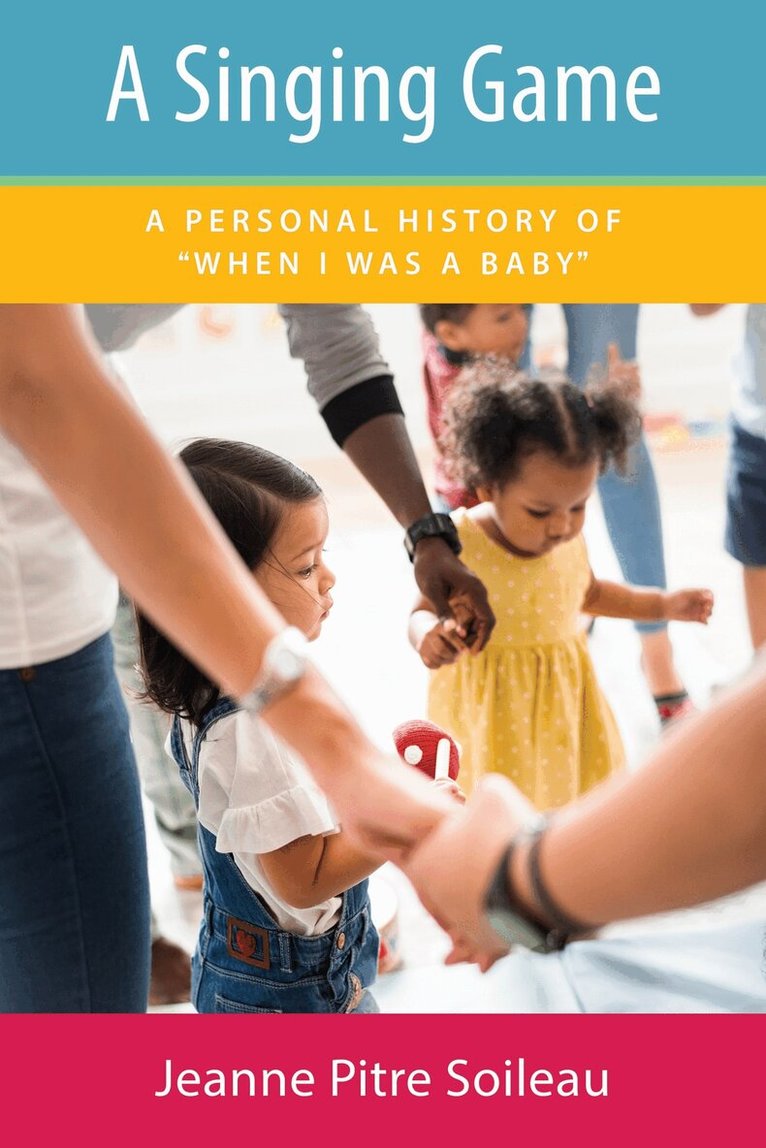
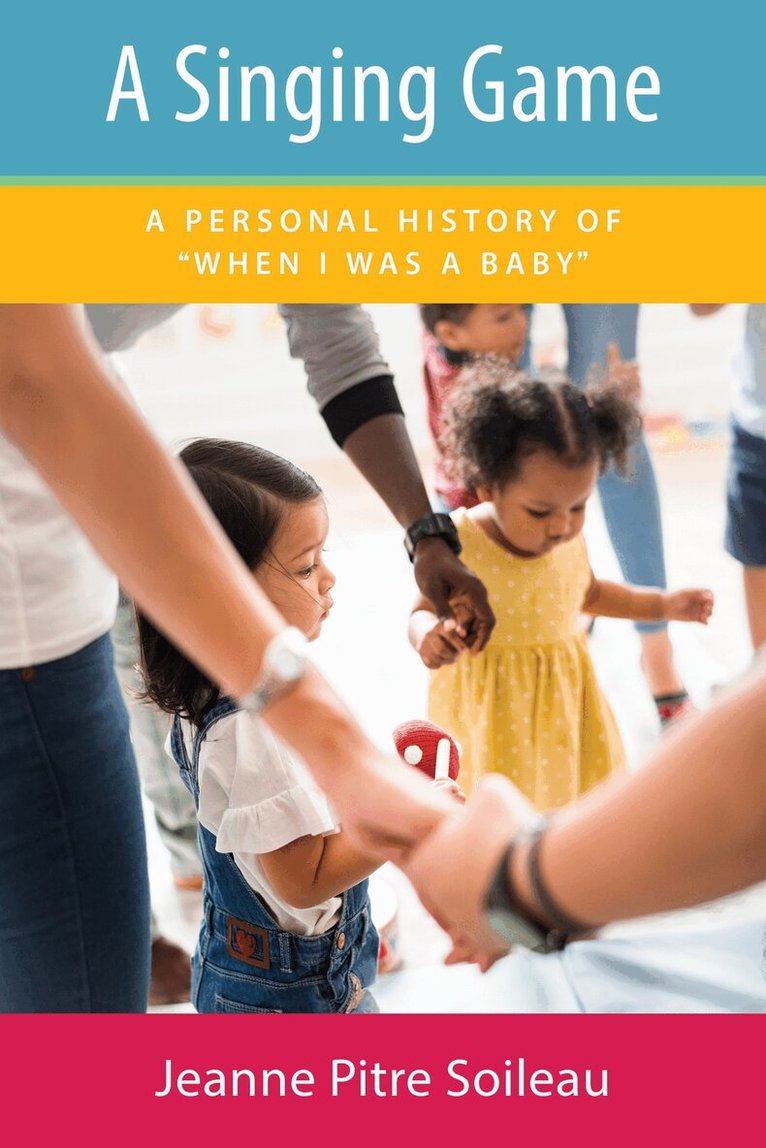
A Singing Game: A Personal History of "When I Was a Baby" examines a series of variants of the classic singing game. "When I Was a Baby," like other traditional singing games, is based around a verse or rhyme paired with a set of movements. This singing game was made up by children and passed down by classmates, siblings, and friends to other children over a period of at least one hundred and fifty years. Jeanne Pitre Soileau traces "When I Was a Baby" through its many permutations, from its earliest appearance in folklore to variations uploaded to YouTube and introduces the varied folklorists who collected it through its history. As the years go by, the anonymous child poets who keep it alive, keen observers of change, spice it up with new vocabulary, new pantomimes, and incorporate into it more piquant social commentary. Part folklore study, part memoir, A Singing Game also explores Soileau’s journey of becoming, through trial and error, a specialist in south Louisiana child lore. Altogether, A Singing Game is an important addition to the children’s folklore canon.
297 kr
Kommande
A Singing Game: A Personal History of "When I Was a Baby" examines a series of variants of the classic singing game. "When I Was a Baby," like other traditional singing games, is based around a verse or rhyme paired with a set of movements. This singing game was made up by children and passed down by classmates, siblings, and friends to other children over a period of at least one hundred and fifty years. Jeanne Pitre Soileau traces "When I Was a Baby" through its many permutations, from its earliest appearance in folklore to variations uploaded to YouTube and introduces the varied folklorists who collected it through its history. As the years go by, the anonymous child poets who keep it alive, keen observers of change, spice it up with new vocabulary, new pantomimes, and incorporate into it more piquant social commentary. Part folklore study, part memoir, A Singing Game also explores Soileau’s journey of becoming, through trial and error, a specialist in south Louisiana child lore. Altogether, A Singing Game is an important addition to the children’s folklore canon.