Jeannie M. Whayne – författare
Visar alla böcker från författaren Jeannie M. Whayne. Handla med fri frakt och snabb leverans.
4 produkter
4 produkter
Häftad, Engelska, 1996
348 kr
Skickas inom 10-15 vardagar
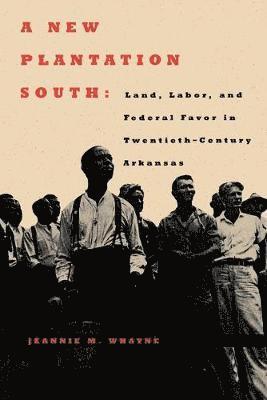
Jeannie M. Whayne traces the emergence of a transformed southern plantation system in the Arkansas delta decades after the end of the Civil War. By manipulating laws and federal and state agencies to gain control over land policy, Poinsett County planters fought to maintain their place on the land amidst tenancy, sharecropping, and the mechanization of farming.
Häftad, Engelska, 1996
352 kr
Skickas inom 3-6 vardagar
This collection of essays represents a large-scale attempt to characterize the long-neglected Arkansas Delta. The historical, social, economic, geographic, and cultural issues the authors address make it abundantly clear that the Delta—long thought to be a land of relative stasis—is actually changing quite rapidly. It is clear, too, that this strange land is filled with haunting contradictions.Winner of the 1994 Virginia C. Ledbetter Prize
Inbunden, Engelska, 2013
539 kr
Skickas inom 5-8 vardagar
Arkansas: A Narrative History is a comprehensive history of the state that has been invaluable to students and the general public since its original publication. Four distinguished scholars cover prehistoric Arkansas, the colonial period, and the nineteenth and twentieth centuries and incorporate the newest historiography to bring the book up to date for 2012.A new chapter on Arkansas geography, new material on the civil rights movement and the struggle over integration, and an examination of the state's transition from a colonial economic model to participation in the global political economy are included. Maps are also dramatically enhanced, and supplemental teaching materials are available.
E-bok
PDF, Engelska, 2005347 kr
Läs direkt efter köp
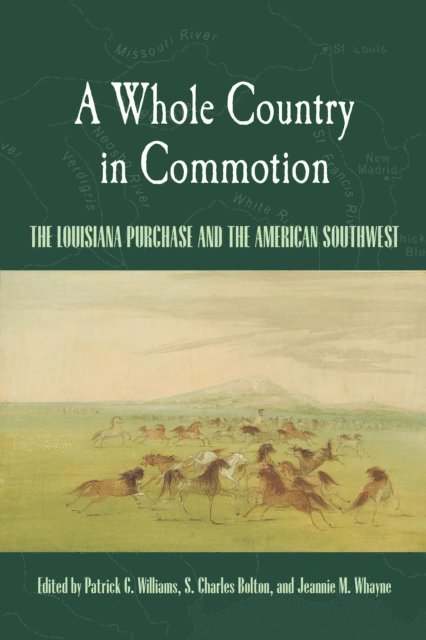
Bringing together the work of prominent scholars and rising stars in southern, western, and Indian history, A Whole Country in Commotion explores lesser-known aspects of one of the better-known episodes in U.S. history. While the purchase has been seen as a great boon for the United States, doubling the size of the new nation and securing American navigation on the Mississippi River, it also brought turmoil to many. Looking past the triumphal aspects of the purchase, this book examines the “negotiations among peoples, nations and empires that preceded and followed the actual transfer of territory.” Its nine essays highlight the “commotion” the purchase stirred up—among nations, among Louisiana residents and newcomers, even among those who remained east of the Mississippi. Many of these essays look at the portion of the Louisiana territory that would become Arkansas to illustrate the profound impact of the purchase on the diverse populations of the American Southwest. Others explore the woeful commotion brought to many thousands of lives as Jefferson’s “noble bargain” set the stage for the forced migration of native and African Americans from the east to the west of the Mississippi.