Jeff Carpenter – författare
366 kr
Skickas
734 kr
Läs direkt efter köp
Is Kubernetes ready for stateful workloads? This open source system has become the primary platform for deploying and managing cloud native applications. But because it was originally designed for stateless workloads, working with data on Kubernetes has been challenging. If you want to avoid the inefficiencies and duplicative costs of having separate infrastructure for applications and data, this practical guide can help.
Using Kubernetes as your platform, you''ll learn open source technologies that are designed and built for the cloud. Authors Jeff Carpenter and Patrick McFadin provide case studies to help you explore new use cases and avoid the pitfalls others have faced. You’ll get an insider''s view of what''s coming from innovators who are creating next-generation architectures and infrastructure.
With this book, you will:
Learn how to use basic Kubernetes resources to compose data infrastructureAutomate the deployment and operations of data infrastructure on Kubernetes using tools like Helm and operatorsEvaluate and select data infrastructure technologies for use in your applicationsIntegrate data infrastructure technologies into your overall stackExplore emerging technologies that will enhance your Kubernetes-based applications in the future708 kr
Läs direkt efter köp
Is Kubernetes ready for stateful workloads? This open source system has become the primary platform for deploying and managing cloud native applications. But because it was originally designed for stateless workloads, working with data on Kubernetes has been challenging. If you want to avoid the inefficiencies and duplicative costs of having separate infrastructure for applications and data, this practical guide can help.
Using Kubernetes as your platform, you''ll learn open source technologies that are designed and built for the cloud. Authors Jeff Carpenter and Patrick McFadin provide case studies to help you explore new use cases and avoid the pitfalls others have faced. You’ll get an insider''s view of what''s coming from innovators who are creating next-generation architectures and infrastructure.
With this book, you will:
Learn how to use basic Kubernetes resources to compose data infrastructureAutomate the deployment and operations of data infrastructure on Kubernetes using tools like Helm and operatorsEvaluate and select data infrastructure technologies for use in your applicationsIntegrate data infrastructure technologies into your overall stackExplore emerging technologies that will enhance your Kubernetes-based applications in the future604 kr
Skickas inom 5-8 vardagar
734 kr
Läs direkt efter köp
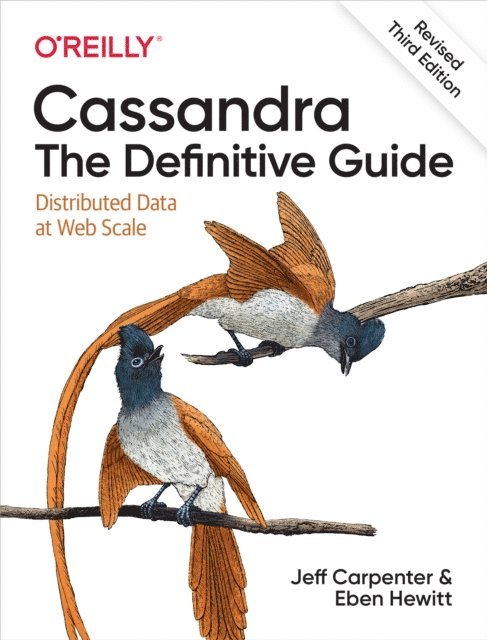
Imagine what you could do if scalability wasn''t a problem. With this hands-on guide, you''ll learn how the Cassandra database management system handles hundreds of terabytes of data while remaining highly available across multiple data centers. This revised third edition--updated for Cassandra 4.0 and new developments in the Cassandra ecosystem, including deployments in Kubernetes with K8ssandra--provides technical details and practical examples to help you put this database to work in a production environment.
Authors Jeff Carpenter and Eben Hewitt demonstrate the advantages of Cassandra''s nonrelational design, with special attention to data modeling. Developers, DBAs, and application architects looking to solve a database scaling issue or future-proof an application will learn how to harness Cassandra''s speed and flexibility.
Understand Cassandra''s distributed and decentralized structureUse the Cassandra Query Language (CQL) and cqlsh (the CQL shell)Create a working data model and compare it with an equivalent relational modelDesign and develop applications using client driversExplore cluster topology and learn how nodes exchange dataMaintain a high level of performance in your clusterDeploy Cassandra onsite, in the cloud, or with Docker and KubernetesIntegrate Cassandra with Spark, Kafka, Elasticsearch, Solr, and Lucene734 kr
Läs direkt efter köp
Imagine what you could do if scalability wasn''t a problem. With this hands-on guide, you''ll learn how the Cassandra database management system handles hundreds of terabytes of data while remaining highly available across multiple data centers. This revised third edition--updated for Cassandra 4.0 and new developments in the Cassandra ecosystem, including deployments in Kubernetes with K8ssandra--provides technical details and practical examples to help you put this database to work in a production environment.
Authors Jeff Carpenter and Eben Hewitt demonstrate the advantages of Cassandra''s nonrelational design, with special attention to data modeling. Developers, DBAs, and application architects looking to solve a database scaling issue or future-proof an application will learn how to harness Cassandra''s speed and flexibility.
Understand Cassandra''s distributed and decentralized structureUse the Cassandra Query Language (CQL) and cqlsh (the CQL shell)Create a working data model and compare it with an equivalent relational modelDesign and develop applications using client driversExplore cluster topology and learn how nodes exchange dataMaintain a high level of performance in your clusterDeploy Cassandra onsite, in the cloud, or with Docker and KubernetesIntegrate Cassandra with Spark, Kafka, Elasticsearch, Solr, and Lucene604 kr
Skickas inom 5-8 vardagar
442 kr
Läs direkt efter köp
A new approach to growing local medicine, including information on geo-authenticity, wildcrafting, and developing a good business plan
"[A] beautiful and informative book . . . A dirt-smudged copy should be within easy reach of every home gardener or farmer who grows—or wants to grow—medicinal plants."—Michael McGuffin, President, American Herbal Products Association
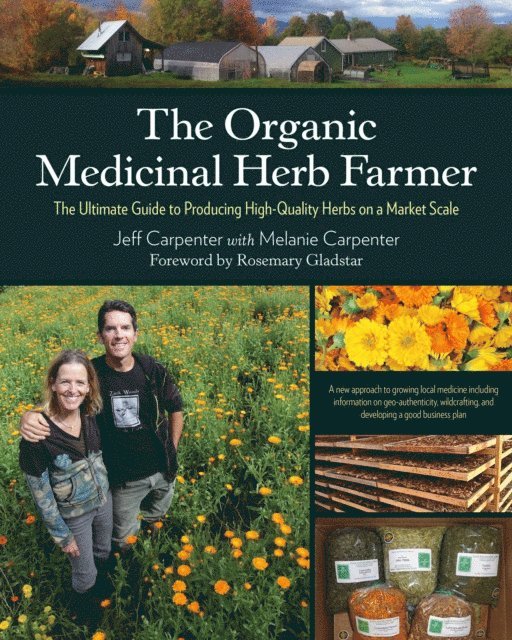
Both a business guide and a farming manual, The Organic Medicinal Herb Farmer will teach readers how to successfully grow and market organic medicinal Western herbs.
Whether you’re trying to farm medicinal plants, culinary herbs, or at-risk native herbs exclusively or simply add herbal crops to what you’re already growing, successful small-scale herb farmers Jeff and Melanie Carpenter will guide you through the entire process―from cultivation to creating value-added products.
Using their Zack Woods Herb Farm in Vermont as a backdrop, the Carpenters cover all the basic practical information farmers need to know to get an organic herb farm up and running, including:
Size and scale considerationsLayout and design of the farm and facilitiesGrowing and cultivation information, including types of toolsField and bed prepPlant propagationWeed control, and pests and diseasesHarvesting, as well as wild harvesting and the concept of geo-authentic botanicalsPost-harvest processingValue-added products and marketingThe authors also provide fifty detailed plant profiles, going deeper into the herbs every farmer should consider growing, including:
ArnicaCalendulaEchinaceaGinkoGinsengPeppermintSaint John’s WortValerianIn an easy-to-understand, practical, and comprehensive manner, readers will learn how to focus on quality over quantity, and keep costs down by innovating with existing equipment, rather than expensive technology. Market farmers who have never before considered growing medicinal herbs will learn why it’s more important to produce these herbs domestically.
The Organic Medicinal Herb Farmer makes a convincing case that producing organic medicinal herbs can be a viable, profitable, farming enterprise. The Carpenters also make the case for incorporating medicinal herbs into existing operations, as it can help increase revenue in the form of value-added products, not to mention improve the ecological health of farmland by encouraging biodiversity as a path toward greater soil health.
442 kr
Läs direkt efter köp
“Seasoned and novice growers alike will find a mother lode of information and wisdom packed into this gem of a book!”—Nancy Phillips, author of The Herbalist’s Way
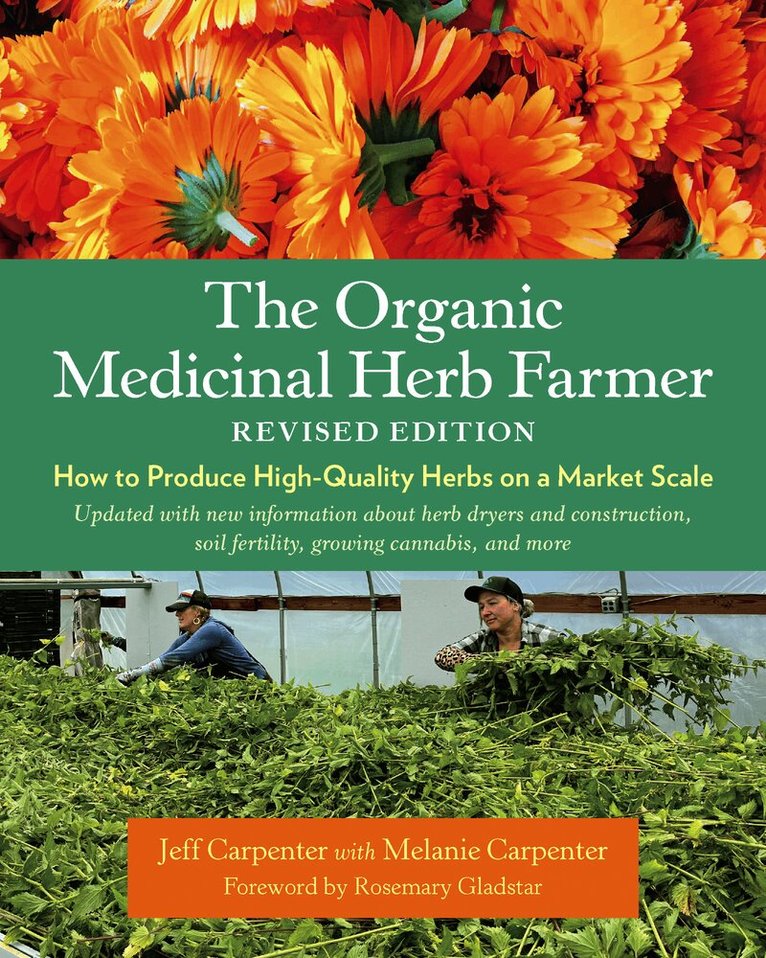
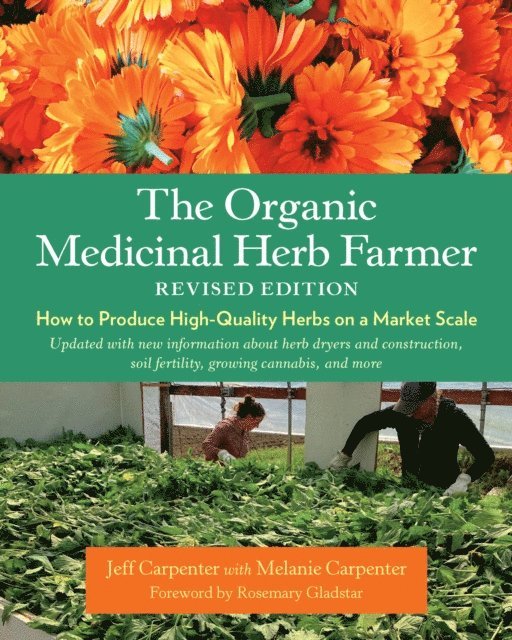
*Updated with new information about herb dryers and construction, soil fertility, growing cannabis, and more
In the first edition of The Organic Medicinal Herb Farmer, authors Jeff and Melanie Carpenter presented a comprehensive seed-to-bottle guide for aspiring and experienced growers alike, from basic business considerations to planting and propagation to creating value-added products. Now they’re back with a revised and updated edition, sharing the lessons they’ve learned throughout their twenty-five years of operating a medicinal herb farm that prizes quality over quantity.
The Carpenters offer their insights and tips on every aspect of herb farming, including:
Size and scale considerationsData management for profit maximizationThe herbal marketplace and choosing which herbs to growField and bed preparation and planting, including building soil fertilityPlant-positive weed, pest, and disease controlHarvest and post-harvest processing, including scalable dryer constructionValue-added products and marketingA new chapter on growing cannabisAnd much more!The Carpenters make the case that growing organic medicinal herbs is not only viable and profitable, but also an important step for improving the ecological health of farmland, taking pressure off of wild medicinal plant populations, and increasing biodiversity. While local foodways are more often the focus of attention, local medicine ways are equally critical and in need of restoration.
The Organic Medicinal Herb Farmer is a one-of-a-kind resource, complete with detailed profiles of 50 medicinal herbs and over 200 color photographs. Whether you’re looking to grow an herb farm from the ground up, incorporate medicinal plants on an existing farm, or add tools to your belt as a seasoned grower, you’ll find the information you need in this volume.
“[A] beautiful and informative book . . . A dirt-smudged copy should be within easy reach of every home gardener or farmer who grows—or wants to grow—medicinal plants.”—Michael McGuffin, President, American Herbal Products Association
283 kr
Skickas inom 5-8 vardagar