Jeffrey L. Broughton – författare
Visar alla böcker från författaren Jeffrey L. Broughton. Handla med fri frakt och snabb leverans.
9 produkter
9 produkter
Häftad, Engelska, 1999
409 kr
Skickas inom 5-8 vardagar
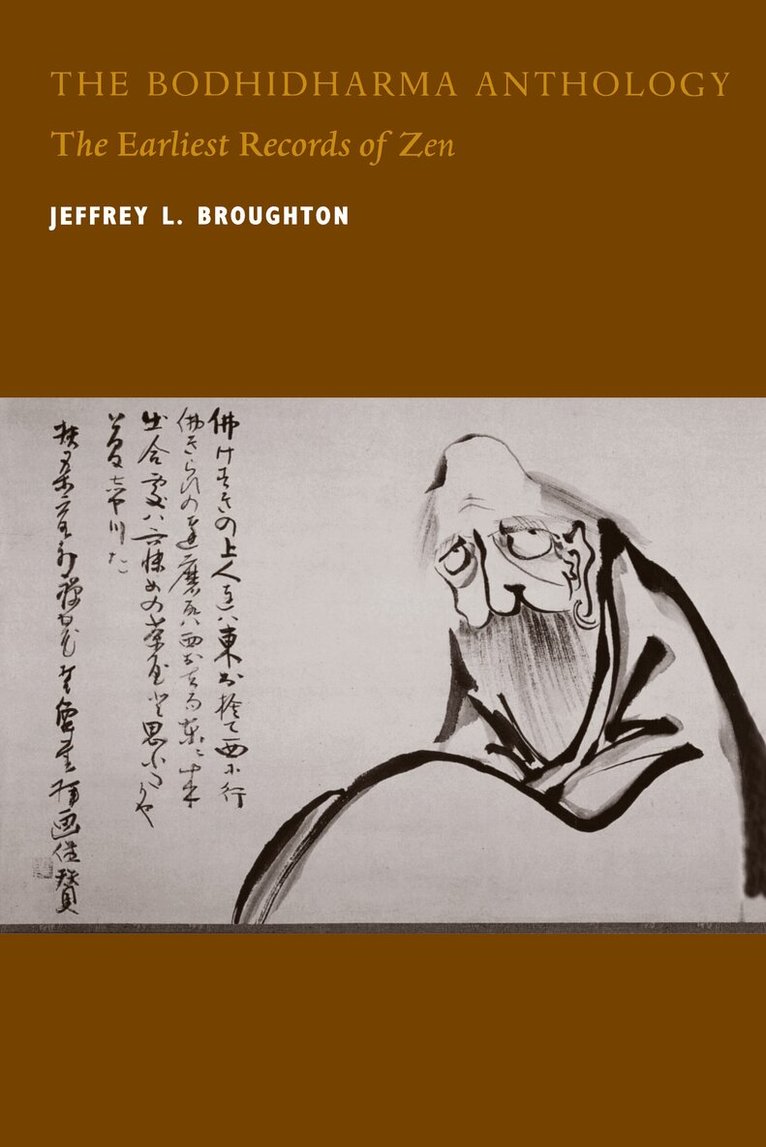
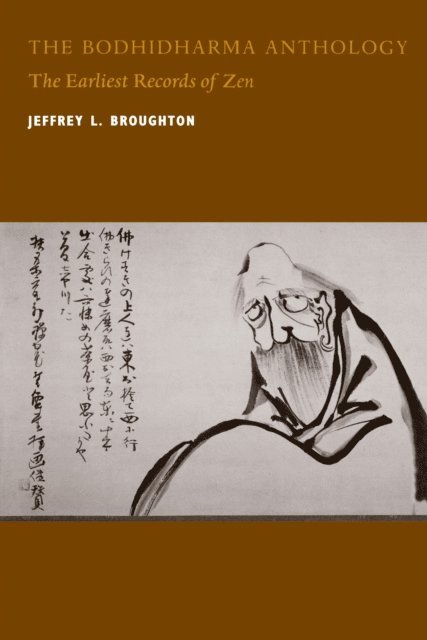
In the early part of this century, the discovery of a walled-up cave in northwest China led to the retrieval of a lost early Ch'an (Zen) literature of the T'ang dynasty (618-907). One of the recovered Zen texts was a seven-piece collection, the Bodhidharma Anthology. Of the numerous texts attributed to Bodhidharma, this anthology is the only one generally believed to contain authentic Bodhidharma material. Jeffrey L. Broughton provides a reliable annotated translation of the Bodhidharma Anthology along with a detailed study of its nature, content, and background. His work is especially important for its rendering of the three Records, which contain some of the earliest Zen dialogues and constitute the real beginnings of Zen literature. The vivid dialogues and sayings of Master Yuan, a long-forgotten member of the Bodhidharma circle, are the hallmark of the Records. Master Yuan consistently criticizes reliance on the Dharma, on teachers, on meditative practice, and on scripture, all of which lead to self-deception and confusion, he says.According to Master Yuan, if one has spirit and does not seek anything, including the teachings of Buddhism, then one will attain the quietude of liberation. The boldness in Yuan's utterances prefigures much of the full-blown Zen tradition we recognize today. Broughton utilizes a Tibetan translation of the Bodhidharma Anthology as an informative gloss on the Chinese original. Placing the anthology within the context of the Tun-huang Zen manuscripts as a whole, he proposes a new approach to the study of Zen, one that concentrates on literary history, a genealogy of texts rather than the usual genealogy of masters.
E-bok
PDF, Engelska, 2014641 kr
Läs direkt efter köp
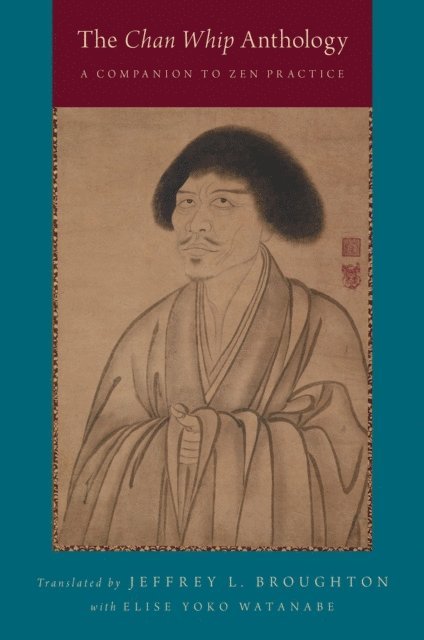
Jeffrey L. Broughton offers an annotated translation of the Whip for Spurring Students Onward Through the Chan Barrier Checkpoints (Changuan cejin), which he abbreviates to Chan Whip. This anthology, compiled by Yunqi Zhuhong (1535-1615), has served as a Chan handbook in both China and Japan since its publication in 1600. To characterize the Chan Whip as "late Ming Chan" is inaccurate-in fact, it is a survey of virtually the entirety of Chan literature, running from the late 800s (Tang dynasty) to about 1600 (late Ming). The Chan extracts, the bulk of the book, are followed by a short section of extracts from Buddhist canonical works (showing Zhuhong''s adherence to the "convergence of Chan and the teachings"). The Chan extracts deliberately eschew abstract discussions of theory in favor of autobiographical narratives, anecdotal sketches, exhortations, sermons, sayings, and letters that deal very frankly-sometimes humorously-with the concrete ups and downs of lived practice. Recent decades have seen the publication in English of a number of handbooks on Zen practice by contemporary East Asian masters. The Chan Whip, though 400 years old, is as invaluable to today''s practitioners as these modern works. The scholarly literature on Chan until now has focused on the Tang and Song dynasties-by giving us in addition the sayings of Yuan- and Ming-dynasty masters this translation fills a gap in that literature.
E-bok
PDF, Engelska, 20211 246 kr
Läs direkt efter köp
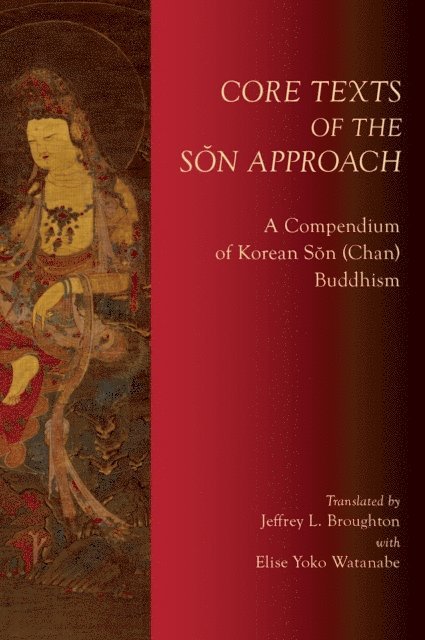
Jeffrey L. Broughton here offers a study and partial translation of Core Texts of the S&on Approach (S&onmun ch''waryo), an anthology of texts foundational to Korean S&on (Chan/Zen) Buddhism. Core Texts of the S&on Approach provides a convenient entrée to two fundamental themes of Korean S&on: S&on vis-à-vis the doctrinal teachings of Buddhism (in which S&on is shown to be superior) and the huatou (i.e., phrase; Korean hwadu) method of practice-work originally popularized by the Song dynasty Chinese Chan master Dahui Zonggao. This method consists of "raising to awareness" or "keeping an eye on" the phrase, usually No (Korean mu). No mental operation whatsoever is to be performed upon the phrase. One lifts the phrase to awareness constantly, when doing "quiet" cross-legged sitting as well as when immersed in the "noisiness" of everyday life. Core Texts of the S&on Approach, which was published in Korea during the first decade of the twentieth century (the identity of the compiler is not known for certain), contains eight Chan texts by Chinese authors (two translated here) and seven S&on texts by Korean authors (three translated here), showing the organic relationship between the parent Chinese tradition and its Korean inheritor. The set of translations in this volume will give readers access to some of the key texts of the Korean branch of this influential East Asian school of Buddhism.
E-bok
Engelska, 20211 246 kr
Läs direkt efter köp
Jeffrey L. Broughton here offers a study and partial translation of Core Texts of the S&on Approach (S&onmun ch''waryo), an anthology of texts foundational to Korean S&on (Chan/Zen) Buddhism. Core Texts of the S&on Approach provides a convenient entrée to two fundamental themes of Korean S&on: S&on vis-à-vis the doctrinal teachings of Buddhism (in which S&on is shown to be superior) and the huatou (i.e., phrase; Korean hwadu) method of practice-work originally popularized by the Song dynasty Chinese Chan master Dahui Zonggao. This method consists of "raising to awareness" or "keeping an eye on" the phrase, usually No (Korean mu). No mental operation whatsoever is to be performed upon the phrase. One lifts the phrase to awareness constantly, when doing "quiet" cross-legged sitting as well as when immersed in the "noisiness" of everyday life. Core Texts of the S&on Approach, which was published in Korea during the first decade of the twentieth century (the identity of the compiler is not known for certain), contains eight Chan texts by Chinese authors (two translated here) and seven S&on texts by Korean authors (three translated here), showing the organic relationship between the parent Chinese tradition and its Korean inheritor. The set of translations in this volume will give readers access to some of the key texts of the Korean branch of this influential East Asian school of Buddhism.
Inbunden, Engelska, 2023
1 266 kr
Skickas inom 5-8 vardagar
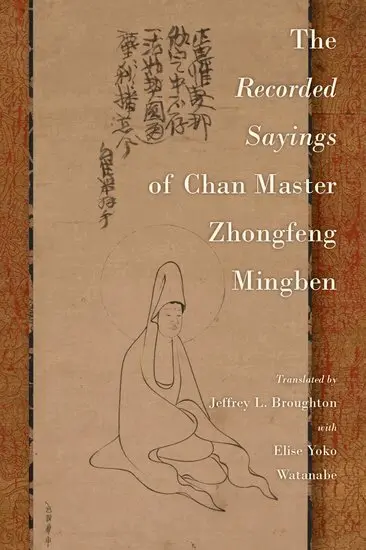
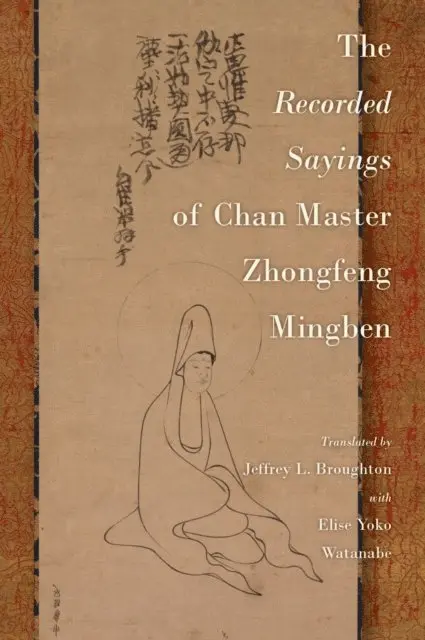
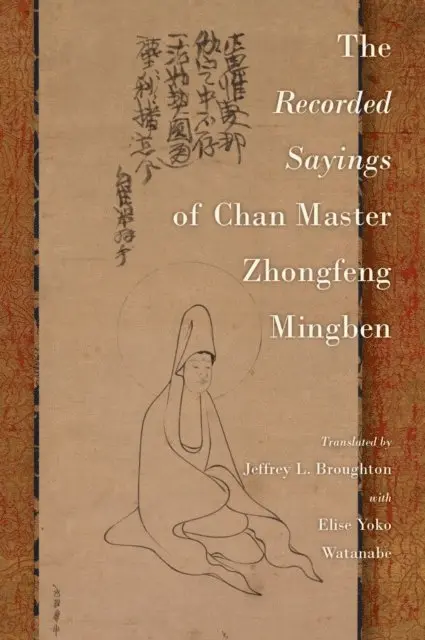
After the death of his master Gaofeng Yuanmiao, Zhongfeng Mingben (1263-1323) left Gaofeng's mountain and lived in solitude. For many years, he resided in various small mountain hermitages (often called "Dwelling-in-the-Phantasmal Hermitages") or houseboats. He drew students from all over East Asia: Yunnan, Turfan, Mongolia, Korea, Japan, and elsewhere. The Recorded sayings of Chan Master Zhongfeng Mingben provides an introduction, from the perspective of Chan/Zen Studies, to the teachings of this key figure of Yuan-dynasty Chan. Jeffrey Broughton focuses on selected works in Zhongfeng's two Chan records, the enormous Extensive Record of Preceptor Tianmu Zhongfeng, and the much smaller ancillary Zhongfeng Record B. Included translations are Instructions to the Assembly; selected Dharma Talks; the miscellany Night Conversations in a Mountain Hermitage; the dharma talk entitled House Instructions for Dwelling-in-the-Phantasmal Hermitage; In Imitation of Hanshan's Poems (one-hundred poems); Song of Dwelling-in-the-Phantasmal Hermitage; Cross-Legged Sitting Chan Admonitions (with Preface); Ten Poems on Living on a Boat; and Ten Poems on Living in Town.
E-bok
PDF, Engelska, 20231 126 kr
Läs direkt efter köp
After the death of his master Gaofeng Yuanmiao, Zhongfeng Mingben (1263-1323) left Gaofeng''s mountain and lived in solitude. For many years, he resided in various small mountain hermitages (often called "Dwelling-in-the-Phantasmal Hermitages") or houseboats. He drew students from all over East Asia: Yunnan, Turfan, Mongolia, Korea, Japan, and elsewhere. The Recorded sayings of Chan Master Zhongfeng Mingben provides an introduction, from the perspective of Chan/Zen Studies, to the teachings of this key figure of Yuan-dynasty Chan. Jeffrey Broughton focuses on selected works in Zhongfeng''s two Chan records, the enormous Extensive Record of Preceptor Tianmu Zhongfeng, and the much smaller ancillary Zhongfeng Record B. Included translations are Instructions to the Assembly; selected Dharma Talks; the miscellany Night Conversations in a Mountain Hermitage; the dharma talk entitled House Instructions for Dwelling-in-the-Phantasmal Hermitage; In Imitation of Hanshan''s Poems (one-hundred poems); Song of Dwelling-in-the-Phantasmal Hermitage; Cross-Legged Sitting Chan Admonitions (with Preface); Ten Poems on Living on a Boat; and Ten Poems on Living in Town.
E-bok
Engelska, 20231 126 kr
Läs direkt efter köp
After the death of his master Gaofeng Yuanmiao, Zhongfeng Mingben (1263-1323) left Gaofeng''s mountain and lived in solitude. For many years, he resided in various small mountain hermitages (often called "Dwelling-in-the-Phantasmal Hermitages") or houseboats. He drew students from all over East Asia: Yunnan, Turfan, Mongolia, Korea, Japan, and elsewhere. The Recorded sayings of Chan Master Zhongfeng Mingben provides an introduction, from the perspective of Chan/Zen Studies, to the teachings of this key figure of Yuan-dynasty Chan. Jeffrey Broughton focuses on selected works in Zhongfeng''s two Chan records, the enormous Extensive Record of Preceptor Tianmu Zhongfeng, and the much smaller ancillary Zhongfeng Record B. Included translations are Instructions to the Assembly; selected Dharma Talks; the miscellany Night Conversations in a Mountain Hermitage; the dharma talk entitled House Instructions for Dwelling-in-the-Phantasmal Hermitage; In Imitation of Hanshan''s Poems (one-hundred poems); Song of Dwelling-in-the-Phantasmal Hermitage; Cross-Legged Sitting Chan Admonitions (with Preface); Ten Poems on Living on a Boat; and Ten Poems on Living in Town.
E-bok
PDF, Engelska, 2012696 kr
Läs direkt efter köp
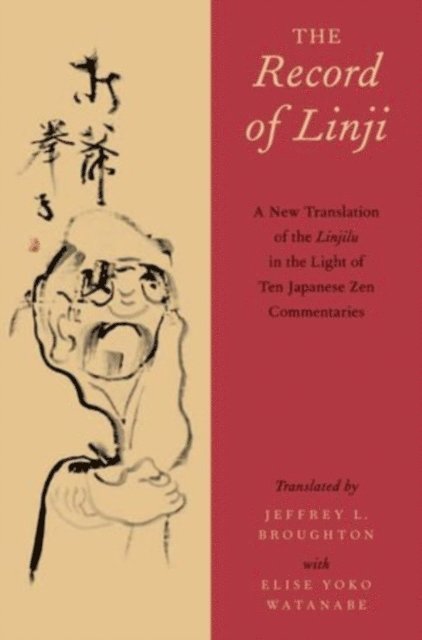
The Linjilu (Record of Linji or LJL) is one of the foundational texts of Chan/Zen Buddhist literature, and an accomplished work of baihua (vernacular) literature. This bracing new translation transmits the LJL''s living expression of Zen''s "personal realization of the meaning beyond words," as interpreted by ten commentaries produced by Japanese Zen monks, over a span of over four centuries, ranging from the late 1300s, when Five-Mountains Zen flourished in Kyoto and Kamakura, through the early 1700s, an age of thriving interest in the LJL.
E-bok
Engelska, 2023421 kr
Läs direkt efter köp
In the early part of this century, the discovery of a walled-up cave in northwest China led to the retrieval of a lost early Ch''an (Zen) literature of the T''ang dynasty (618-907). One of the recovered Zen texts was a seven-piece collection, the Bodhidharma Anthology. Of the numerous texts attributed to Bodhidharma, this anthology is the only one generally believed to contain authentic Bodhidharma material.Jeffrey L. Broughton provides a reliable annotated translation of the Bodhidharma Anthology along with a detailed study of its nature, content, and background. His work is especially important for its rendering of the three Records, which contain some of the earliest Zen dialogues and constitute the real beginnings of Zen literature.The vivid dialogues and sayings of Master Yuan, a long-forgotten member of the Bodhidharma circle, are the hallmark of the Records. Master Yuan consistently criticizes reliance on the Dharma, on teachers, on meditative practice, and on scripture, all of which lead to self-deception and confusion, he says. According to Master Yuan, if one has spirit and does not seek anything, including the teachings of Buddhism, then one will attain the quietude of liberation. The boldness in Yuan''s utterances prefigures much of the full-blown Zen tradition we recognize today.Broughton utilizes a Tibetan translation of the Bodhidharma Anthology as an informative gloss on the Chinese original. Placing the anthology within the context of the Tun-huang Zen manuscripts as a whole, he proposes a new approach to the study of Zen, one that concentrates on literary history, a genealogy of texts rather than the usual genealogy of masters.In the early part of this century, the discovery of a walled-up cave in northwest China led to the retrieval of a lost early Ch''an (Zen) literature of the T''ang dynasty (618-907). One of the recovered Zen texts was a seven-piece collection, the Bodhidh