Jeffrey Sklansky – författare
Visar alla böcker från författaren Jeffrey Sklansky. Handla med fri frakt och snabb leverans.
3 produkter
3 produkter
Inbunden, Engelska, 2017
422 kr
Skickas inom 5-8 vardagar
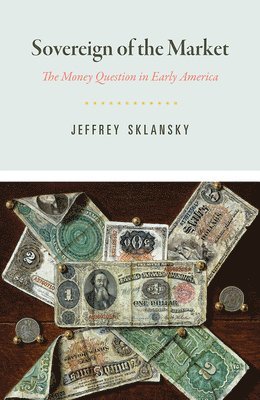
What should serve as money, who should control its creation and circulation, and according to what rules? For more than two hundred years, the "money question" shaped American social thought, becoming a central subject of political debate and class conflict. Sovereign of the Market reveals how and why this happened. Jeffrey Sklansky's wide-ranging study comprises three chronological parts devoted to major episodes in the career of the money question. First, the fight over the innovation of paper money in colonial New England. Second, the battle over the development of commercial banking in the new United States. And third, the struggle over the national banking system and the international gold standard in the late nineteenth century. Each section explores a broader problem of power that framed each conflict in successive phases of capitalist development: circulation, representation, and association. The three parts also encompass intellectual biographies of opposing reformers for each period, shedding new light on the connections between economic thought and other aspects of early American culture.The result is a fascinating, insightful, and deeply considered contribution to the history of capitalism.
E-bok
Engelska, 2017783 kr
Läs direkt efter köp
What should serve as money, who should control its creation and circulation, and according to what rules? For more than two hundred years, the “money question” shaped American social thought, becoming a central subject of political debate and class conflict. Sovereign of the Market reveals how and why this happened. Jeffrey Sklansky’s wide-ranging study comprises three chronological parts devoted to major episodes in the career of the money question. First, the fight over the innovation of paper money in colonial New England. Second, the battle over the development of commercial banking in the new United States. And third, the struggle over the national banking system and the international gold standard in the late nineteenth century. Each section explores a broader problem of power that framed each conflict in successive phases of capitalist development: circulation, representation, and association. The three parts also encompass intellectual biographies of opposing reformers for each period, shedding new light on the connections between economic thought and other aspects of early American culture. The result is a fascinating, insightful, and deeply considered contribution to the history of capitalism.
Häftad, Engelska, 2002
477 kr
Skickas inom 10-15 vardagar
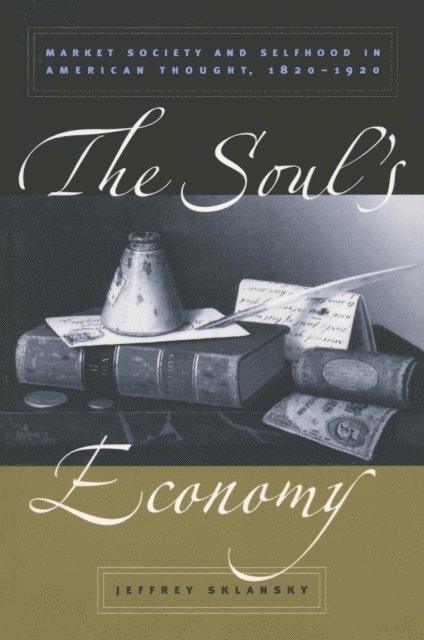
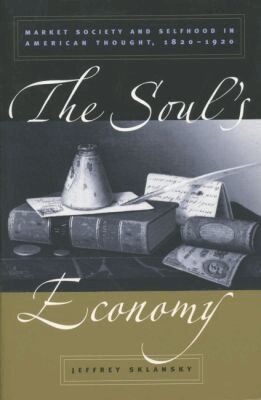
Socializing the psyche; Tracing a seismic shift in American social thought, Jeffrey-Sklansky offers a new synthesis of the intellectual transformation entailed in the rise of industrial capitalism. For a century after Independence, the dominant American understanding of selfhood and society came from the tradition of political economy, which defined freedom and equality in terms of ownership of the means of self-employment. However, the gradual demise of the household economy rendered proprietary independence an increasingly embattled ideal. Large landowners and industrialists claimed the right to rule as a privilege of their growing monopoly over productive resources, while dispossessed farmers and workers charged that a propertyless populace was incompatible with true liberty and democracy. Amid the widening class divide, nineteenth-century social theorists devised a new science of American society that came to be called ""social psychology."" The change Sklansky charts begins among Romantic writers such as Ralph Waldo Emerson and Margaret Fuller, continues through the polemics of political economists such as Henry George and William Graham Sumner, and culminates with the pioneers of modern American psychology and sociology such as William James and Charles Horton Cooley. Together, these writers reconceived freedom in terms of phychic self-expression instead of economic self-interest, and they redefined democracy in terms of cultural kinship rather than social compact.