Jelena Barbir - Böcker
Visar alla böcker från författaren Jelena Barbir. Handla med fri frakt och snabb leverans.
3 produkter
3 produkter
1 690 kr
Skickas inom 10-15 vardagar
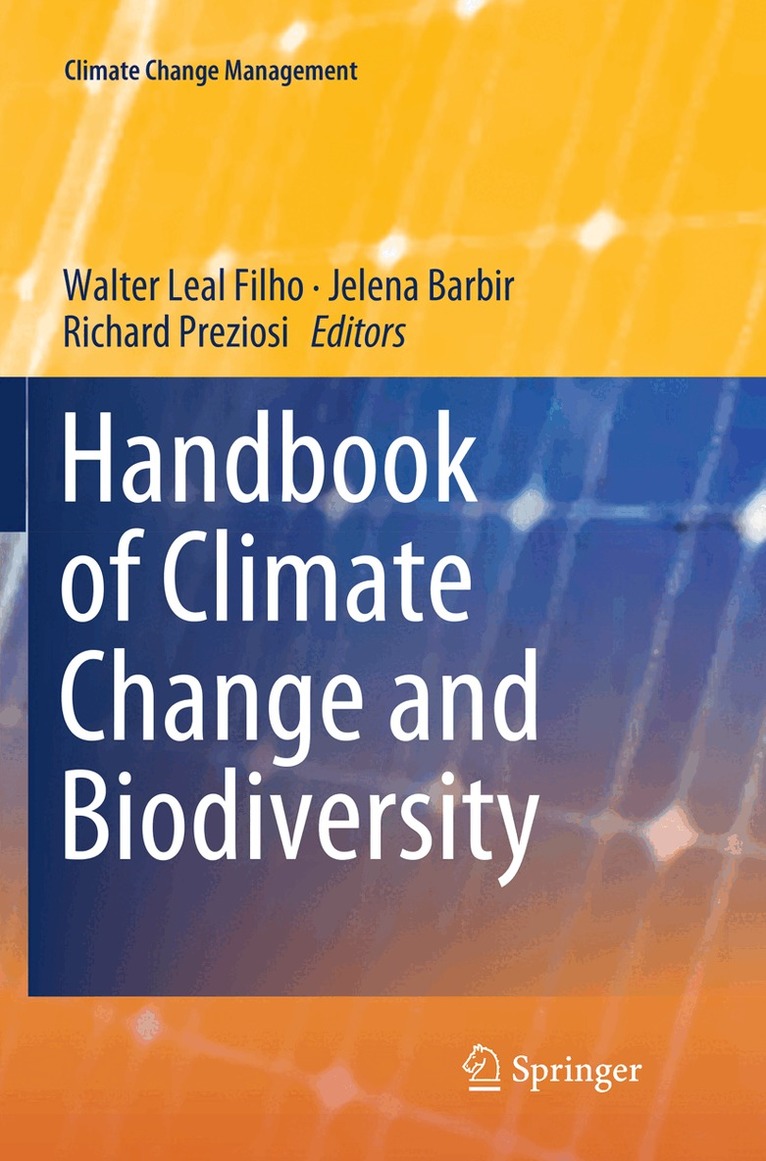
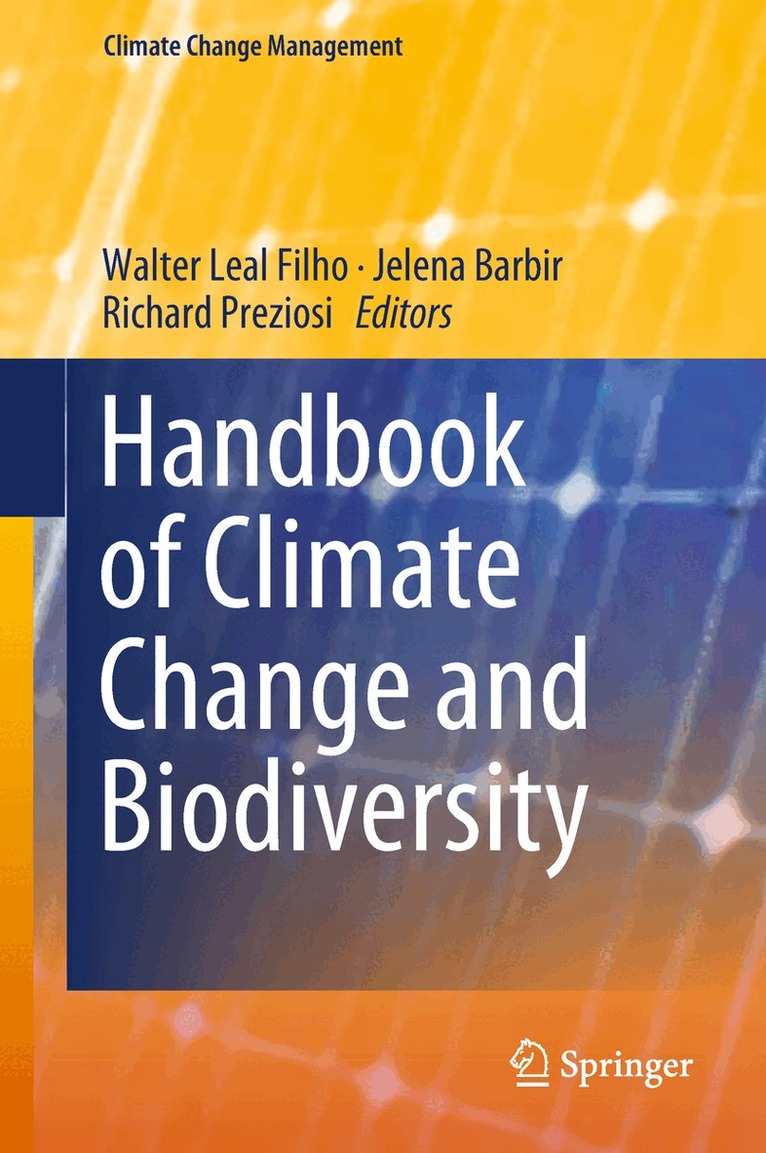
This book comprehensively describes essential research and projects on climate change and biodiversity. Moreover, it includes contributions on how to promote the climate agenda and biodiversity conservation at the local level. Climate change as a whole and global warming in particular are known to have a negative impact on biodiversity in three main ways. Firstly, increases in temperatures are detrimental to a number of organisms, especially those in sensitive habitats such as coral reefs and rainforests. Secondly, the pressures posed by a changing climate may lead to sets of responses in areas as varied as phenology, range and physiology of living organisms, often leading to changes in their lifecycles (especially but not only in reproduction), losses in productivity or even death. In some cases, the very survival of very sensitive species may be endangered. Thirdly, the impacts of climate change on biodiversity will be felt in the short term with regard to some species and ecosystems, but also in the medium and long term in many biomes. Indeed, if left unchecked, some of these impacts may be irreversible. Many individual governments, financial institutes and international donors are currently spending billions of dollars on projects addressing climate change and biodiversity, but with little coordination. Quite often, the emphasis is on adaptation efforts, with little emphasis on the connections between physio-ecological changes and the lifecycles and metabolisms of fauna and flora, or the influence of poor governance on biodiversity. As such, there is a recognized need to not only better understand the impacts of climate change on biodiversity, but to also identify, test and implement measures aimed at managing the many risks that climate change poses to fauna, flora and micro-organisms. In particular, the question of how to restore and protect ecosystems from the impact of climate change also has to be urgently addressed. This book was written to address this need. The respective papers explore matters related to the use of an ecosystem-based approach to increase local adaptation capacity, consider the significance of a protected areas network in preserving biodiversity in a changing northern European climate, and assess the impacts of climate change on specific species, including wild terrestrial animals. The book also presents a variety of case studies such as the Yellowstone to Yukon Conservation Initiative, the effects of climate change on the biodiversity of Aleppo pine forest in Senalba (Algeria), climate change and biodiversity response in the Niger Delta region, and the effects of forest fires on the biodiversity and the soil characteristics of tropical peatlands in Indonesia. This is a truly interdisciplinary publication, and will benefit all scholars, social movements, practitioners and members of governmental agencies engaged in research and/or executing projects on climate change and biodiversity around the world.
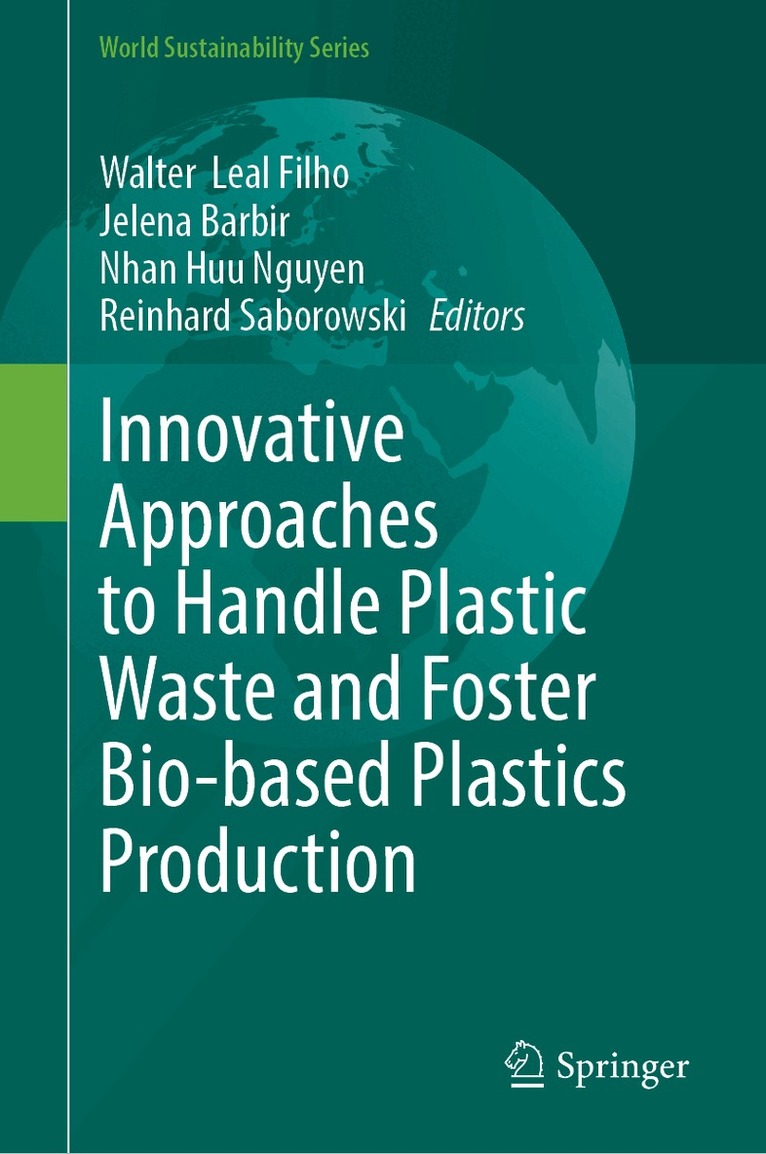
Innovative Approaches to Handle Plastic Waste and Foster Bio-based Plastics Production
Inbunden, Engelska, 2025
1 690 kr
Skickas inom 10-15 vardagar
This book provides a platform for the dissemination of information on the latest initiatives, paving the way for technology transfer and networking. Addressing the global challenge of plastic waste requires innovative approaches, both in managing existing waste and in developing sustainable materials. The strategies can be broadly categorised into two main areas: a) handling plastic waste and b) fostering bio-based plastics production. Both are equally important.There is a perceived need for publications which document and showcase innovative approaches and strategies to tackle the plastic waste challenge.Against this backdrop and in order to facilitate a broad discussion on the contribution of innovative approaches to handle plastic and foster bioplastics use, that this book is being produced. Produced as an output of the Horizon 2020 project "BIO-PLASTICS EUROPE".The book gathers inputs from universities and research organisations working on matters related to plastic waste management and bioplastic production, in a variety of contexts. Furthermore, the book intends to provide a fertile basis upon which universities, research centres, and practitioners may cooperate more closely in this key area. Last but not least, a further aim of the book is to present methodological approaches and experiences deriving from case studies and projects, which aim to show how research to handle plastic-based pollution and many related problems may be implementing across a range of disciplines. Thanks to its scope and interdisciplinarity, this books makes an excellent reading to everyone interested on handling the many challenges posed by plastics in our modern society.
1 227 kr
Skickas
This book comprehensively describes essential research and projects on climate change and biodiversity. Moreover, it includes contributions on how to promote the climate agenda and biodiversity conservation at the local level. Climate change as a whole and global warming in particular are known to have a negative impact on biodiversity in three main ways. Firstly, increases in temperatures are detrimental to a number of organisms, especially those in sensitive habitats such as coral reefs and rainforests. Secondly, the pressures posed by a changing climate may lead to sets of responses in areas as varied as phenology, range and physiology of living organisms, often leading to changes in their lifecycles (especially but not only in reproduction), losses in productivity or even death. In some cases, the very survival of very sensitive species may be endangered. Thirdly, the impacts of climate change on biodiversity will be felt in the short term with regard to some species and ecosystems, but also in the medium and long term in many biomes. Indeed, if left unchecked, some of these impacts may be irreversible. Many individual governments, financial institutes and international donors are currently spending billions of dollars on projects addressing climate change and biodiversity, but with little coordination. Quite often, the emphasis is on adaptation efforts, with little emphasis on the connections between physio-ecological changes and the lifecycles and metabolisms of fauna and flora, or the influence of poor governance on biodiversity. As such, there is a recognized need to not only better understand the impacts of climate change on biodiversity, but to also identify, test and implement measures aimed at managing the many risks that climate change poses to fauna, flora and micro-organisms. In particular, the question of how to restore and protect ecosystems from the impact of climate change also has to be urgently addressed. This book was written to address this need. The respective papers explore matters related to the use of an ecosystem-based approach to increase local adaptation capacity, consider the significance of a protected areas network in preserving biodiversity in a changing northern European climate, and assess the impacts of climate change on specific species, including wild terrestrial animals. The book also presents a variety of case studies such as the Yellowstone to Yukon Conservation Initiative, the effects of climate change on the biodiversity of Aleppo pine forest in Senalba (Algeria), climate change and biodiversity response in the Niger Delta region, and the effects of forest fires on the biodiversity and the soil characteristics of tropical peatlands in Indonesia. This is a truly interdisciplinary publication, and will benefit all scholars, social movements, practitioners and members of governmental agencies engaged in research and/or executing projects on climate change and biodiversity around the world.